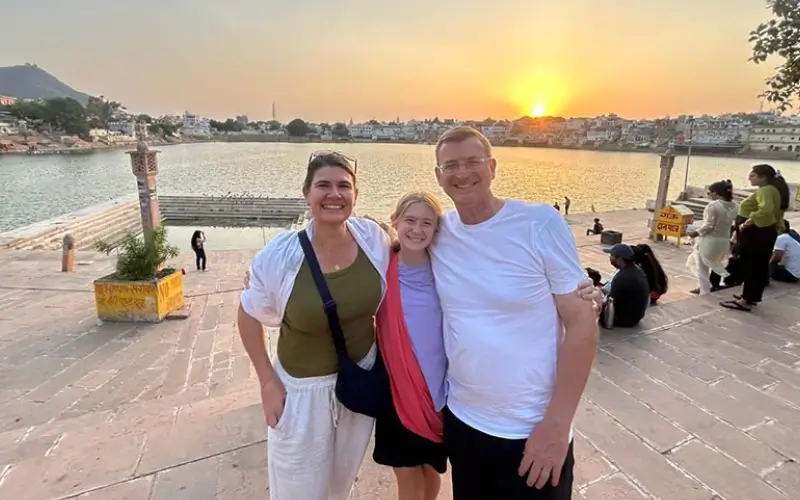
Think of a family of five from Vancouver arriving in Delhi on an evening flight: two parents, a grandmother, a ten-year-old and a four-year-old who has been awake for most of the last fourteen hours. The suitcases alone fill a hotel trolley, there is a stroller, a car seat and a bag of snacks, and everyone needs to be in bed within the hour. This is the moment when family travel in India either starts calmly or starts badly, and the difference usually comes down to the vehicle waiting outside. Families have different needs from couples, and the right car is the foundation of a relaxed trip.
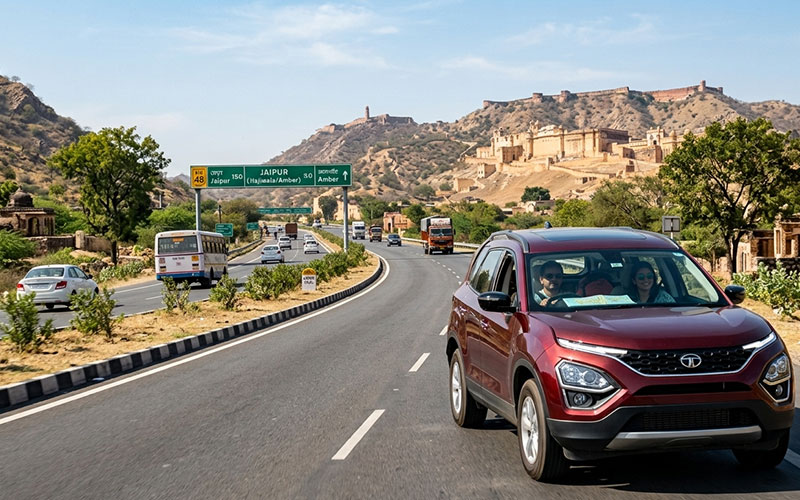
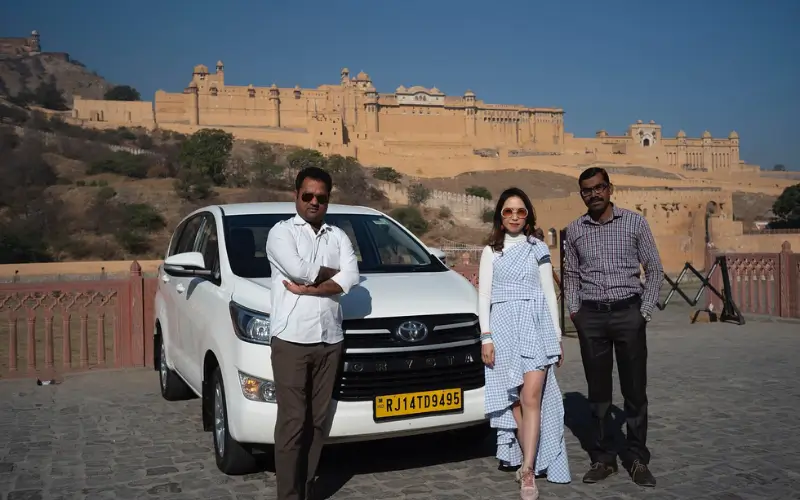
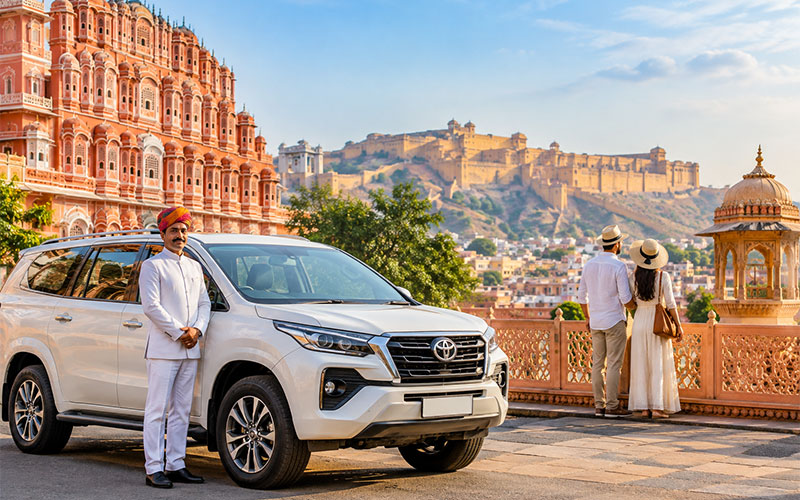
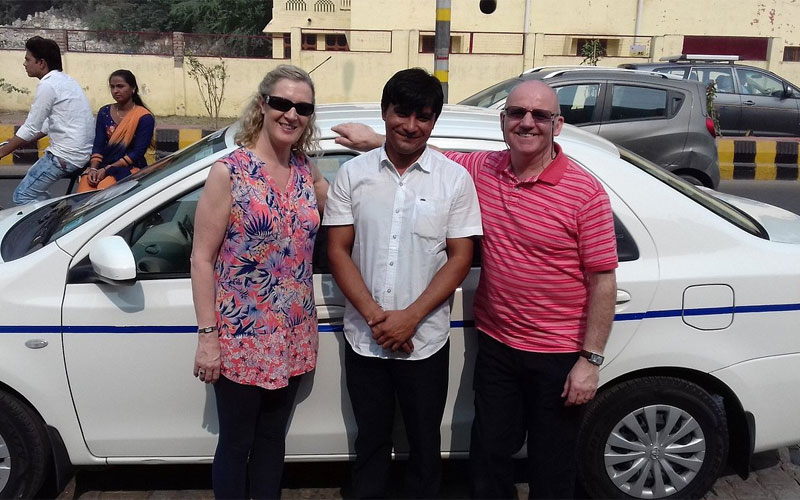
The first rule is to size the vehicle to the family plus the luggage, not just the number of seats. A sedan like the Maruti Suzuki Ciaz seats four guests on paper, but with two large suitcases, a stroller and day bags it is comfortable for two adults and one child at most. For a family of four or five, the Toyota Innova Crysta or Innova Hycross is the standard choice across India. It seats up to six guests in three rows, has a proper boot behind the third row when it is folded, and its air conditioning reaches the rear seats, which matters on hot afternoons in Rajasthan. Many families with two children choose the Innova even when a sedan would technically fit, because the extra space keeps tired children apart and leaves room for a nap.
For larger groups, such as two families travelling together or three generations on one holiday, the Tempo Traveller for families of eight or more is the practical answer. These vans seat from 9 to 18 guests depending on the layout, have high roofs so children and adults can move around, and carry far more luggage than two separate cars. The Force Urbania, a newer premium van seating 10 to 15 guests, offers a smoother ride, better seats and a quieter cabin, and is worth the extra cost on long routes like Delhi to Jaipur or Jaipur to Udaipur. One van also keeps the family together, which means one driver, one set of stops and no worrying about whether the second car has got lost.
Price differences are moderate when split across a family. On the higher side of the market, expect INR 3,800 to 4,800 a day (about USD 46 to 58) for a sedan, INR 5,200 to 6,500 a day (about USD 63 to 78) for an Innova Crysta or Hycross, INR 7,500 to 10,000 a day (about USD 90 to 120) for a 12-seat Tempo Traveller, and INR 11,000 to 14,000 a day (about USD 132 to 168) for a Force Urbania. These figures typically cover fuel, the driver's allowance, tolls, state taxes and parking on a multi-day tour, but always confirm the exact inclusions in writing.
Child car seats in India are the issue that surprises most parents. They are not standard in taxis or tour cars, and Indian law does not yet require them in practice the way it does in Europe, Australia or North America. Some tour companies can arrange a seat if you ask well in advance, typically for INR 300 to 600 a day, but quality and fit vary, and the supply of toddler seats is very limited outside Delhi. The safer option for babies and young toddlers is to bring your own, which most airlines check for free. The Innova and modern vans have ISOFIX points or proper three-point rear seat belts to secure them. For older children, a compact booster cushion is light and easy to pack. Whatever you bring, mention it when you book so the driver knows to leave space and can help fit it at the airport.
Make Every Mile of Your Family Journey Part of the Memory
From exciting discoveries for the children to comfortable journeys for every generation, experience India at a pace that works for your family.
Distances in India look short on a map and feel long in a car. Delhi to Agra is about 230 km, Agra to Jaipur about 240 km, and Jaipur back to Delhi about 280 km, but each of these takes four and a half to six hours with traffic, city entry and stops. For adults that is tiring; for young children it can be miserable. The most useful rule for a family road trip in India is to keep daily driving to around four to five hours with children under ten, and to break any longer drive with a meal stop and a proper stretch.
Good highway stops make a real difference. On the Delhi to Agra route via the Yamuna Expressway, there are clean food courts with modern washrooms roughly halfway. On the Agra to Jaipur road, many drivers stop at Fatehpur Sikri, which turns a long drive into two shorter halves with a fascinating abandoned royal city in the middle. Between Jaipur and Ranthambore, a 180 km drive of about three and a half hours, the route is easy and quiet. Your driver will know which roadside restaurants have reliable toilets and fresh food, which is worth asking about on the first day.
The time of departure is just as important as the distance. Leave between 7 and 8 AM, when roads are emptier and the car is cool. Children often sleep through the first two hours, and you arrive at the next hotel by early afternoon in time for a swim, a nap and an unhurried evening. Avoid driving after dark with children; highways carry heavy truck traffic at night, and arriving late with tired children is never pleasant. A sensible tour company will build the itinerary around daylight driving and will not push for long distances.
Pacing also means fewer cities with more nights in each. A classic Golden Triangle route of Delhi, Agra and Jaipur works well for families over seven or eight days, with two nights in Delhi, two in Agra or one in Agra and one in Fatehpur Sikri, and three in Jaipur. For a ten-day holiday, adding Ranthambore for two nights gives children the excitement of a tiger safari and a break from cities. Trying to cover Udaipur, Jodhpur, Jaisalmer and Varanasi in the same ten days is too much for most families; save those for a second trip.
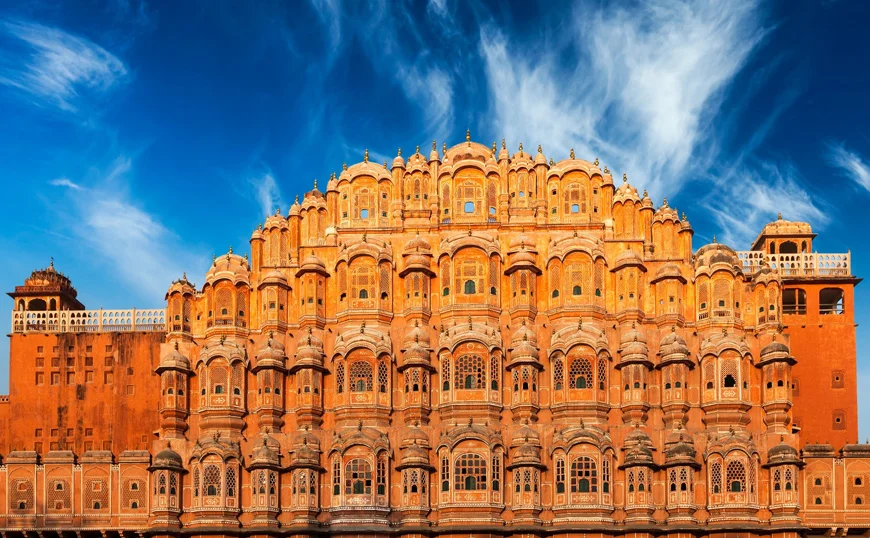
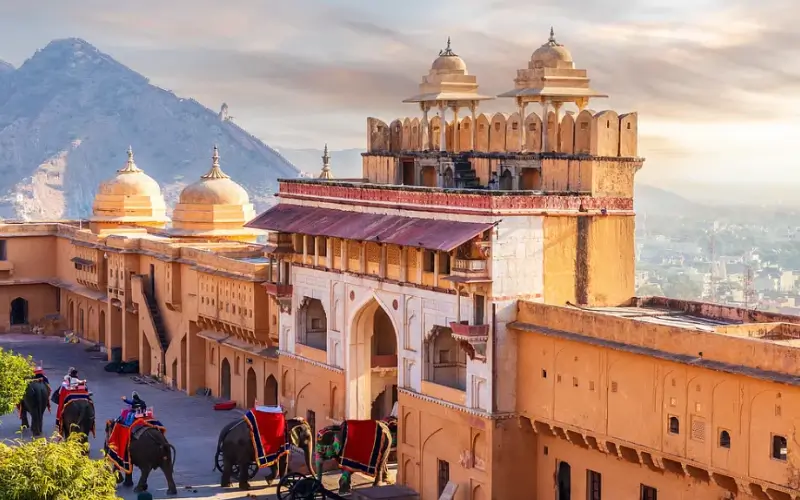
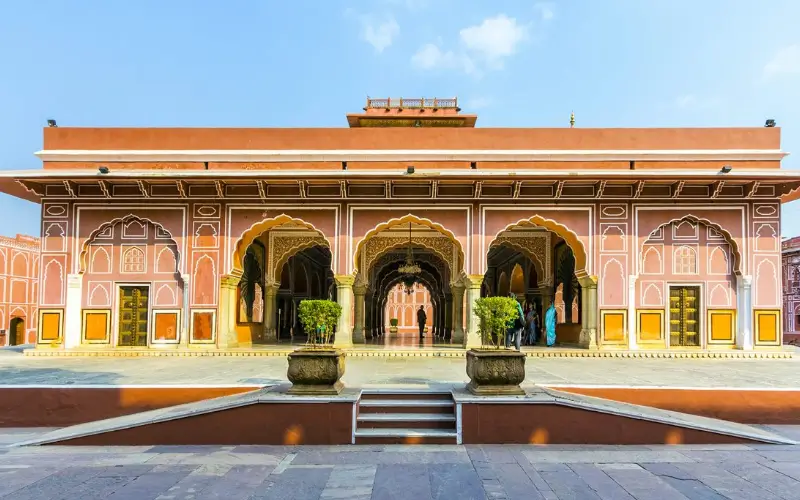
Within cities, a private car is useful in a different way. Children tire quickly in heat and crowds, and having the car waiting near each monument means you can stop when they need to. Jaipur's main sights, such as Amber Fort, the City Palace, Jantar Mantar and Hawa Mahal, are spread across about 15 km, and moving between them by car takes minutes rather than an exhausting walk. A private driver for families also acts as an extra pair of eyes when crowds are thick at places like the Taj Mahal's east gate or the markets around Johari Bazaar. Ask him to agree a meeting point with you at each stop, and give older children his phone number written on a card in their pocket.
Finally, pack the car for the day ahead. Keep water, snacks, wet wipes, hand sanitiser, a change of clothes for small children and a small first-aid kit in the cabin rather than the boot. Download films or audiobooks for longer drives, since mobile data can drop in rural stretches. Many drivers are excellent with children and will happily point out camels, peacocks and decorated trucks along the way, which helps the kilometres pass more easily.
Hotels are where Indian travel can be wonderfully family-friendly or quietly frustrating, depending on what you book. The first thing to know is that standard rooms in most Indian hotels are designed for two adults, sometimes with one child under five or six sharing existing beds at no charge. A third person over that age usually needs an extra bed, which costs INR 1,500 to 3,500 a night (about USD 18 to 42) in good hotels and is often a narrow folding bed. For a family of four with older children, this quickly becomes cramped.
The better options are family rooms in Indian hotels, connecting rooms, or suites. Family rooms usually have one king bed and two single beds, or two queen beds, with a larger bathroom. Connecting rooms are two standard rooms with an internal door, which gives parents privacy and two bathrooms, and they are especially useful with teenagers. Suites in heritage hotels often have a separate sitting room where children can sleep on sofa beds. Always ask for connecting rooms to be guaranteed in writing, because some hotels treat them as a request rather than a confirmation.
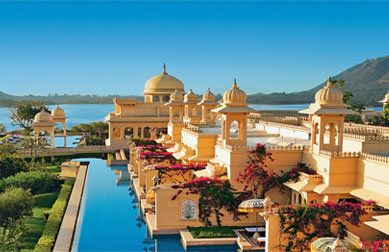
Prices on the higher side of the realistic range are as follows. In Delhi, a family room or two connecting rooms at a good four-star hotel costs INR 14,000 to 22,000 a night (about USD 168 to 264), while five-star properties such as the Taj, Oberoi or ITC hotels charge INR 28,000 to 45,000 (about USD 336 to 540) for connecting rooms. In Agra, four-star family rooms run INR 10,000 to 16,000 (about USD 120 to 192), and five-star rooms with Taj Mahal views INR 25,000 to 40,000 (about USD 300 to 480). Jaipur has the widest choice, with heritage mansion hotels offering family suites for INR 12,000 to 20,000 (about USD 144 to 240) and luxury palace hotels charging INR 35,000 to 70,000 (about USD 420 to 840). In Ranthambore, family cottages at good jungle resorts cost INR 15,000 to 28,000 (about USD 180 to 336) a night, usually including meals. Prices peak from mid-December to early January and around Diwali, so book family rooms three to four months ahead for those dates.
When choosing a hotel, look at more than the room. A swimming pool is worth a great deal to children after a hot morning of sightseeing, and in Rajasthan from March onwards it can be the highlight of the day. Check that the pool is open in the season you travel, since some close for maintenance in winter or have unheated water. Large gardens, a children's play area, and a restaurant serving simple food like pasta, toast, eggs and plain rice also help. Many Indian kitchens are happy to cook dishes without chilli for children, and you should ask on the first evening.
Location matters too. In Agra, staying within walking distance of the Taj Mahal's east gate means children can see it at sunrise without a long drive. In Jaipur, hotels near the old city save time but can be noisy, while properties on the edge of town have more space and gardens. In Delhi, Aerocity near the airport is convenient for late arrivals and early departures, but central Delhi is better for sightseeing days.
Lastly, check practical details: whether the hotel provides a cot for babies (usually free on request), a microwave or kettle for warming milk, a laundry service, and a doctor on call. Most four-star and five-star hotels in India offer all of these, but confirming them before you arrive avoids awkward conversations at reception after a long drive.
The Best Family Stories Begin with a Journey Together
From magnificent forts and colourful cities to unforgettable wildlife encounters, India offers experiences every generation can share.
Children remember India for its animals, colours and hands-on moments more than for its monuments, and a good family itinerary mixes both. One of the most popular kid-friendly experiences in Jaipur is a visit to an ethical elephant sanctuary near Amber, where families feed, wash and walk alongside rescued elephants rather than riding them. A half-day visit typically costs INR 4,500 to 7,000 per person (about USD 54 to 84), with lower rates for young children, and includes a simple meal. Choose a sanctuary that does not offer rides and that limits group sizes, and wear old clothes, because children inevitably end up soaked during the bathing time.
A Ranthambore tiger safari with children is another highlight. Safaris run twice a day in either a six-seat open jeep, known locally as a gypsy, or a 20-seat open canter. Children of all ages are allowed, but young children must be held on a lap or seated properly, and there is no age exemption from the rule of staying seated and quiet. Children under five generally do not need a separate permit, though forest department rules change, so confirm at the time of booking. Foreign visitors pay roughly INR 2,000 to 2,600 per person for a canter seat and INR 3,000 to 3,800 per person for a shared jeep seat, with a full private jeep costing considerably more. Morning safaris start around 6:30 to 7 AM in winter, so children need an early night. The three-and-a-half-hour drive in an open vehicle can be cold in December and January, so pack warm jackets, hats and gloves. Tiger sightings are never guaranteed, but deer, crocodiles, peacocks and monkeys almost always appear.
Camel rides are a gentle way to introduce children to the desert. Near Jaipur, short camel rides are available at village resorts and at Amber, while longer sunset rides are more atmospheric around Jaisalmer, Pushkar or the dunes near Osian outside Jodhpur. A 30 to 45 minute ride usually costs INR 800 to 1,500 per camel, and two people, or one adult and one child, can share. Make sure the camel has a proper saddle with a handle, and that the handler walks alongside for young children.
Cooking classes in Jaipur work well for older children and teenagers. Many family-run classes in the city teach a four or five course vegetarian meal over three hours, including flatbreads, curries, rice and a dessert, followed by eating everything you have cooked. Prices run INR 3,000 to 5,000 per person (about USD 36 to 60), and many hosts welcome children from about eight years upwards. Classes take place in a home kitchen, which also gives children a glimpse of daily life in an Indian family.
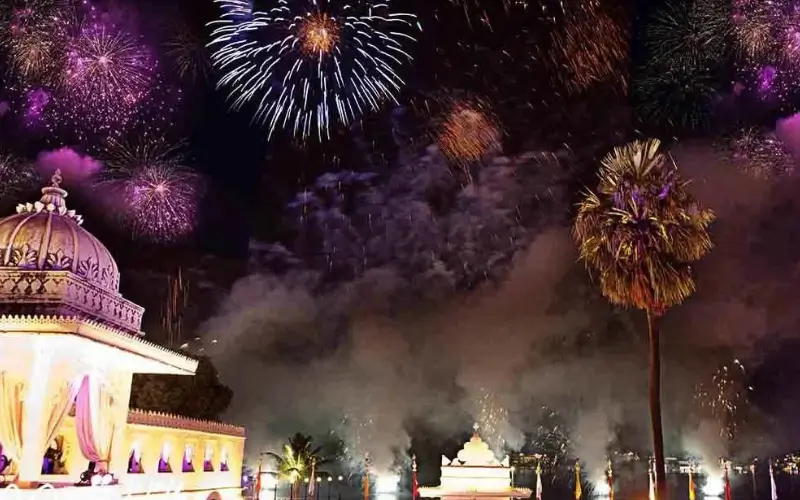
If you travel in mid-January, kite flying in Jaipur is an extraordinary experience. Around 14 January, the entire city takes to its rooftops for the festival of Makar Sankranti, and the sky fills with thousands of kites. Children can learn to fly kites from hotel terraces or with a local family, and the evening ends with fireworks and paper lanterns. Kites and strings are sold cheaply in the old city markets in the weeks before. Even outside festival time, a kite and a rooftop make a fun afternoon.
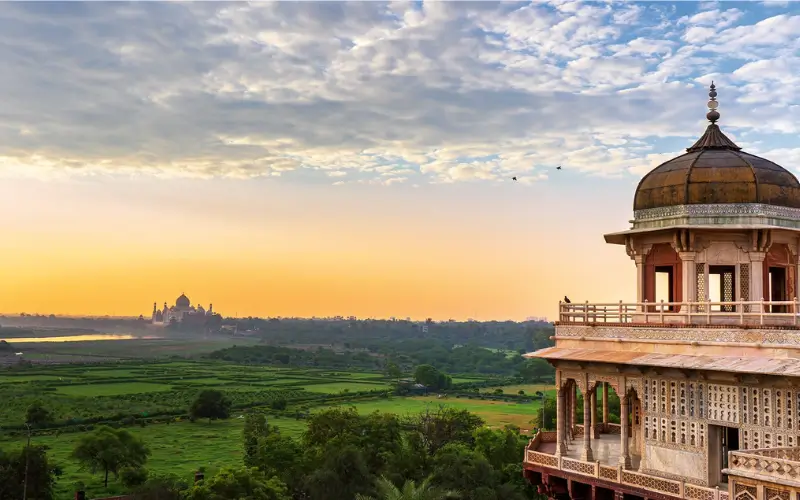
Other good choices for families include the light and sound show at Amber Fort in the evening, the giant instruments at Jantar Mantar, block-printing workshops in Sanganer and Bagru, puppet shows at heritage hotels, and the Agra Fort, whose ramps and courtyards children enjoy running through. Mix one monument with one hands-on activity each day, and children will stay curious rather than bored.
Health is the topic parents ask about most, and a few sensible habits cover nearly everything. Food safety for children in India starts with water: give children only sealed bottled water, check the cap seal every time, and use bottled water for brushing teeth. Avoid ice, raw salads and cut fruit from street stalls. Freshly cooked hot food, bread, rice, boiled eggs, bananas and fruits you peel yourself are generally safe. Hotel buffets are usually fine, but choose dishes that are steaming hot rather than lukewarm. Carry oral rehydration salts, a children's fever and pain medicine, and anything your doctor recommends for diarrhoea, and use hand sanitiser before every meal and snack.
Heat is the second risk. From April to June, Rajasthan regularly reaches 42 to 46°C, and even October and March can reach the mid-thirties. Children overheat faster than adults and do not always notice. Sightsee from 7 to 11 AM, rest at the hotel in the afternoon, and go out again after 4 PM. Dress children in loose cotton, wide-brimmed hats and high-factor sunscreen, and make sure they drink water every half hour. The best months for family holidays in India are October to March, when days are warm and evenings cool.
It helps to know where good hospitals are. In Delhi, Max Super Speciality Hospital in Saket, Indraprastha Apollo Hospital and Medanta in Gurugram offer international-standard care with English-speaking doctors. In Jaipur, Fortis Escorts Hospital and Narayana Multispeciality Hospital are reliable private options, and Agra has several private hospitals for urgent care, with serious cases often referred to Delhi. Your hotel can call a doctor to the room for minor issues, usually for INR 1,500 to 3,000. Full travel insurance with at least USD 100,000 of medical cover and evacuation is essential for every family member. The all-in-one emergency number is 112, and ambulances can be called on 108.
Here is a realistic 10-day family tour cost in India for two adults and two children, quoted on the higher side. A private Toyota Innova Crysta with an English-speaking driver for ten days on a Delhi, Agra, Ranthambore and Jaipur route costs about INR 55,000 to 65,000 (about USD 660 to 780), including fuel, tolls, parking and driver allowance. Nine nights in good four-star family rooms or connecting rooms come to roughly INR 1,30,000 to 1,80,000 (about USD 1,560 to 2,160), with breakfast. Monument entry for two foreign adults across the Taj Mahal, Agra Fort, Fatehpur Sikri, Amber Fort, City Palace, Red Fort and Qutub Minar is about INR 9,000 to 11,000, with children under 15 entering free at most Archaeological Survey of India sites. Two Ranthambore safaris add INR 12,000 to 16,000, local guides in three cities INR 6,000 to 8,000, and an elephant sanctuary visit and cooking class around INR 20,000 to 26,000 for the family. Meals outside the hotel average INR 4,000 to 6,000 a day. That brings the total to roughly INR 2,70,000 to 3,60,000, about USD 3,240 to 4,320, excluding international flights.
Heritage India Private Tours, based in Jaipur, arranges family tours with Innova, Tempo Traveller and Urbania vehicles, hotel bookings, local guides and child-seat requests, and the founder Magan Singh has driven families across Rajasthan for more than 27 years. To get a written family itinerary and quote, share your dates, the ages of your children and your preferred route on WhatsApp at +91 9799397401 or through the website enquiry form.
A Toyota Innova Crysta or Innova Hycross is the best fit. It seats up to six guests, has room for luggage and a stroller, and its rear air conditioning keeps children comfortable. A sedan can technically take four, but it becomes cramped with suitcases. Expect around INR 5,200 to 6,500 a day for an Innova with driver, fuel and tolls.
A Tempo Traveller is the standard choice for eight or more travellers. Layouts seat 9 to 18 guests, with high roofs and plenty of luggage space. The Force Urbania is a newer premium van for 10 to 15 guests with better seats and a quieter ride. One van keeps everyone together with one driver, which is easier than two cars.
Child seats are not standard in Indian taxis or tour cars. Some companies can arrange one with advance notice for INR 300 to 600 a day, but supply and fit vary. Bringing your own seat is safer for babies and toddlers, and most airlines carry it free. Tell your tour company in advance so the driver can help fit it.
Keep driving to around four to five hours a day with children under ten, and break the drive with a meal stop. Leave between 7 and 8 AM, when roads are quieter and children often sleep. Avoid night driving, and choose fewer cities with two or three nights in each rather than moving every day.
On the higher side, good four-star family rooms or connecting rooms cost INR 10,000 to 22,000 a night depending on the city. Five-star hotels charge INR 25,000 to 45,000 for connecting rooms, and palace hotels much more. Extra beds cost INR 1,500 to 3,500 a night. Book three to four months ahead for Christmas, New Year and Diwali.
Yes, children of all ages are allowed on canter and jeep safaris, though they must stay seated and quiet. Children under five generally do not need a separate permit, but confirm current forest department rules when booking. Morning safaris start early and can be cold in winter, so pack warm jackets, hats and snacks for the three-hour drive.
Freshly cooked hot food, bread, rice, eggs and fruit you peel yourself are usually safe. Give children only sealed bottled water, avoid ice and raw salads, and use bottled water for brushing teeth. Hotel kitchens will often cook mild dishes without chilli. Carry oral rehydration salts and use hand sanitiser before every meal.
October to March is the best season, with warm days and cool evenings across Delhi, Agra and Rajasthan. December and January mornings can be chilly, especially on open-vehicle safaris. April to June is very hot, often above 42°C in Rajasthan, which is hard on children. Mid-January brings Jaipur's kite festival, a highlight for families.
In Jaipur, Fortis Escorts Hospital and Narayana Multispeciality Hospital are reliable private options. In Delhi, Max Super Speciality Hospital in Saket, Indraprastha Apollo Hospital and Medanta in Gurugram offer international-standard care. Hotels can call a doctor for minor issues for about INR 1,500 to 3,000. Dial 112 or 108 in an emergency.
For two adults and two children on a Delhi, Agra, Ranthambore and Jaipur route, expect roughly INR 2,70,000 to 3,60,000, about USD 3,240 to 4,320, excluding flights. This covers a private Innova with driver, four-star family rooms with breakfast, monument fees, safaris, guides, activities and meals. Children under 15 enter most protected monuments free.