Chennai – Mahabalipuram – Pondicherry – Chettinad – Madurai – Kochi – Munnar – Alleppey
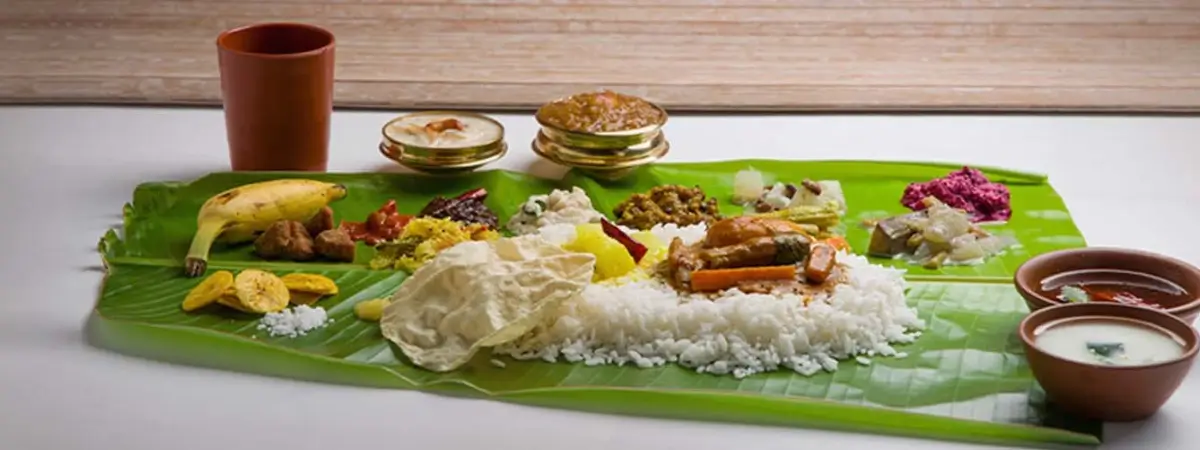
Breakfast in Tamil Nadu is a serious business, and it sets the tone for this South India Food and Culinary Experience Tour from the first morning, when a plate of soft idli, ghee-glazed pongal and a frothing cup of filter coffee arrives at a Mylapore tiffin hall before Chennai opens its shutters. Over twelve days you eat your way south and then west, from the temple-town kitchens of Chennai to the fishing coves of Mahabalipuram, the French-Tamil Creole tables of Pondicherry and the mansions of Chettinad, whose cooks are famous across India for heat, depth and freshly pounded spice. Madurai follows, with street food that keeps going well past midnight, before a flight carries you to Kochi and the Kerala leg: tea country around Munnar and a final night on the Alleppey backwaters. Every road section runs with a private car and driver, so the pace bends around meals.
Tasting is only half of it; you will also cook. There are four hands-on sessions built into the route: a Creole kitchen class in a Pondicherry family home, a Chettinad lesson where you grind masala on a granite stone, a Kerala seafood session in Fort Kochi, and a spice-garden lunch in the hills near Munnar. Local guides who actually eat in these places lead food walks in Chennai and Madurai, steering you to stalls that have perfected a single dish over decades, whether that is Burmese atho on a Chennai pavement or the cold, creamy jigarthanda drink of Madurai. Monuments come along naturally: the rock-cut shrines of Mahabalipuram, the Brihadeeswarar Temple at Thanjavur and the towers of Meenakshi Amman. Vegetarian, vegan and allergy needs are briefed to every cook in advance.
Tour Highlights
 Package Includes:
 Package Excludes:
Reply within 24hrs
Chennai International Airport sits in Meenambakkam, about 16 km south of the city centre, and our representative meets you at the exit with a name board after you clear immigration and customs. Many international flights land late at night, and the transfer to your hotel, roughly forty minutes outside rush hour, is arranged for whatever time you arrive. Your chauffeur hands over a small welcome kit with bottled water and a printed outline of the week's meals, along with a phone number that is answered around the clock. Check in and rest; the city is hot and humid for much of the year, so the first afternoon is best taken slowly.
If you land in daylight and feel ready for something light, a short drive to Besant Nagar takes you to Elliot's Beach, where families gather in the evening and vendors sell sundal, a warm salad of boiled chickpeas tempered with mustard seed, curry leaves and grated coconut, served in a cone of newspaper. Grilled corn rubbed with lime and chilli is another favourite here. It is a gentle introduction to the way Chennai snacks, and an easy one on a tired stomach. Dinner tonight is at your hotel or a nearby restaurant of your choice, and we suggest keeping it simple ahead of a full eating day tomorrow.
Overnight stay in Chennai.
Chennai wakes early, and so does today's Chennai food walk. Your guide meets you at 7 am in Mylapore, the old temple quarter, where tiffin halls have served the same breakfast menu for generations. You will try steamed idli with three chutneys, ven pongal studded with black pepper and cashew, crisp medu vada and, at a well-known mess near the temple, a ghee roast dosa the length of your forearm. Filter coffee here is brewed from a chicory blend and served scalding hot. Between plates you walk around the Kapaleeshwarar Temple, whose tank and painted gopuram are at their liveliest in the morning, and through the lanes selling jasmine garlands and brass lamps.
After a rest at the hotel, the afternoon turns to the city's other communities and their food. In George Town near the harbour, Tamil Burmese families who came back from Rangoon in the 1960s still run stalls serving atho, a tangle of noodles and shredded cabbage with tamarind and fried garlic, and mohinga, a fish-based noodle soup. In Sowcarpet, the Marwari and Gujarati quarter, you can sample kachori, sweet jalebi and spiced milk. The tour ends at Marina Beach as the sun drops, with a look at the Indo-Saracenic buildings along Kamarajar Salai, including the University of Madras and the Chepauk Palace.
Overnight stay in Chennai.
Leave Chennai after breakfast and drive south along the East Coast Road, which runs between the sea and a string of fishing villages, casuarina plantations and salt pans. About halfway, stop at DakshinaChitra, a heritage museum of rebuilt village homes from Tamil Nadu, Kerala, Karnataka and Andhra Pradesh, each moved here and reassembled piece by piece. It is closed on Tuesdays, so on those weeks we swap the visit for the Cholamandal Artists' Village. The kitchens inside the houses are especially useful for a food traveller, showing grinding stones, brass vessels and the wood-fired hearths still used in rural homes. Lunch at the on-site restaurant is served on a banana leaf, with rice, sambar, rasam and several vegetable poriyal.
Continue to Mahabalipuram, about forty minutes further, and check in at a beach resort. In the late afternoon, a local guide walks you through the Pallava monuments: the Shore Temple, built in the eighth century right at the water's edge, the great relief of Arjuna's Penance carved across two granite boulders, and Krishna's Butter Ball, a huge rock balanced on a slope. In the evening, head down to the fishing harbour, where the day's catch is sold straight from the boats. Several beach shacks will grill your choice of pomfret, prawns or squid with a masala of red chilli, turmeric and lime, served with rice and onion salad.
Overnight stay in Mahabalipuram.
Start with an early visit to the Five Rathas, monolithic temples each carved from a single outcrop of granite in the seventh century. They are quiet at opening time and the morning light suits the stone. The carvings of an elephant and a lion standing beside the shrines are among the finest early Pallava work. After breakfast, take the East Coast Road south toward Pondicherry. The route passes the backwaters of Muttukadu and the bird lakes near Alamparai, and your chauffeur can stop at a roadside stall for fresh palm fruit, known locally as nungu, which has a soft, jelly-like flesh and tastes faintly of coconut water.
You reach Pondicherry in time for lunch and check in at a heritage guesthouse in the French quarter, called White Town, where mustard and white villas line straight streets shaded by bougainvillea. The French held this town until 1954, and their influence shows on the plate. After lunch, walk the waterfront promenade along Goubert Avenue, visit the Sri Aurobindo Ashram and the Notre Dame des Anges church, and stop at a local bakery for a croissant or a slice of tarte au citron. In the evening, eat at a Creole restaurant where Franco-Tamil dishes such as prawn assad and chicken vadouvan curry appear on the same menu as steak frites.
Overnight stay in Pondicherry.
Goubert Market, Pondicherry's main produce market, is at its busiest between 7 and 9 am, and this morning a local guide takes you through it with a shopping list for your cooking class. You will see the fish hall, where seer, sardines and crabs are sold off ice, the spice traders with heaps of dried red chillies and tamarind, and the vegetable lanes selling drumsticks, snake gourds and bunches of fresh curry leaves. Your guide explains how Creole cooking in Pondicherry combines Tamil spices with French techniques, using ingredients such as vadouvan, a sun-dried blend of shallots, garlic and curry leaves fried with mustard seed and fenugreek.
The Pondicherry Creole cooking class takes place in the home of a family whose recipes go back several generations. Under the hostess's guidance you prepare a three- or four-course meal, perhaps a fish curry with coconut and green mango, a vadouvan chicken stew, a vegetable dish with lentils, and a caramel custard for dessert. You will eat what you cook together at the family table, often with stories about Pondicherry's mixed French and Tamil past. In the late afternoon, drive out to Auroville, about 12 km north, to see the golden Matrimandir from its viewing point and buy organic produce and bread at the bakery there.
Overnight stay in Pondicherry.
This long but rewarding day crosses the fertile Kaveri delta, the rice bowl of Tamil Nadu. Leave by 7.30 am and drive through Chidambaram, then on to Kumbakonam, a temple town famous for its degree coffee, made with milk that has been tested for purity with a lactometer. Small coffee shops along the road still brew it in brass filters and serve it in a steel tumbler and davara, and you will stop at one for a mid-morning cup and a plate of crisp rava dosa. The surrounding landscape is green and flat, crossed by irrigation canals and rows of coconut palms.
Lunch is in Thanjavur, followed by a visit to the Brihadeeswarar Temple, built by the Chola king Rajaraja I and completed around 1010. Its tower rises about 66 metres, and the capstone is said to weigh around 80 tonnes. Afterwards, continue south to Kanadukathan in the Chettinad region, arriving in the late afternoon. Chettinad is a cluster of villages built by the Nattukottai Chettiar merchant community, who grew rich trading in Burma, Malaya and Ceylon and built palatial homes with Burma teak pillars, Italian marble and Belgian glass. You stay in a restored Chettiar mansion for two nights.
Overnight stay in Chettinad.
Chettinad cooking is known throughout India, and today you learn why. After a breakfast of paniyaram, small rice-and-lentil dumplings cooked in a cast-iron mould, and kandharappam, a sweet fried cake, your hosts take you to the mansion kitchen for a Chettinad cooking class. The secret is in the spices, which are roasted and ground fresh for each dish: black pepper, fennel, cinnamon, star anise, dried red chillies and two local ingredients, kalpasi, a lichen known as stone flower, and marathi mokku, a dried flower bud. You will pound the masala on a granite grinding stone and cook a chicken or vegetable kuzhambu, a pepper fry and kavuni arisi, a sweet made from black rice.
After your lunch, walk through the streets of Kanadukathan with a local guide, visiting the grand mansions of the Chettiar families, many now empty or used only for weddings. The Chettinad Palace, built in 1912, is one of the largest. Then drive to Athangudi, where artisans still make the famous handmade cement tiles by pouring coloured pigments into moulds on glass and drying them in water. In the evening, browse the antique shops in Karaikudi, which sell old brass lamps, wooden doors, enamelware and Burmese lacquer boxes taken from the old homes. Dinner at the mansion is served on a banana leaf.
Overnight stay in Chettinad.
Leave Chettinad after a leisurely breakfast and drive to Madurai, arriving in time to check in and rest. In the afternoon, visit the Thirumalai Nayak Palace, built in 1636 with massive pillars and domes in a blend of Dravidian and Islamic styles, followed by a walk through the Puthu Mandapam, a pillared hall now filled with tailors and brass sellers. The Meenakshi Amman Temple is the heart of Madurai, and it closes in the early afternoon between about 12.30 pm and 4 pm, so we time your visit for the evening. Mobile phones and cameras are not allowed inside, and your guide will help you deposit them safely.
At around 7 pm, enter the temple through one of its four tall gopurams with a local guide to see the Hall of a Thousand Pillars and the Golden Lotus Tank, and stay for the night ceremony, when the god Sundareswarar is carried in a palanquin to Meenakshi's chamber. Then begin a Madurai night food walk. You will try kari dosai, a thick dosa topped with spiced minced mutton and egg; bun parotta, soft layered bread with salna gravy; and finish with jigarthanda, a chilled drink of milk, almond gum, sarsaparilla syrup and ice cream that locals swear by after a hot day. Vegetarian alternatives are always available.
Overnight stay in Madurai.
Start early with a visit to the Mattuthavani flower market, where jasmine, the famous Madurai malli, is sold by weight and strung into garlands by hand, filling the hall with its scent. Then transfer to Madurai airport for your flight to Kochi, which usually connects via Chennai or Bengaluru as direct services are limited. Your Kerala chauffeur meets you at Cochin International Airport and drives you about an hour to your hotel in Fort Kochi. The change of scene is immediate: coconut palms, low tiled roofs, and a cuisine built around coconut, curry leaves and fish rather than the dry spice blends of Tamil Nadu.
In the late afternoon, walk to the Fort Kochi beach, where you can buy fish straight from the Chinese fishing nets and have it cooked at one of the nearby stalls. Then join a Kerala seafood cooking session in a family home in Fort Kochi. Your host teaches you to make meen pollichathu, fish marinated in a spicy masala and steamed in a banana leaf, a prawn curry thickened with coconut milk and kudampuli, a smoked fruit used for sourness, and a simple cabbage thoran with grated coconut. Dinner is the meal you cook, eaten together with your hosts and often accompanied by a story or two about the town.
Overnight stay in Kochi.
Spend the morning in Mattancherry, Kochi's old trading district, with a local guide. Walk along the lanes past spice warehouses, antique shops and the Dutch Palace, which is closed on Fridays and contains some of the finest temple murals in Kerala. The Jewish quarter is home to small cafes and craft shops, and the morning is a good time to watch the merchants weighing spices. Before leaving the city, stop for an early lunch at a well-known Mattancherry restaurant serving Kochi-style biryani, made with short-grained kaima rice, fried onions and mutton or chicken cooked slowly with whole spices, quite different from the biryanis of Hyderabad or Lucknow.
After lunch, drive east into the Western Ghats to Munnar. The road climbs steadily past Neriamangalam and the Cheeyappara and Valara waterfalls, then through cardamom and pepper plantations before reaching the tea gardens. Check in at a hillside hotel, then visit a small family spice garden on the outskirts of town, where the owners show you cardamom, pepper, nutmeg, cinnamon and vanilla growing together. The visit ends with a home-cooked Kerala meal of rice, avial, olan, sambar and pappadam, served on a banana leaf with buttermilk and payasam. Evenings in Munnar turn cool quickly, so keep a light jacket handy.
Overnight stay in Munnar.
Rise early for a guided walk through the tea gardens near your hotel, when the light is soft and the pickers are beginning their day. Your guide explains how tea is plucked by hand, two leaves and a bud, and how the leaves are processed at a nearby factory. If time allows, stop at a tea factory with a tasting room for a quick sampling of Munnar's black teas. Then set off for Alleppey, leaving Munnar by about 8 am. The drive descends through Adimali and Kothamangalam, past rubber plantations and paddy fields, to the backwater country of Kuttanad, a region largely below sea level.
You reach the jetty in Alleppey by early afternoon and board your private houseboat, a converted rice barge with bedrooms, a lounge and a dedicated crew. The cook prepares lunch on board, typically red rice, karimeen fish fry, a vegetable curry and pickle, followed by evening tea with banana fritters and a fish or chicken dinner. The boat cruises through narrow canals and wide lakes, passing villages where life revolves around the water: ducks herded along the banks, women washing clothes, boys fishing from small canoes. You can visit the galley to watch the cook at work and ask for recipes.
Overnight stay in Alleppey.
Wake on the houseboat to the sounds of the backwaters, with birds calling and small country boats gliding past. Breakfast is served on deck, usually appam with egg roast or puttu with kadala curry, a black chickpea curry that is a Kerala staple. The houseboat returns to the jetty by about 9 am, where your chauffeur is waiting with the car. If your flight is in the afternoon or evening, there is time for a short stop at a toddy shop in the villages near Alleppey, which serves spicy fish curry and tapioca. Your chauffeur can also stop at a store to buy coconut oil, banana chips and spices to take home.
The drive to Cochin International Airport takes about two hours through Cherthala and the busy Kochi suburbs; allow more time during the evening rush. Your chauffeur will help with luggage at the terminal, and our team in Jaipur stays in touch until you are checked in for your flight. Over twelve days you will have cooked with families in Pondicherry, Chettinad, Kochi and Munnar, eaten from banana leaves, pavement stalls and a houseboat galley, and learned how geography, trade and history shaped the food of the South. Pack your recipe notes carefully. Our team wishes you a safe journey home.
Hear what our happy guests say about their India adventures! From private drivers to guided tours, we make every journey smooth, safe & unforgettable.
 rating score: 5.0 of 5, based on 448 reviews

Complete our inquiry form

Customize your itinerary

Confirm when you're satisfied
1-to-1 Service | Reply within 24hrs | Expert's Advice