Delhi - Agra - Jaipur - Ranthambore - Udaipur - Kochi - Kumarakom - Mumbai
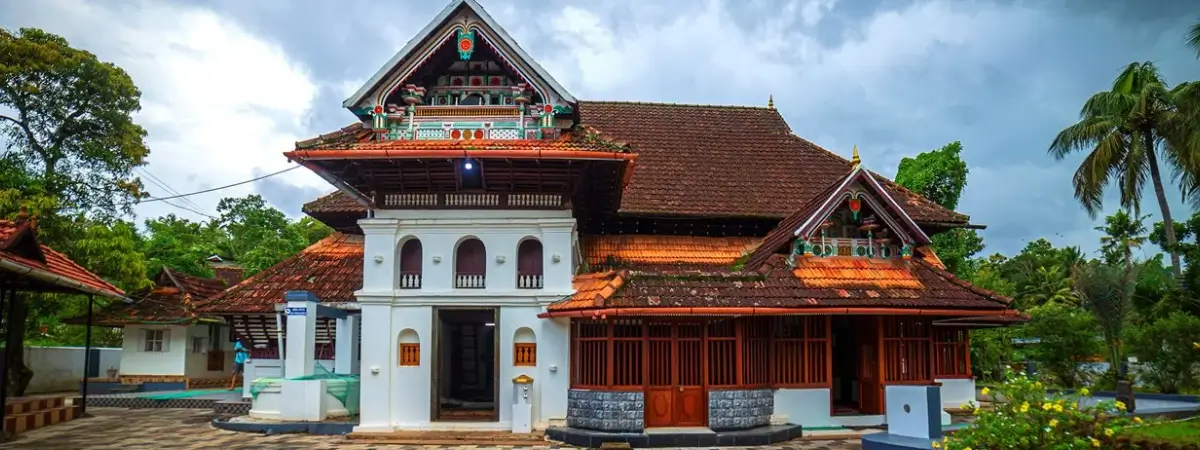
Mughal marble, a tiger on a forest track, a palace floating in a lake and a rice barge drifting through coconut palms: few itineraries manage all four, and our Luxury India Grand Discovery Tour with Taj and Oberoi Stays was built to do exactly that in eighteen days. It starts in Delhi and Agra, crosses Rajasthan to Jaipur, the tiger reserve of Ranthambore and the lakes of Udaipur, then flies south to the spice port of Kochi and the backwaters of Kumarakom before finishing in Mumbai. Every night is spent in a hotel run by either the Taj group or Oberoi, the two names that have set the standard for Indian hospitality for over a century, from the Rambagh Palace in Jaipur to the Amarvilas, where every room looks at the Taj Mahal.
The northern half of the tour runs by private car and driver, so the Rajasthan stretch moves at your speed, with stops at stepwells, village tea stalls and fort viewpoints that a fixed schedule would miss. Your English-speaking chauffeur stays with you from Delhi to Udaipur, and expert local guides join you in each city and inside the national park. From Udaipur, domestic flights carry you to Kerala and then on to Mumbai, with a fresh car and driver waiting at each airport. The contrast is the whole point of a grand India tour: desert forts and dry teak forest in the first week, green canals, Chinese fishing nets and Kathakali dancers in the second, and the Art Deco seafront of Mumbai to close.
Tour Highlights
 Package Includes:
 Package Excludes:
Reply within 24hrs
Welcome to India. Once you clear immigration and customs at Indira Gandhi International Airport, our airport representative is waiting just outside the arrivals exit, where only passengers are allowed, so look for your name on a printed board. A short walk takes you to the car park, and your chauffeur, who will drive you all the way to Udaipur, loads the luggage into a spacious air-conditioned car. The drive into central Delhi follows the wide avenues of the Aerocity and Dhaula Kuan roads and takes about forty-five minutes at quiet hours. Local SIM cards and currency exchange can be arranged on the way if you need them.
Your first two nights are at The Taj Mahal Hotel on Mansingh Road, our usual choice, a short walk from India Gate and the green lawns of Lutyens' Delhi. The lobby is decorated with Mughal-style murals, and the hotel's House of Ming is a long-standing Delhi favourite for Cantonese and Sichuan dishes. We leave this evening free so that you can sleep off the flight, but if you arrive early and want some fresh air, the Lodhi Garden is ten minutes away and is full of joggers, families and fifteenth-century tombs in the late afternoon. Your chauffeur is on call if you would rather ride there. Overnight stay in Delhi.
Your guide meets you after breakfast for a full day across the two Delhis. In the old walled city of Shahjahanabad, you begin at the Jama Masjid, the largest mosque in India, where visitors climb the red sandstone steps to a courtyard that can hold twenty-five thousand people. From its gate, a cycle rickshaw winds into Chandni Chowk, past wedding card shops, silver merchants and the Gurudwara Sis Ganj, to the Red Fort, built by Shah Jahan in the 1640s. Inside, the Diwan-i-Aam was where the emperor heard petitions, and the Rang Mahal once had a channel of rose-scented water running through its floor. Please note that the Red Fort is closed on Mondays.
After lunch in a hotel restaurant, the afternoon moves to New Delhi. The car drives down Kartavya Path from Rashtrapati Bhavan to India Gate, then stops at Gurudwara Bangla Sahib, where volunteers in the vast kitchen prepare free meals of dal, roti and kheer for thousands of people every day; you are welcome to help roll chapatis. End the day at the Raj Ghat memorial to Mahatma Gandhi, a simple black marble platform set in calm lawns, before returning to the hotel. Shoes are removed at the memorial, and the grounds stay peaceful even on busy days. Overnight stay in Delhi.
After a relaxed breakfast, the car takes the Yamuna Expressway south-east, a six-lane road that has cut the journey to Agra to under four hours. If you would like a break, your chauffeur can stop at Vrindavan, about two hours along, where the newly built Prem Mandir is lined with white marble scenes from the life of Krishna. Otherwise you arrive in Agra in time for lunch and check in to The Oberoi Amarvilas, our usual choice, standing just 600 metres from the Taj Mahal, with terraced fountains and pavilions inspired by Mughal gardens. Butlers unpack for you, and lunch is served on the terrace by the pool.
In the afternoon, your guide takes you to Agra Fort, a red sandstone citadel built by Akbar in 1565 and later decorated with white marble by his grandson Shah Jahan. Walk through the Amar Singh Gate, the courtyards of the Jahangiri Mahal with their Hindu-style brackets, and the Khas Mahal, where the white marble pavilion faces the river. Return to the hotel in time for sunset, when the Taj Mahal seen from the Amarvilas bar terrace changes colour, and dinner at Esphahan, the hotel's North Indian restaurant, is served with live santoor music, played softly through the meal. Overnight stay in Agra.
The Oberoi Amarvilas has its own electric cart to the east gate of the Taj Mahal, which saves a long walk at dawn. Meet your guide in the lobby before sunrise, carrying only your phone, camera and passport, because large bags, food and tripods are not allowed inside. As the main gate frames the tomb, you will see why Shah Jahan's architects shifted the four minarets slightly outwards; if one ever fell, it would fall away from the main dome. Your guide will show you the jasmine and tulip inlay on the cenotaph screens. The Taj Mahal is closed on Fridays, and our dates are set to avoid that.
Back at the hotel for a late breakfast by the pool, the morning is free until around three. Then drive north for twenty minutes to Sikandra, where Akbar himself lies in a tomb he began designing during his lifetime. The gateway is decorated with bold geometric inlay of white, black and yellow stone, and spotted deer and langurs wander through the large garden around it. On the way back, stop at Kinari Bazaar for petha, the translucent Agra sweet made from ash gourd, which comes in more than twenty flavours, from plain white to saffron and coconut. Overnight stay in Agra.
Today the route crosses into Rajasthan, and rather than following the usual road via Fatehpur Sikri, we take you on a slight detour to Abhaneri. The village is home to Chand Baori, a ninth-century stepwell reaching down thirteen storeys with around 3,500 narrow steps arranged in perfect triangles. Beside it, the ruined Harshat Mata temple still carries fine stone carvings of musicians and dancers. Your guide explains how stepwells collected monsoon rain and offered a cool place to gather in summer, which is why people still call them the community halls of the desert. The site is small and rarely crowded, so photographs are easy.
The last two hours follow the highway to Jaipur, arriving in the late afternoon at Rambagh Palace, our usual choice and part of the Taj group. Built in 1835 as a garden house for a royal servant, it was turned into a hunting lodge and then the home of Maharaja Sawai Man Singh II and Maharani Gayatri Devi until 1957. Peacocks walk the forty-seven acres of lawns, and the Steam bar sits inside a restored steam locomotive. Take an evening drink on the Verandah while the hotel staff perform the traditional sunset ritual of welcome, with shehnai music on the lawns. Overnight stay in Jaipur.
Your Jaipur day begins with the drive north past the Jal Mahal water palace to Amber Fort, where we prefer a jeep up the ramp to the Jaleb Chowk rather than an elephant ride. Inside, the guide points out the Sukh Niwas, where water once ran through channels in the walls to cool the air, and the Diwan-i-Aam with its double row of columns. From Amber, a short drive takes you up to Jaigarh Fort, which houses the Jaivana, said to be one of the largest cannons on wheels in the world, cast here in 1720 and fired just once.
After lunch at Rambagh, head into the walled city for the City Palace museum, where the Mubarak Mahal holds royal costumes, including the robe of Sawai Madho Singh I, who was said to be over two metres tall, and two huge silver urns in the Diwan-i-Khas that carried Ganges water to London in 1902. From there, step out to see the honeycomb front of Hawa Mahal and finish at Johari Bazaar for gemstones and enamel work. In the evening, dinner at Suvarna Mahal, the old royal dining hall at Rambagh, is a fitting end to the day. Overnight stay in Jaipur.
Leave Jaipur after breakfast for the drive south-east to Sawai Madhopur, the town at the edge of Ranthambore National Park. The road passes through mustard and wheat fields and small towns such as Tonk and Chaksu, and your chauffeur can stop at a roadside stall for a glass of fresh sugarcane juice. You arrive in time for lunch at The Oberoi Vanyavilas, our usual choice, where guests stay in luxury tents with teak floors and claw-foot bathtubs, set in a twenty-acre garden filled with mango and lemon trees. The afternoon gives you time to settle in and rest before the first drive into the forest.
At around half past two, your naturalist meets you in the lobby for your first afternoon safari in a private six-seat jeep, subject to availability of zones allocated by the forest department. Ranthambore is a dry deciduous forest of dhok trees, banyan and lakes, and it is one of the best places in India to see Bengal tigers in daylight. Besides tigers, look for sambar deer, spotted deer, wild boar, marsh crocodiles in the Padam Talao lake and the leopard that sometimes hunts in the rocky hills. Return to the camp at dusk for a bonfire under the stars. Overnight stay in Ranthambore.
The wake-up call comes early, with tea and biscuits brought to your tent before the morning drive departs at around six in winter and earlier in summer. Morning safaris are often the most rewarding, as tigers walk the forest tracks to patrol their territories and cool off in waterholes. Your naturalist listens for alarm calls from langur monkeys and sambar deer, which often give away a hidden tiger. Each safari lasts about three hours, and you return to Vanyavilas for a large breakfast on the terrace. Binoculars are provided in every jeep, and your naturalist keeps a record of the animals you see.
Late in the morning, before the heat builds, drive to the gate of Ranthambore Fort, a UNESCO-listed hill fort inside the park, dating from the tenth century. Climb the steps to the Ganesh temple, where local families send wedding invitations addressed to the god by post, and look down on the lakes and forest from the walls. After lunch and a rest, your second safari of the day goes out in the afternoon to a different zone. In the evening, the hotel can arrange a talk by a naturalist on Project Tiger and the park's famous tigresses. Overnight stay in Ranthambore.
Today is a long road day, so an optional early safari is best skipped and we leave after breakfast at eight. The drive heads through the Hadoti region via Bundi to Chittorgarh, about four and a half hours away. The fort here is the largest in India, spread across a 180-metre-high plateau, and it saw three famous sieges in which the Rajput women chose death in fire, known as jauhar, rather than capture. Your guide shows you the nine-storey Vijay Stambha victory tower, the Padmini Palace beside its pool, and the Meera temple. Wear good walking shoes, as the ruins are spread out over a large area.
After a late lunch at a heritage hotel in Chittorgarh, the road continues through the Mewar countryside for two more hours to Udaipur. At the Lake Palace jetty, a boat takes you across Lake Pichola to Taj Lake Palace, our usual choice for three nights, a white marble palace built in 1746 as a royal summer retreat and covering a whole island. Your butler welcomes you with rose petals falling from the rooftop, a ceremony once used to greet the Maharana. Dinner is served at Neel Kamal, which specialises in Rajasthani and Mewari royal recipes such as safed maas and ker sangri. Overnight stay in Udaipur.
After a calm breakfast on the island, the hotel boat takes you to the mainland, where your guide begins the morning at the City Palace. On this visit, focus on the Fateh Prakash Palace and its Durbar Hall, with crystal chandeliers and portraits of Mewar rulers, and the Badi Mahal, a raised garden courtyard built on top of a natural hill inside the palace. The view of Taj Lake Palace from the windows is a fine reminder of where you sleep. Later in the morning, visit the Vintage and Classic Car Collection in the old royal garage, with Rolls-Royce models still used by the family.
After lunch, rest at the hotel and enjoy the spa, which offers treatments in a boat on the lake. Around four, your chauffeur drives you up to Sajjangarh, the Monsoon Palace, built in 1884 on a hilltop five kilometres west of the city to watch the rain clouds roll in. From the walls, you look over the lakes, the Aravalli hills and the city at sunset. Back on the island in the evening, the hotel can arrange a private dinner on the Mewar Terrace or on the pontoon in the water, with candles and a private waiter. Overnight stay in Udaipur.
Today is a full-day excursion north into the Aravalli hills, through tribal villages, mango orchards and ancient water tanks. Kumbhalgarh was built by Rana Kumbha in the fifteenth century, and its wall runs for 36 kilometres over the hills, the second-longest continuous wall in the world after the Great Wall of China. Your guide leads you through seven gates to the Badal Mahal, the palace of the clouds, at the top. Here, Maharana Pratap, the most celebrated hero of Mewar, was born in 1540. More than 360 temples lie inside the walls. The climb is steady rather than steep, and your guide stops often to rest in the shade.
After lunch at a resort near the fort, the drive back to Udaipur may include a stop at a farm where you see oxen pulling water from a Persian wheel well, still used in some villages. You are back on Lake Pichola by late afternoon, in time for a sunset boat tour that passes Gangaur Ghat, the Jag Mandir island and the Lal Ghat, where women wash clothes at the water's edge. Your last dinner in Rajasthan can be at Bhairo, the rooftop restaurant at the Leela, or at the Lake Palace with live sitar music. Overnight stay in Udaipur.
This morning you say goodbye to your chauffeur, who will drop you at Udaipur's Maharana Pratap Airport for your flight south. There are no non-stop flights between Udaipur and Kochi, so the trip connects through Mumbai or Bengaluru and takes about five to six hours in total. As the aircraft lands in Kochi, you see a completely different India below: green coconut palms, lagoons and red-tiled roofs. Our Kerala representative meets you at the airport with a new car and English-speaking driver for the next five days. The air is warm and humid after Rajasthan, so keep a light shirt handy.
The drive to Willingdon Island, an artificial island built in the 1930s from material dredged from Kochi harbour, takes about an hour. You stay two nights at the Taj Malabar Resort and Spa, our usual choice, on the tip of the island facing the harbour. In the evening, the hotel's sunset cruise takes you on a traditional boat past container ships, fishing boats and the Chinese fishing nets of Fort Kochi. Dinner at the Rice Boat restaurant, inside a converted rice barge, serves Kerala seafood such as karimeen pollichathu, pearl spot fish cooked in banana leaves. Overnight stay in Kochi.
Your Kochi guide meets you after breakfast for a walk through Fort Kochi, where Portuguese, Dutch and British traders all left their mark. Start at the beach, where the Chinese fishing nets, introduced by traders from the court of Kublai Khan, are lowered and raised by a team of fishermen using counterweights of stone. Walk to St Francis Church, the oldest European church in India, where Vasco da Gama was first buried in 1524, then to the Santa Cruz Basilica with its painted ceiling, and the Dutch Cemetery. The streets are flat and shaded with old rain trees, making this an easy and pleasant walk.
In the afternoon, drive to Mattancherry for the Dutch Palace, which holds some of the finest Hindu temple murals in Kerala, showing scenes from the Ramayana, and the Paradesi Synagogue in Jew Town, built in 1568 and floored with hand-painted blue Chinese tiles. Note that the synagogue is closed on Fridays, Saturdays and Jewish holidays, and the palace is closed on Fridays. Spend time in the spice warehouses of Bazaar Road, then attend a Kathakali dance at the Kerala Kathakali Centre, arriving early to watch the actors apply their elaborate green make-up, which takes more than an hour. Overnight stay in Kochi.
A gentle morning, with time for a swim or a walk along the Willingdon Island waterfront before checkout. Your driver then takes you south-east past the city of Kochi into rural Kerala, with rice paddies, rubber trees and small churches and temples along the road. The landscape opens up as you approach Vembanad, the longest lake in India, fed by canals and rivers that flow down from the Western Ghats. You arrive at Taj Kumarakom Resort and Spa, our usual choice, in time for lunch. Your rooms look over the water or the gardens, and the staff will greet you with fresh coconut water.
The resort is built around a nineteenth-century Dutch-style bungalow, one of the oldest in Kerala, with lily ponds, coconut groves and a pool on the lake shore. Rooms are in heritage villas, some with private pools. In the afternoon, take a short country canoe ride through the narrow village canals, where you can see families washing dishes at the water's edge, children rowing to school, and farmers harvesting rice in the paddies below sea level. Back at the resort, the sunset over Vembanad Lake is a fine introduction to the slower pace of the backwaters, where nobody is in a hurry. Overnight stay in Kumarakom.
Early risers should walk to the Kumarakom Bird Sanctuary next to the resort, which opens at six in the morning, when birds are most active. A naturalist guide points out cormorants, darters, kingfishers, egrets and herons nesting in the mangroves, and in winter, migratory birds arrive from as far as Siberia. Back at the resort, have breakfast, and at around eleven board a private kettuvallam, a traditional rice barge built of jackwood and coconut fibre rope without using a single nail, now fitted with a lounge deck. The boat is yours alone for the day, with soft drinks and fruit kept cold on board.
Your houseboat crew includes a captain and a cook, who prepare a Kerala lunch on board: fish curry with tamarind, avial with mixed vegetables in coconut, thoran, rice and banana fritters. The cruise drifts across Vembanad Lake and into the smaller canals, past toddy tappers climbing palms and ducks herded along the water. You return to the resort in the late afternoon in time for an Ayurvedic massage at the Jiva Spa, perhaps an abhyanga with warm herbal oil, and a seafood dinner at the resort's lakeside restaurant, where the catch of the day is grilled to your taste. Overnight stay in Kumarakom.
After breakfast, your driver takes you to Kochi International Airport, the first airport in the world to run entirely on solar power, for your flight to Mumbai, which takes about two hours. Domestic baggage limits are lower than international ones, so pack any heavy shopping carefully. Our Mumbai representative meets you at the arrivals gate with a car and driver. The drive into the city crosses the Bandra–Worli Sea Link and follows the coastline to Nariman Point, the business district at the southern tip of the city. It is a different world from the quiet backwaters you left this morning.
You stay two nights at The Oberoi, Mumbai, our usual choice, where every room has floor-to-ceiling windows looking over the Arabian Sea. After checking in, walk along Marine Drive, the three-kilometre seafront promenade lined with Art Deco buildings from the 1930s and 1940s, which form part of a UNESCO World Heritage Site together with the Victorian Gothic buildings across the Oval Maidan. At sunset, join the families and couples sitting on the sea wall, and then try Mumbai street food such as bhel puri and pav bhaji at Chowpatty Beach with your guide's hygiene-safe recommendations, finished with a kulfi from a beachside stall. Overnight stay in Mumbai.
The ferry to Elephanta Island leaves from the Gateway of India, and it takes about an hour to cross the harbour. Please note that the caves are closed on Mondays. On the island, a short climb of about 120 steps leads to the main cave, carved from basalt rock in the sixth century, where the six-metre-high Trimurti sculpture shows three faces of Shiva as creator, preserver and destroyer. Your guide explains the carved panels of Shiva's marriage to Parvati and the descent of the Ganges, and you return to the mainland for lunch at a seafood restaurant in Colaba, where bombil fry and prawn gassi are the dishes to order.
In the afternoon, visit Mani Bhavan, where Gandhi stayed between 1917 and 1934, now a small museum with letters, photographs and his spinning wheel. Afterwards, view the Mahalaxmi Dhobi Ghat from the bridge above, where hundreds of washermen beat laundry on stone slabs in rows of open concrete pens. Finish at the Haji Ali Dargah, a white mosque on a small island reached by a causeway only at low tide. A farewell dinner in one of the sea-facing restaurants at The Oberoi or Wasabi by Morimoto at the Taj Mahal Palace brings the tour to a close in fitting style. Overnight stay in Mumbai.
Today is your final day, and the hotel can arrange late checkout for an evening or overnight flight, subject to availability. Use the morning for a last walk on Marine Drive, a visit to the Jehangir Art Gallery in Kala Ghoda, or shopping for Indian designer clothing at the Good Earth store at Kala Ghoda or at the Palladium Mall in Lower Parel. Your driver will collect you from the hotel at the agreed time, about three to four hours before your international flight, because traffic in Mumbai can be heavy at any hour. Our team will call to confirm the pickup time the evening before.
The drive to Chhatrapati Shivaji Maharaj International Airport takes about an hour, using the coastal road and the Sea Link. Your driver helps you to the terminal door with your bags. Over eighteen days, you have travelled from the Mughal cities of the north through the Rajput forts and tiger forests of Rajasthan to the green waterways of Kerala and the seafront of Mumbai, staying in some of the finest Taj and Oberoi hotels in the country. Magan Singh and the team in Jaipur thank you for travelling with Heritage India Private Tours and wish you a safe flight home.
Hear what our happy guests say about their India adventures! From private drivers to guided tours, we make every journey smooth, safe & unforgettable.
 rating score: 5.0 of 5, based on 448 reviews

Complete our inquiry form

Customize your itinerary

Confirm when you're satisfied
1-to-1 Service | Reply within 24hrs | Expert's Advice