Chennai - Kanchipuram - Pondicherry - Karaikudi - Chettinad Villages - Madurai - Pollachi - Munnar - Kochi - Kumarakom - Alleppey - Kochi
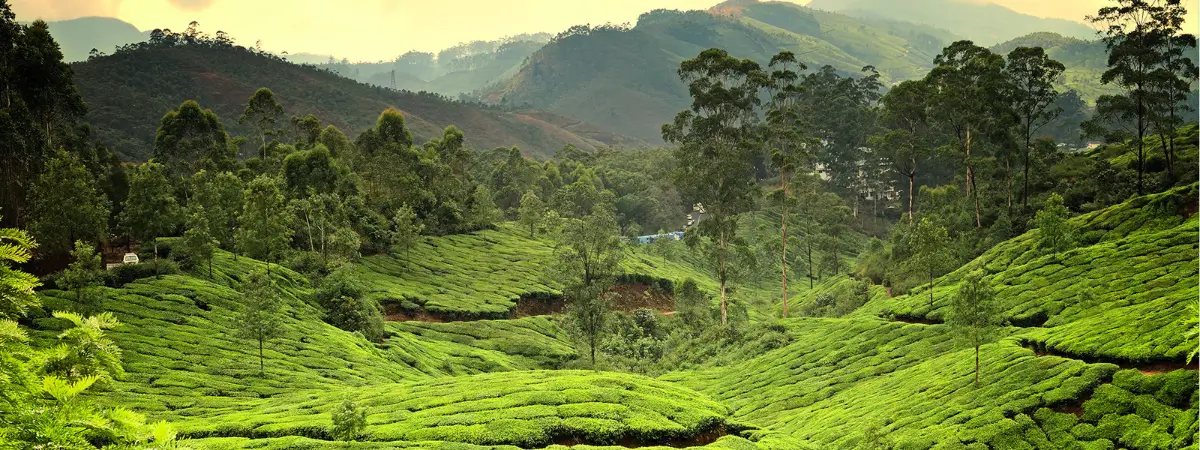
Most visitors see South India through its big temple towns and beach resorts, yet the region's real character lives in its villages: the loom sheds of Kanchipuram, the tile yards of Athangudi, the coconut groves of Pollachi and the paddy polders of Kuttanad. Our South India Offbeat Villages and Local Culture Tour spends twenty-five unhurried days moving between those places, from the Tamil coast across the Western Ghats to the Kerala backwaters. You will sit with weavers, potters, tea pluckers, toddy tappers and temple cooks, eat in family kitchens, and sleep in a restored Chettiar mansion, a coconut farmstay and a houseboat. Big sights are still part of the route, including the Meenakshi temple in Madurai and the Dutch Palace in Kochi, but they are balanced with quiet mornings in places few itineraries bother to stop.
Every kilometre is covered in a private car and driver arrangement, with an air-conditioned vehicle and an English-speaking chauffeur who stays with you from the Chennai airport arrival to the final drop at Kochi airport. Road days are kept sensible, rarely beyond five hours, and broken with lunch at a local mess or a roadside shrine visit. In each region we add a local guide who knows the families and workshops personally, which is how doors open to a Kandangi sari loom or a jaggery boiling shed. The pace suits curious travellers who prefer conversations to checklists, and the South India village tour format leaves free afternoons for reading on a veranda, walking a temple tank at dusk, or simply watching a market wake up. Heritage India Private Tours handles every booking, transfer and timing detail behind the scenes.
Tour Highlights
 Package Includes:
 Package Excludes:
Reply within 24hrs
Your chauffeur waits in the arrivals hall at Chennai International Airport with a name board, a chilled bottle of water and the car parked a short walk away. The drive into the city takes forty minutes to an hour depending on traffic along GST Road, and on the way he will point out the first signs of Tamil daily life: kolam patterns drawn in rice flour at doorsteps, roadside tender coconut sellers, and auto-rickshaws painted with film stars. Check-in at the hotel is smooth, as we send your passport details ahead, and the rest of the day belongs to you. Long-haul flights into Chennai often land late at night or early morning, so we deliberately leave this first day open.
If you have energy in the evening, walk down to Elliot's Beach in Besant Nagar, where local families gather to eat sundal, a spiced chickpea snack served in paper cones, and watch the fishing boats pulled up on the sand. The Ashtalakshmi Temple at the beach's southern end is lit after dark and open to visitors. Dinner can be a simple banana-leaf meal at a local restaurant, which your chauffeur is happy to suggest, or something quiet at the hotel. Before turning in, take ten minutes to read through the welcome folder we leave at reception, which lists your guide contacts, timings for the next two days and a short note on temple dress etiquette.
Overnight stay in Chennai.
The morning starts early in Mylapore, the oldest living neighbourhood of Chennai, with your local guide meeting you outside the Kapaleeshwarar Temple. Arrive around seven and you will find priests performing the first puja, women buying jasmine strings at the east gate and the temple tank reflecting the painted gopuram. From there the walk winds through the narrow lanes of North Mada Street, past Carnatic music schools, brass lamp shops and a hundred-year-old pickle store. Breakfast is at a crowded tiffin house, where filter coffee is poured back and forth between tumbler and davara until it froths. Your guide will show you how to order idli, pongal and vada like a regular.
Late morning, drive past San Thome Basilica, built over the tomb of the apostle Thomas, and on to George Town, the trading district behind the High Court. Here the wholesale markets of Parry's Corner sell everything from dried chillies to wedding garlands, and the lanes of Kothawal Chavadi still carry the smell of spice sacks. Fort St George and its museum are worth a look, though the museum is closed on Fridays, so we adjust the order on that day. In the evening join the families strolling along Marina Beach, one of the longest urban beaches in the world, and try a plate of murukku and sliced raw mango dusted with chilli.
Overnight stay in Chennai.
After breakfast the car heads south-west out of Chennai along the Bengaluru highway, and within two hours you are in Kanchipuram, the old Pallava capital and one of the seven sacred cities of Hinduism. The first stop is Kailasanathar Temple, built in sandstone by the king Rajasimha in the early 8th century. It is small and quiet compared to the giant temples later in the trip, but its cell-like shrines around the courtyard still carry traces of original painting, and the rampant lion pillars are typical Pallava work. Your guide will help you read the carved panels of Shiva as dancer, archer and ascetic, and point out the restored sections.
After lunch at a local vegetarian mess, the afternoon is devoted to silk. Rather than visiting a showroom, your guide takes you to a weaver's home in one of the streets behind the main bazaar, where a pit loom sits in the front room and the family works in shifts. You will see the Korvai technique, in which the border and body of a sari are woven in contrasting colours and interlocked by hand, a process that can take two weavers three weeks for one piece. There is no pressure to buy, though purchases go directly to the family. Later, walk the outer corridor of Ekambareswarar Temple, with its ancient mango tree.
Overnight stay in Kanchipuram.
Today heads into the countryside south of Kanchipuram, a landscape of paddy fields, irrigation tanks and palmyra palms. The first stop is Uthiramerur, about thirty kilometres away, a quiet village with an extraordinary record. On the walls of its Vaikunta Perumal Temple, inscriptions from the reign of the Chola king Parantaka I describe how the village chose its assembly members by writing names on palm leaves and drawing lots from a pot, the kudavolai system. The rules even covered age, property and disqualification for corruption. Your guide translates key lines, and the elders who usually sit on the temple steps are often happy to add their own version of the story.
On the way back, stop at Thiruparuthikundram, the old Jain quarter of Kanchipuram, where the Trilokyanatha Temple has painted ceilings showing scenes from the lives of the Tirthankaras. It sees very few foreign visitors and is looked after by a caretaker family. Late afternoon, visit Varadharaja Perumal Temple, known for its hundred-pillared hall with carved horses and a stone chain cut from a single block. Dinner tonight is with a local family in a traditional house with a central courtyard, where you will eat off banana leaves and learn the order in which rasam, sambar and curd rice are served.
Overnight stay in Kanchipuram.
Leave Kanchipuram after an early breakfast and drive through Vandavasi toward Gingee, where three granite hills are linked by walls into one of the largest forts in Tamil Nadu. The climb up Rajagiri, the tallest hill, takes about an hour each way on uneven stone steps, and at the top you reach granaries, a temple and a small audience hall with views across the Villupuram plains. Starting before ten is important, as the rock heats up quickly. If the full climb feels too much, the lower fort with its Kalyana Mahal and elephant tank is reached on flat ground and still gives a good sense of the place.
Lunch is a simple meal in Gingee town before the final seventy kilometres to Pondicherry, which take around ninety minutes. The change of atmosphere on arrival is immediate: mustard-yellow colonial houses, street names in French, and bougainvillea spilling over garden walls in the White Town. Check in to a heritage guesthouse in the French or Tamil quarter, then take an evening walk along the Promenade on Goubert Avenue, which is closed to vehicles in the evening and fills with walkers, joggers and ice cream sellers. The waves break on boulders rather than sand here, so this is a place for walking rather than swimming.
Overnight stay in Pondicherry.
Your local guide meets you after breakfast for a walk that starts in the Tamil quarter rather than the better-known French side. On Vysial Street and Calve Subramaniam Street, the old merchant houses have deep thinnai verandas, carved wooden pillars and front doors painted in bright blues and greens. Your guide explains how the canal once divided the town into the White Town and the Black Town under French rule, and how the families on each side have mixed since. Stop at the Goubert Market for a look at the fish, flower and vegetable sections, and taste a fresh sugarcane juice pressed in front of you.
After lunch the car takes you twelve kilometres north to Auroville, the international township founded by the Mother of the Sri Aurobindo Ashram. The Visitors Centre has a short film and a path to the viewing point of the Matrimandir, the gold-disc globe at the centre of the township. Instead of staying inside Auroville's main zone, we visit Kuilapalayam, the Tamil village on its edge, where many residents work in Auroville's craft units making incense, handmade paper and textiles. Your guide introduces you to a family running a small papad and pickle business from their courtyard. Return to Pondicherry for dinner, perhaps Creole-influenced Pondicherry fish curry at a local restaurant.
Overnight stay in Pondicherry.
Pondicherry's surroundings hide some of the most rewarding village visits on the whole coast, and today is given to two of them. The morning starts at Villianur, about ten kilometres west, where potter families make the terracotta horses, votive figures and lamps that carry a geographical indication tag. You will watch clay being worked on the wheel and figures being fired in an open kiln, and you can try shaping a small lamp yourself. Nearby, the Thirukameswarar Temple has a large temple car, and if time allows, the Ousteri Lake on the Tamil Nadu border is good for painted storks and pelicans in winter months.
In the afternoon drive south to Veerampattinam, a fishing village beside the Ariyankuppam river mouth. Arrive around four, when boats come in and women auction the catch on the beach by shouting bids, a fast and lively process your guide will decode for you. The village temple to Sengazhuneer Amman has a huge wooden chariot, pulled during the annual festival with help from the Pondicherry administration. Back in town, there is time to browse the bookshops on Rue Suffren or buy hand-dyed cotton from a boutique on Rue Romain Rolland. Pack tonight, as tomorrow is a longer driving day into Chettinad.
Overnight stay in Pondicherry.
This is the longest road day in the first half of the trip, so we break it carefully. The car leaves around eight and follows the coast road through Cuddalore and Chidambaram before turning inland to Kumbakonam, a temple town known for its brass work and its coffee. Four kilometres outside Kumbakonam sits the Airavatesvara Temple at Darasuram, built by the Chola king Rajaraja II in the 12th century and a UNESCO World Heritage site. The front hall is carved as a chariot pulled by horses with stone wheels, and the steps at the entrance produce musical notes when tapped. Few tour groups stop here, so you may have the courtyard almost to yourselves.
Lunch is in Kumbakonam, where a plate of meals and a tumbler of degree coffee, brewed with fresh milk and chicory, are the local tradition. The final stretch to Karaikudi passes through Pudukkottai district, where the landscape dries out and the first Chettiar mansions start appearing behind village walls. Check in to a restored mansion hotel in or near Karaikudi in the late afternoon. These houses were built by the Nattukottai Chettiar trading community with Burma teak, Italian marble and Belgian mirrors, and many have courtyards large enough for a wedding. Dinner tonight is a first taste of Chettinad cuisine, spicier and more aromatic than anything earlier on the route.
Overnight stay in Karaikudi.
Start the day with a walk through Karaikudi's antique market, a cluster of lanes near the Muneeswarar Kovil where dealers sell everything salvaged from demolished mansions: carved doors, brass lamps, enamel tiffin carriers, Burmese lacquer and old wall clocks. Your local guide knows several dealers well and can explain how the Chettiars' trade with Burma, Ceylon and Malaya filled these houses in the late 19th and early 20th centuries. Even if you buy nothing, the piles of objects tell the story of a whole community's rise and dispersal. Afterward, visit a cotton weaving unit where Kandangi saris, the checked and striped cotton saris of the region, are still woven on handlooms.
After lunch, drive about ten kilometres to Athangudi, the village that gives its name to the hand-made cement tiles used in Chettinad houses. In open sheds, artisans pour coloured oxides into metal stencils placed on a sheet of glass, then back them with sand and cement, letting each tile cure in water for days. No two batches are identical, and the floors you have been walking on in your hotel were made this way. In Athangudi itself, the Lakshmi Vilas mansion often allows visitors into its courtyard for a look at its painted ceilings. Return to your hotel for an evening by the courtyard.
Overnight stay in Karaikudi.
Today you move a short distance to Kanadukathan, one of the best preserved of the seventy-odd Chettinad villages, and check in to a smaller mansion stay for two nights. The village is laid out on a grid, with the great houses facing each other across wide sandy streets. Your guide walks you past the Chettinad Palace, built for Raja Sir Annamalai Chettiar, which is viewed from outside as it remains a private residence. Several other mansions open their front halls to visitors, and you will see the wedding halls, ancestral portraits and the famous Chettinad plaster, polished with egg white and lime until it shines.
The afternoon is spent in the kitchen. A local cook, often from a family that has cooked for Chettiar weddings for generations, takes you through the dry roasted spice blends that give this cuisine its punch, including kalpasi, the stone flower lichen, and marathi mokku, a dried flower pod. You will help make kuzhi paniyaram in a cast-iron pan with round moulds, a pepper chicken Chettinad, and a dessert of kavuni arisi, black rice cooked with jaggery and coconut. Dinner is the meal you have cooked, eaten on banana leaves in the dining hall. Later, walk to the village oorani, the stepped water tank at the edge of town.
Overnight stay in Chettinad.
A slow morning bicycle ride or walk takes you to two smaller villages nearby, Pallathur and Kothamangalam, where many mansions stand empty with families now living in Chennai, Singapore and abroad. Your guide arranges a visit to one house still occupied by an elderly couple, who show the family's collection of steel vessels and wedding gifts, kept in locked storerooms for generations. On the way back, stop at a village Ayyanar shrine, where life-size terracotta horses are offered to the guardian deity in gratitude for a good harvest or a cured illness. These open-air shrines are seen across rural Tamil Nadu but rarely explained to visitors.
After lunch, drive twenty kilometres to Pillayarpatti, where the Karpaga Vinayagar temple is cut directly into a rock face, with a large Ganesha carved in relief. The temple is managed by the Chettiar community and is very much in active use, so expect families performing rituals for new vehicles or new businesses. Continue another half hour to Thirumayam Fort, built by the Sethupathi ruler Vijaya Raghunatha Thevar in the late 17th century. A short climb to the cannon at the top gives views over the plains, and at the base there are two rock-cut cave temples. Return to Kanadukathan by sunset.
Overnight stay in Chettinad.
After a leisurely breakfast in the mansion's courtyard, the drive to Madurai takes about two hours along a straight highway through dry farming country. Check in to your hotel by lunch, then visit the Thirumalai Nayak Palace in the afternoon, built in the 17th century by the Nayak king of the same name. Only a fraction of the original complex survives, but the main hall has massive white columns, high domes and Indo-Islamic arches, and the stucco work in the ceilings has recently been restored. Your Madurai guide is a local who grew up near the temple, and today he will introduce the city's history through the stories of its Nayak rulers.
The evening is reserved for the Meenakshi Amman Temple, which is at its most atmospheric after dark. Leave mobile phones in the car, as they are not permitted inside, and dress with shoulders and knees covered. Your guide leads you through the Hall of a Thousand Pillars, the Golden Lotus Tank, and the corridors lined with stalls selling bangles and kumkum. Around nine at night, priests carry the golden sandals of Sundareswarar in a palanquin to Meenakshi's chamber, accompanied by drums and nagaswaram music. Non-Hindus can watch from the corridor. Afterward, try a glass of jigarthanda, Madurai's chilled milk drink.
Overnight stay in Madurai.
An early start is worth it today. Your guide collects you at six for Mattuthavani flower market, where farmers from surrounding villages bring in sacks of Madurai malli, the local jasmine variety with a geographical indication tag. Prices change every hour depending on festivals and weddings, and the auction is fast and loud. You will also see marigolds, roses and tuberoses being strung into garlands at incredible speed. From the market, drive back toward the temple for a breakfast of idli and kari dosa, the mutton-topped dosa Madurai is known for, at a family-run shop near the West Tower, where the cook works three tawas at once and the queue never seems to shrink.
Late morning, visit a Sungudi workshop in the Saurashtrian neighbourhood, where families who migrated from Gujarat centuries ago still produce tie-dyed cotton saris by tying tiny knots into the fabric before dyeing. Then spend some time at the Gandhi Memorial Museum, housed in an old palace of Rani Mangammal, which holds the cloth Gandhi wore at the time of his assassination. It was in Madurai that he first adopted the simple loincloth, and the museum explains why. The afternoon is free for rest, as the heat builds by midday. In the evening, walk the Masi Streets for bronze and brass shops.
Overnight stay in Madurai.
Today heads out of the city into the rural districts that feed Madurai's markets. The first stop is Alagar Kovil, twenty-one kilometres north, a Vishnu temple at the foot of a forested hill, where monkeys and pilgrims share the steps. Climb a little higher to Pazhamudircholai, one of the six abodes of Murugan, set among trees and a natural spring called Nupura Gangai. On the way back, stop at a jasmine farm and walk the rows with the farmer, who picks only buds that will open at dusk. You will learn how a farmer's income can swing sharply from one week to the next.
After lunch, drive around thirteen kilometres south-east to Keezhadi, where recent excavations have uncovered brick structures, pottery inscribed with Tamil-Brahmi script and evidence of an urban settlement from the Sangam period. The site museum displays finds in a modern building designed around Chettinad courtyard architecture, and your guide explains how the dig has changed debates about early Tamil history. Return via Thiruparankundram, a rock-cut temple to Murugan at the base of a granite hill, where newly married couples often come for blessings. Your last evening in Madurai is free, perhaps for a second look at the temple.
Overnight stay in Madurai.
Leave Madurai after breakfast and head north-west past Dindigul, known for its lock makers and its biryani, toward Palani, one of the most visited pilgrimage hills in Tamil Nadu. A winch train or a rope car carries pilgrims up to the Dandayuthapani Swamy temple at the top, and you can take one of them or climb the 690 steps if you are fit. The view from the summit takes in the Palani hills to the west and the paddy fields below. Your chauffeur will suggest the quietest time to go up based on the day, as weekends and festival days get very crowded.
From Palani the road continues through Udumalpet into Pollachi, a market town surrounded by coconut groves stretching to the foothills of the Anamalai range. You check in to a family-run coconut farmstay for three nights, where the house sits among thousands of palms, cows, a vegetable garden and a well. The family will welcome you with tender coconut water and introduce you to the farm's daily rhythm, from the climbers who harvest nuts every forty-five days to the cattle that provide milk for morning coffee. Dinner is home-cooked Kongu Nadu food, a cuisine milder than Chettinad and rich in lentils and coconut.
Overnight stay in Pollachi.
Pollachi is one of the largest coconut and jaggery trading centres in South India, and this morning your host walks you around the farm to see how it all works. Watch a climber scale a palm in seconds using a rope loop, and see how nuts are husked by hand on a spike. Later visit a copra drying yard where coconut flesh is sun-dried before going to the oil mills. The most interesting stop is a jaggery shed, where sugarcane juice is boiled in huge iron pans over a fire fed by the crushed cane, stirred constantly until it thickens and is poured into moulds.
In the afternoon, drive to Anaimalai, about fifteen kilometres away, to the Masani Amman Temple, where the goddess is depicted lying down and local people come with grinding stones and chillies as offerings to resolve disputes. Continue to Aliyar Dam at the foot of the Valparai hills, where the reservoir sits against the steep wall of the Ghats and a small park is popular with local families. Back at the farm, the evening is free, perhaps for a walk to the village tea stall to watch the men argue about cricket and coconut prices, or for a quiet hour on the veranda as the palms turn dark against the sky.
Overnight stay in Pollachi.
Today's outing is to Top Slip, about thirty-five kilometres from the farm, inside the Anamalai Tiger Reserve. The name comes from colonial times, when teak logs were slid down the slopes from here. The forest department runs van safaris through moist deciduous forest, and sightings often include gaur, spotted deer, sambar, Nilgiri langur and the lion-tailed macaque. Tigers and leopards are present but rarely seen, so treat any sighting as a bonus. Safaris run in the morning and afternoon and are booked on arrival, so your chauffeur aims to arrive early, as seats fill quickly on weekends and holidays. Carry binoculars and wear muted colours.
Near Top Slip, the Kozhikamuthi elephant camp is home to trained elephants and their Malasar mahouts, members of an indigenous community with a long history of working with elephants. If the camp is open to visitors on the day, you can watch the elephants' morning bath and feeding, when the mahouts hand-roll balls of ragi and jaggery. Return to the farm by late afternoon. Tonight your hosts cook a farewell dinner, and if you wish, they will show you how to make coconut chutney on a stone grinder and adai, a thick lentil pancake. Pack tonight, as tomorrow you cross into Kerala.
Overnight stay in Pollachi.
This is one of the most beautiful drives of the whole tour. From Pollachi the road runs through Udumalpet and then climbs into the rain shadow side of the Ghats, entering Kerala at Chinnar Wildlife Sanctuary. This dry scrub forest is home to the grizzled giant squirrel, one of the rarest squirrels in India, and the road often has spotted deer or elephants crossing in the early morning. Your chauffeur will stop at the Chinnar checkpost so you can stretch your legs and walk to the viewpoint over the river. The sudden change from coconut country to rocky forest is very striking.
Beyond Chinnar lies Marayoor, a small town surrounded by natural sandalwood forest, guarded by the forest department and fenced with watchtowers. Marayoor is also known for its jaggery, made in small family sheds, and for ancient dolmens called muniyaras, stone burial chambers on the hillside dating back two thousand years or more. After a stop to see both, the road climbs through tea estates and cardamom hills into Munnar, a hill station at around 1,600 metres. Check in to a small hotel or homestay set among tea bushes, and expect cool evenings that call for a light jacket.
Overnight stay in Munnar.
Begin the day with a visit to Eravikulam National Park, about fifteen kilometres from Munnar, home to the largest population of the Nilgiri tahr, a mountain goat found only in the Western Ghats. Visitors are taken by park bus up to the Rajamalai section, where the animals graze on grassy slopes and are quite used to people. The park closes for calving season, usually in February and March, so during those months we replace this visit with a tea estate walk. On clear days you can see Anamudi, the highest peak in South India, from the walking path, and the Neelakurinji shrubs that colour these slopes blue once every twelve years grow all around you.
After lunch, visit the KDHP Tea Museum at Nallathanni estate, which is closed on Mondays, to see the old rollers and dryers used in the early days of tea in Munnar, followed by a demonstration of orthodox tea processing. Your local guide then takes you on a walk through an estate where you can meet pluckers, mostly Tamil-speaking women whose families came to Munnar generations ago, and see the line houses they live in. The guide explains the wage system, the role of the estate companies and how the settlement shaped Munnar's mixed Tamil and Malayali culture. Evening at leisure.
Overnight stay in Munnar.
Today goes deeper into the hills, to Vattavada, a farming village near the Tamil Nadu border about forty kilometres from Munnar. Here, the hillsides have been cut into narrow terraces where farmers grow cabbages, carrots, garlic, beans and strawberries, a pattern very different from the tea estates around Munnar. Most of the families here are Tamil-speaking, and their houses and village temple are built in a style closer to the Kodaikanal hills than to Kerala. Your guide arranges a walk through the terraces with a farmer, and if it is the season, you can pick strawberries and taste the local passion fruit.
On the return, stop at Top Station, at the edge of the Kerala plateau, where the hill drops away into the plains of Tamil Nadu. The name comes from the ropeway that once carried tea down to the railhead below. Lunch is at a simple restaurant on the way. In the afternoon, stop at Mattupetty Dam and Kundala Lake, where pedal boats and the Indo-Swiss dairy farm nearby are popular with Indian families. Back in Munnar, the evening is yours, perhaps for a visit to the local market for spices like cardamom and pepper sold directly by growers.
Overnight stay in Munnar.
After breakfast, descend from Munnar to the coast through Adimali and Kothamangalam. The road winds through cardamom and pepper gardens before the hills give way to rubber and pineapple fields near Muvattupuzha. Stop at Cheeyappara waterfalls, which are at their strongest just after the monsoon, and at a roadside spice garden where the owner will show you how vanilla, nutmeg, clove and pepper grow. As you get closer to Kochi, the traffic picks up and the city's sprawl takes over, but within four hours you will be checking in to a heritage hotel in Fort Kochi, a converted merchant house or a Dutch-era bungalow with a garden courtyard.
In the afternoon, walk the quiet streets of Fort Kochi with your guide, starting at St Francis Church, where Vasco da Gama was first buried before his remains were taken back to Portugal. Continue past the Dutch Cemetery and the old bungalows along Princess Street to the Chinese fishing nets at the beach. Fishermen operate the giant cantilevered nets in teams, and are usually happy to let you help lower one into the water for a small tip. Early evening, attend a Kathakali performance at a local cultural centre, where you can watch the actors apply their make-up before the show.
Overnight stay in Kochi.
Start with a visit to Mattancherry Palace, also known as the Dutch Palace, which is closed on Fridays. Its upper rooms have some of the finest Kerala murals, with scenes from the Ramayana painted in natural pigments. Then walk through Jew Town to the Paradesi Synagogue, built in the 16th century, with its hand-painted Chinese floor tiles and Belgian glass chandeliers. The synagogue is closed on Fridays, Saturdays and Jewish holidays, so we adjust the day if needed. The lanes nearby are full of spice warehouses and antique shops, and your guide knows which ones still trade in ginger and pepper rather than souvenirs.
After lunch, drive about twelve kilometres to Kumbalangi, a backwater island village turned into a model rural tourism village. From here, a country boat carries you through narrow canals past crab farms, prawn ponds and coconut-lined banks. On land, you will meet coir workers spinning rope from coconut husk fibre on hand wheels, and see a toddy tapper climbing a palm to collect the sap. Many families welcome visitors into their homes for a cup of tea or a snack of tapioca and fish curry. Return to Fort Kochi in the evening for a last walk along the waterfront.
Overnight stay in Kochi.
Leave Kochi after breakfast and drive south-east through Vaikom, where you can stop at the Vaikom Mahadeva Temple, famous for the Vaikom Satyagraha, a campaign for temple road access in the early 20th century. From here the road follows the eastern shore of Vembanad Lake into Kumarakom. Check in to a lakeside resort or a small homestay among the canals, depending on your preference. After lunch, take a walk through the village with a local guide, past paddy fields lying below the water level of the canals, and meet a family that makes coconut leaf mats or coir products from their home.
In the late afternoon, a country canoe paddled by a local boatman takes you through the narrow canals of Kumarakom, too small for houseboats, where you can watch village life at close range: women washing clothes on the steps, children going to school by boat and men fishing with hand nets. Return by dusk, when the herons and cormorants settle in the trees. Dinner is karimeen pollichathu, pearl spot fish wrapped in banana leaf and roasted, with appam on the side. If you are up for an early start tomorrow, ask your guide about a dawn walk at the Kumarakom Bird Sanctuary.
Overnight stay in Kumarakom.
An early morning walk in the Kumarakom Bird Sanctuary is the best way to start, when darters, kingfishers, egrets and purple herons are most active. After breakfast, the car takes you to the houseboat jetty near Alleppey, a drive of about an hour, and you board your private houseboat around noon. These boats are built from jackwood boards tied with coir rope, with a thatched roof, bedrooms with attached bathrooms and an open deck for lounging. The crew includes a captain, a cook and a helper who will look after you until tomorrow morning. Tell the cook on boarding about any dietary needs, and he will shop for fresh fish or vegetables at a canal-side stall.
The boat cruises through the canals and lakes of Kuttanad, a region where farmers grow rice below sea level, protected by earth bunds. Lunch, evening tea and dinner are cooked on board, typically fish fry, sambar, thoran, avial and red rice. In the afternoon, the boat stops at a village so you can walk along the bunds and see the paddy fields from up close. By law, houseboats must anchor by about half past five, so the evening is spent moored beside a village bank. The quiet after dark, broken only by the sound of crickets and frogs, is a fitting last night on the water.
Overnight stay in Alleppey.
Wake up early to watch the backwaters come alive, with fishermen in small canoes, ducks being herded along the canals and the first boats carrying villagers to work. Breakfast is cooked on board, often appam with egg curry or puttu with kadala curry, and around nine the houseboat returns to the jetty. Your chauffeur will be waiting with the car and luggage packed. If your flight is in the evening, there may be time to stop at Alleppey beach or the old lighthouse in town. Otherwise you head straight north on the national highway toward Kochi, passing coir factories and roadside fish stalls near Cherthala.
The drive to Cochin International Airport at Nedumbassery takes about two and a half hours, depending on traffic through Ernakulam. On the way you can stop at a cashew shop or a banana chips fryer, as both make easy gifts to take home. Your chauffeur will help you with luggage at the departure terminal and say goodbye after twenty-five days on the road together. We hope you leave with not just photographs but the names of the families who opened their homes, looms and kitchens to you. Heritage India Private Tours wishes you a safe flight home and looks forward to welcoming you back.
Hear what our happy guests say about their India adventures! From private drivers to guided tours, we make every journey smooth, safe & unforgettable.
 rating score: 5.0 of 5, based on 448 reviews

Complete our inquiry form

Customize your itinerary

Confirm when you're satisfied
1-to-1 Service | Reply within 24hrs | Expert's Advice