Somewhere between Jodhpur and Jaisalmer, the road narrows, the villages thin out, and the land turns to scrub and sand. A herd of goats crosses without warning, a camel cart sways along the edge of the tarmac, and a truck painted in every colour imaginable overtakes on a blind bend. For a visitor, this stretch can feel thrilling and unnerving at the same time. For an experienced Rajasthan driver, it is just Tuesday. He slows for the goats, waves at the cart driver, and pulls into a roadside stop for sweet tea and fresh samosas just as you begin to feel hungry.
This is why so many travellers choose a private driver in Rajasthan instead of trains or buses. The state is vast, its finest forts and villages sit far from railway stations, and the drives themselves are a large part of the pleasure. This guide covers what a Rajasthan driver costs, the main routes and driving times, what a normal day looks like, and how to stay safe and comfortable on the road.
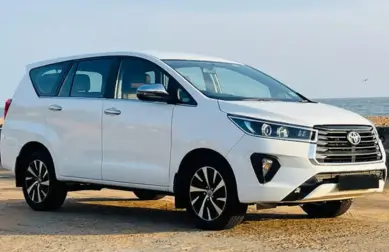
Rajasthan is one of the most popular regions in India for chauffeur-driven travel, and prices reflect both demand and the long distances involved. Most operators charge a per kilometre rate with a minimum of 250 kilometres per day, plus a daily driver allowance. On a typical Rajasthan car and driver tour, the rates on the higher side of the market look like this.
|
Vehicle |
Per Km (INR) |
Daily Cost incl. Allowance (INR) |
Approx. USD per Day |
|
Swift Dzire / Toyota Etios |
14 – 16 |
3,900 – 4,600 |
44 – 52 |
|
Maruti Ciaz |
15 – 17 |
4,200 – 4,900 |
48 – 56 |
|
Toyota Innova Crysta |
19 – 23 |
5,400 – 6,400 |
61 – 73 |
|
Toyota Innova Hycross |
21 – 26 |
5,900 – 7,100 |
67 – 81 |
|
Tempo Traveller (12 seats) |
26 – 30 |
7,100 – 8,200 |
81 – 93 |
A car registered in Rajasthan has one quiet advantage. It does not pay state entry taxes when travelling within the state, so a tour that starts in Jaipur and stays inside Rajasthan avoids permit charges that a Delhi-registered car would pay.For a sedan, that saving is usually INR 800 to INR 1,500. For a Tempo Traveller it can reach INR 5,000 or more. If your tour begins in Delhi, a Jaipur-based company will still send the car to pick you up, and the permit cost for crossing into Rajasthan is small compared with the total.
Tolls in Rajasthan are lower than on the Delhi expressways. Expect INR 150 to INR 400 per driving day on the main highways, and very little on smaller rural roads such as the desert route to Jaisalmer. Parking at forts and palaces costs INR 50 to INR 200 per stop. At Mehrangarh Fort in Jodhpur and Amber Fort in Jaipur, cars park at the base and you walk, take a lift, or ride a jeep up the final stretch.
Driver allowance in Rajasthan ranges from INR 400 to INR 650 per night. Heritage hotels and forts almost always have driver rooms, but a few remote desert camps and village homestays may need an extra INR 500 to INR 800 for the driver's lodging. A good company includes this in the price.
For a Rajasthan driver cost check, divide any all-inclusive quote by the number of days. A figure between INR 4,500 and INR 5,500 per day for a sedan, or INR 6,000 to INR 7,200 for an Innova, is fair for peak season. Much lower usually means hidden shopping stops or an older vehicle. Much higher should come with something extra, such as a senior chauffeur with decades of experience.
Season affects Rajasthan prices more than most regions. From mid-December to the first week of January, many operators add 15 to 20 percent to daily rates, and good Innovas are often fully booked. From April to June, when temperatures in the desert cross 42°C, rates drop by 10 to 20 percent, but long afternoon drives become tiring even with strong air conditioning.
Distances in Rajasthan look short on a map, but driving times depend on road quality, village traffic and the number of stops. The table below shows realistic times for a private car, including a short tea break, but not long sightseeing stops.
|
Route |
Distance |
Driving Time |
|
Delhi to Jaipur |
280 km |
5 – 6 hours |
|
Delhi to Mandawa |
255 km |
5 – 5.5 hours |
|
Mandawa to Bikaner |
190 km |
3.5 – 4 hours |
|
Bikaner to Jaisalmer |
330 km |
5.5 – 6 hours |
|
Jaisalmer to Jodhpur |
285 km |
5 – 5.5 hours |
|
Jodhpur to Udaipur via Ranakpur |
260 km |
6 hours with temple visit |
|
Udaipur to Pushkar |
280 km |
5 – 5.5 hours |
|
Pushkar to Jaipur |
145 km |
2.5 – 3 hours |
|
Jaipur to Ranthambore |
160 km |
3.5 hours |
|
Jaipur to Agra |
240 km |
4.5 – 5 hours |
The most common circuit runs Delhi to Mandawa, then Bikaner, Jaisalmer, Jodhpur, Udaipur, Pushkar and Jaipur before returning to Delhi or continuing to Agra. This loop covers around 2,000 kilometres within Rajasthan alone and suits tours of twelve to sixteen nights.
Some routes deserve special mention. The drive from Jodhpur to Udaipur through the Aravalli hills passes the Ranakpur Jain Temple, one of the finest marble temples in India. The temple opens to non-worshippers from 12 PM to 5 PM, and the entry ticket for foreign visitors is about INR 200, plus a small fee for a camera or phone. Time the day around these hours by leaving Jodhpur by 8 AM. Kumbhalgarh Fort, with its 36-kilometre wall, can be added on the same day with an overnight stop nearby, which turns a long drive into two relaxed ones.
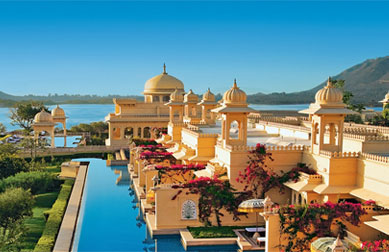
The desert road from Jodhpur to Jaisalmer is long and straight, with few towns. Fuel up in Jodhpur or Pokhran, and keep water and snacks in the car. From Udaipur, a pleasant alternative to driving straight to Pushkar is a night at a heritage fort hotel in Deogarh or Bijaipur, which breaks the drive and adds a quiet countryside stay.
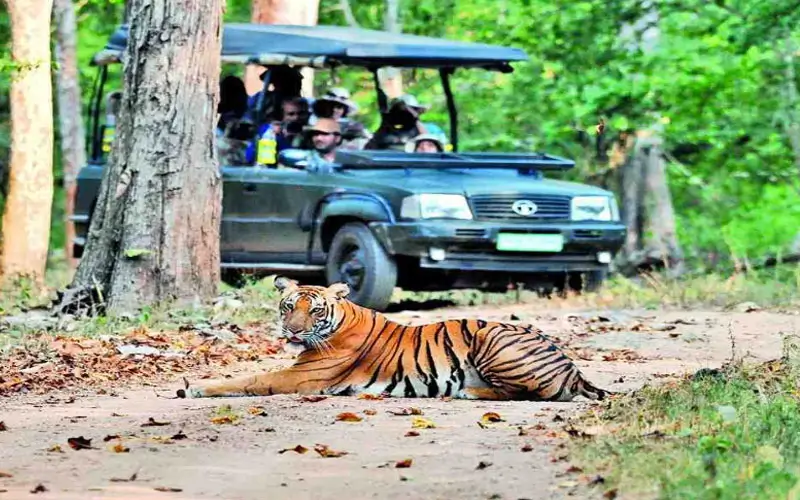
For wildlife lovers, Ranthambore sits three and a half hours from Jaipur and about four hours from Agra via Bharatpur. Safari timings are fixed by the park, so arrive the day before your first safari. Morning safaris start around 6:30 AM in winter and evening safaris around 2:30 PM, each lasting about three and a half hours.
Shekhawati deserves a special mention for travellers coming from Delhi. Towns such as Mandawa, Nawalgarh and Fatehpur are filled with old merchant mansions covered in painted murals, and a night here breaks the long drive towards Bikaner neatly. Roads in Shekhawati are narrower and slower, so allow extra time and avoid arriving after dark.
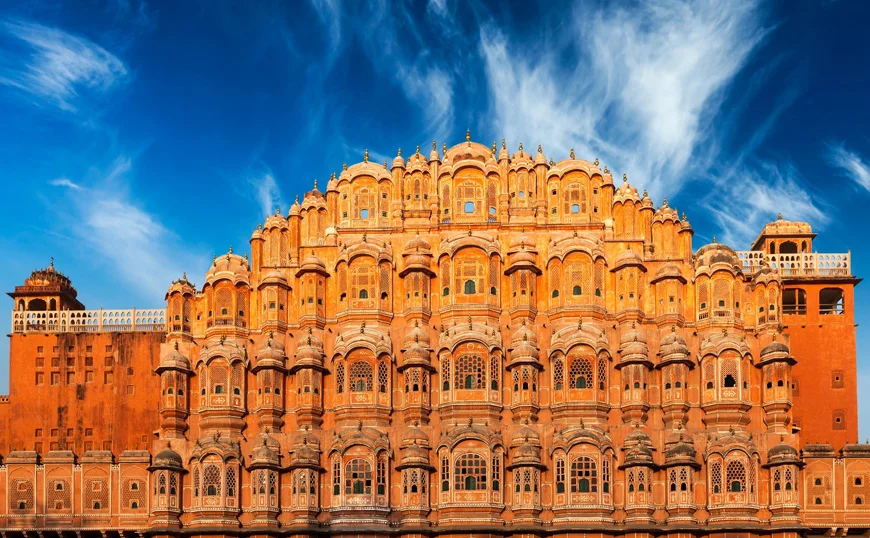
If time is short, the classic shorter loop of Jaipur, Jodhpur and Udaipur still shows three very different sides of Rajasthan: the pink city, the blue city and the lake city. This route covers about 1,000 kilometres and fits comfortably into eight or nine nights, with one long but beautiful driving day through the Aravalli hills between Jodhpur and Udaipur. Add Pushkar between Udaipur and Jaipur and the drive becomes two easier halves, with a quiet lakeside town in the middle.
Most days on a Rajasthan tour follow a rhythm. Your driver will meet you at the hotel reception or porch at an agreed time, usually between 8 AM and 9 AM. He will have checked the oil, cleaned the car and filled the water bottles in the cooler. On travel days, starting early is worth it, as highway traffic builds after 10 AM and arriving before sunset keeps the drive safe and relaxed.
On a long drive, expect a tea break every two to two and a half hours. Drivers know clean highway restaurants with proper washrooms, such as the well-known midway stops on the Jaipur to Jodhpur road and the Bikaner to Jaisalmer road. If you prefer to use hotel washrooms only, tell your driver and he will time stops at heritage hotels along the route, which usually allow guests to use their facilities for the price of a coffee or a cold drink.
Lunch on travel days is usually a simple affair at a roadside restaurant or a hotel along the way. A meal for two at a good highway restaurant costs INR 800 to INR 1,500. At a heritage hotel restaurant, lunch for two costs INR 2,000 to INR 4,000.
On sightseeing days within a city, the driver takes you from the hotel to each monument and waits in the parking area. He is not a licensed guide and is not allowed to guide inside protected monuments. Local guides cost INR 1,500 to INR 2,500 for a half day and INR 2,500 to INR 3,500 for a full day in cities such as Jaipur, Jodhpur and Udaipur. Many drivers will still share stories along the way, point out the best photo stops and suggest where to eat.
Evenings are usually free. Your driver will drop you back at the hotel, agree on the next morning's start time and then rest. If you want to go out for dinner in the evening, ask in advance, and keep it reasonable. A short evening drop and pickup in the same city is usually fine, but long evening outings after a full travel day are tiring for the driver and can affect the next day's safety.
Rest is a real safety issue. Professional drivers in Rajasthan cover hundreds of kilometres in a week. Keeping daily driving under eight hours and avoiding night driving on rural highways protects everyone in the car. A good itinerary builds in two-night stays every few days, which also gives you time to enjoy each city rather than only seeing it from the window.
Rajasthan's main highways are now in good condition, with four-lane roads linking Jaipur, Ajmer, Jodhpur and Udaipur, and smooth two-lane roads across most of the desert. Village roads are narrower and slower. Cattle, goats, camels and tractors share the road, and drivers use the horn constantly, not out of anger but as a polite signal that they are passing.
Night driving is the biggest risk on rural roads. Trucks often run with dim lights, animals rest on the warm tarmac, and pedestrians walk without reflective clothing. A responsible Rajasthan tour driver will avoid driving after dark wherever possible. If a flight or train forces a night drive, expect slower speeds and do not push for a faster arrival.
Seat belts are compulsory for front-seat passengers and strongly advised for all. Most touring cars have rear belts, and you should use them on every drive. If you are travelling with children, ask for child seats in advance. Keep a small first-aid kit, hand sanitiser and a scarf for dust in the car, especially on desert routes during the dry months.
A little etiquette makes the tour smoother. Address your driver by name, and ask his preferences about breaks and meals. Offer him water or a snack on long drives, which is a small gesture he will appreciate. Do not ask him to break speed limits or overtake dangerously, and do not pressure him to drive late after a long day.
If you do not want to visit shops, say so politely on the first day. A professional driver respects this completely. If you do want to shop, ask him to suggest government emporiums or fixed-price shops, and remember you are never obliged to buy anything.
Tipping is customary at the end of the tour. On a Rajasthan circuit, INR 500 to INR 1,000 per day is a fair range for good service, given in one envelope on the final day. If a local guide or hotel staff member has been especially helpful, a smaller separate tip for them is also appreciated.
Heritage India Private Tours is based in Jaipur, and founder Magan Singh has spent more than 27 years driving guests across Rajasthan's highways, desert roads and hill routes. Our drivers know where to stop for the best tea, which roads to avoid after dark, and how to time each day so you arrive relaxed. Share your dates through the enquiry form or on WhatsApp at +91-9799397401, and we will suggest a Rajasthan route that fits your pace.