Bengaluru - Mysuru - Coorg - Kabini - Ooty - Kochi - Kumarakom - Marari Beach
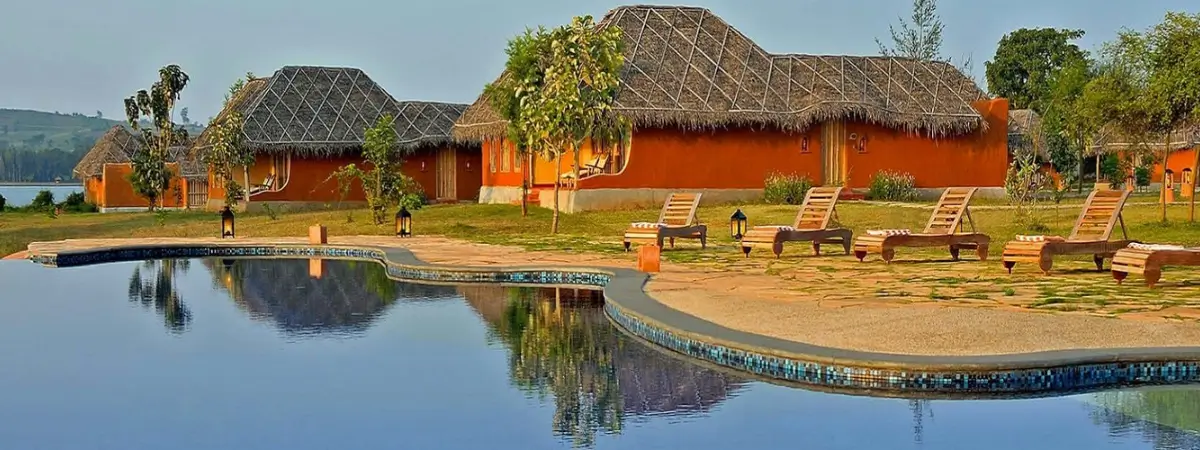
Long before South India became a holiday destination, its maharajas had already chosen the best addresses: a granite palace in Bengaluru, a lakeside banqueting hall in Mysuru, a hunting lodge on the Kabini river and a summer residence high in the Nilgiris. Our South India Royal Palaces and Luxury Resorts Tour follows those royal preferences over twenty-four slow days, pairing each region with a hotel that suits it. You will sleep in a former palace guest house in Mysuru, wake to mist over a coffee estate in Coorg, take jeep safaris from a forest lodge at Kabini, ride the Nilgiri Mountain Railway from Ooty, and finish in Kerala with a heritage hotel in Fort Kochi, a lake resort at Kumarakom, a private houseboat night and two quiet days on Marari Beach.
The pace is the point. Most stops run to three nights, so there is always a morning with nothing scheduled, time for a long lunch, a spa treatment or a book on a verandah. You travel throughout by private car and driver, with an English-speaking chauffeur who stays with you from the Bengaluru airport to the final Kochi departure, apart from one comfortable train ride from Coimbatore to Ernakulam that saves a tiring mountain descent by road. Local guides join you for palaces, temples and museums, and naturalists lead the safaris. As a luxury South India tour, it suits couples marking an anniversary, retired travellers who dislike rushing, and anyone who wants Karnataka, Tamil Nadu and Kerala seen from their most refined side, with good food, good beds and very few early alarms.
Tour Highlights
 Package Includes:
 Package Excludes:
Reply within 24hrs
Your tour begins at Kempegowda International Airport, which sits a good forty kilometres north of central Bengaluru, so we always time the meeting carefully with your flight. Our representative waits in the arrivals hall with a name board, helps with luggage and introduces you to your chauffeur, who will remain with you for the next three weeks. The car is stocked with chilled water and cold towels, and the drive into the city takes around an hour, depending on traffic. Many guests arrive on overnight flights from Europe or the Gulf, so we request early check-in at the hotel wherever possible, although it cannot always be promised during busy months.
For the first nights, our usual choice is the Taj West End or The Leela Palace, subject to availability. The West End sits in twenty acres of old rain trees that have shaded the property since the Victorian era, and its garden cottages are as quiet as anywhere in the city. Spend the remainder of the day resting, taking a swim or walking the grounds. In the evening, your tour specialist calls at the hotel to go through the route, answer questions, and note any food preferences that the resorts further south should know about in advance. A light dinner of South Indian dishes is a good, gentle introduction.
Overnight stay in Bengaluru.
After a late breakfast, your guide joins you for a day built around the city's royal past. The first stop is Bangalore Palace, built in the late nineteenth century for the Wodeyar maharajas of Mysore, who wanted a residence modelled loosely on Windsor Castle. Its turrets, Gothic windows and wood-panelled interiors feel unexpected in South India, and the audio tour leads you through ballrooms, a courtyard with blue tiles and corridors lined with hunting trophies and family portraits. Your guide fills in the stories behind the rooms, including the visits of British viceroys and the long legal battles over the palace grounds that continue to this day.
In the afternoon, you drive into the older part of the city to Tipu Sultan's Summer Palace, a two-storey structure built almost entirely of teak, with painted arches and carved balconies. It sits close to the Kote Venkataramana temple, and the two buildings together show how closely Hindu and Muslim courts once lived. Later, you visit Lalbagh Botanical Garden, laid out by Hyder Ali and expanded under the British, where the glasshouse was modelled on London's Crystal Palace. A sunset walk to the ancient rock outcrop inside the garden, topped by one of Kempegowda's watchtowers, ends the day. Dinner can be booked at Karavalli, known for coastal Karnataka seafood.
Overnight stay in Bengaluru.
An early start today, but a worthwhile one. Your chauffeur collects you before dawn for the drive of about sixty kilometres to Nandi Hills, a granite plateau where Tipu Sultan kept a summer retreat and where colonial officers later built bungalows to escape the heat of the plains. On clear mornings, the valley below fills with cloud, and the sun rises above it in a way that makes the early alarm forgivable. Tea and a picnic breakfast are served at a viewpoint, after which you walk past Tipu's Drop, a sheer cliff, and the old Yoga Nandeeshwara temple near the summit, which dates back to the Chola period.
On the way down, you stop at a winery in the grape-growing country around the base of the hills, where the cool nights and red soil suit Shiraz and Viognier. A guided walk through the vines is followed by a tasting in the cellar and a relaxed lunch on the terrace. In the afternoon, you return to the city via Devanahalli, the small fort town where Tipu Sultan was born, to see the memorial marking the spot. The rest of the day is free. Your chauffeur can suggest the craft shops of Cauvery Emporium for sandalwood and silk, or you may simply prefer the hotel pool.
Overnight stay in Bengaluru.
The drive south to Mysuru now follows a fast access-controlled highway, but we leave enough time for one worthwhile detour. At Channapatna, roughly halfway, you visit a small workshop where artisans turn ivory-wood on hand lathes and colour the toys with natural lacquers made from turmeric, indigo and other plant dyes. The craft is said to have been encouraged by Tipu Sultan, who invited Persian craftsmen to teach the local carvers. You can watch a spinning top or a set of stacking dolls take shape in minutes, and the toys make light, charming gifts to carry home. Your chauffeur will also point out the roadside stalls near Maddur selling the crisp, onion-flecked maddur vada, a snack worth trying with a small cup of filter coffee.
You reach Mysuru by lunchtime and check into our usual choice, the Lalitha Mahal Palace, subject to availability. This brilliant white building was raised in the early twentieth century by Maharaja Krishnaraja Wodeyar IV to house the Viceroy of India during his visits, and the grand staircase, Italian marble and stained-glass dome remain intact. Heritage rooms are spacious rather than modern, which is part of their appeal. The afternoon is free to settle in, and the ballroom-style dining hall is the obvious place for dinner, with Mysore dishes such as bisi bele bath and Mysore pak on the menu.
Overnight stay in Mysuru.
Today belongs to the palace that gives the city its fame. Your private guide meets you at the hotel and takes you to Amba Vilas Palace soon after it opens, before the day trippers arrive from Bengaluru. Rebuilt after a fire in the late nineteenth century and designed by the British architect Henry Irwin, it blends Hindu, Mughal and Gothic styles with remarkable confidence. Inside, the Kalyana Mantapa, the marriage hall, is crowned by a ceiling of stained glass in peacock patterns made in Glasgow, while the Ambavilasa durbar hall glitters with gilded columns and carved teak doors. Note that shoes are removed at the entrance and photography inside is restricted.
After lunch, you visit the Jaganmohan Palace, the older royal residence that now houses the Sri Jayachamarajendra Art Gallery. Its collection includes some of the best-known oil paintings of Raja Ravi Varma, the court painter who brought European realism to Indian mythology, along with musical instruments and the curious French clock with marching soldiers that chimes every hour. If your stay includes a Sunday or public holiday, you will return to Amba Vilas in the evening, when nearly one hundred thousand bulbs light up the facade for about forty-five minutes, a sight that draws families from across the region.
Overnight stay in Mysuru.
A short drive of about thirty-five kilometres east brings you to the village of Somnathpur and the Chennakesava temple, built in the thirteenth century by a general of the Hoysala kings. It is small, star-shaped and raised on a carved platform, and every surface is covered with friezes of elephants, horsemen, scenes from the epics and dancers in mid-step. Unlike the busier Hoysala temples at Belur and Halebidu, Somnathpur is usually quiet, and your guide will point out the signatures of the sculptors, carved into the stone below their work, which is a rare detail in Indian temple art. Bring a hat and arrive before ten if you can, because the stone courtyard heats quickly and the morning light shows the carving at its sharpest.
Back in Mysuru, the afternoon is given to the crafts that supplied the royal household. At the government silk weaving factory, on working days, you can watch the jacquard looms producing the pure silk and gold zari for which Mysuru sarees are prized, then visit the state showroom where the quality is guaranteed. A stop at the sandalwood emporium follows, as the region's sandalwood oil and soap have been produced under royal patronage for over a century. In the evening, enjoy a farewell dinner at the Lalitha Mahal, or ask your chauffeur for a table at a local restaurant serving Mysore masala dosa.
Overnight stay in Mysuru.
The road west climbs gently out of the Mysuru plain, passing sugarcane, coconut groves and the paddy fields fed by the Kaveri river. Near Kushalnagar, you stop at Kaveri Nisargadhama, a small forested island reached by a hanging bridge, where a shaded trail runs through stands of giant bamboo and teak beside the water. It makes a peaceful leg-stretch before the last stretch of hill road. As you climb towards Madikeri, the landscape changes to coffee bushes growing under tall silver oak and jackfruit trees, with pepper vines winding up the trunks, the signature view of the district of Kodagu.
Our usual choice in Coorg is the Taj Madikeri Resort and Spa, set in a rainforest on a ridge outside town, or Evolve Back Coorg on its working coffee estate, subject to availability. Both offer spacious villas, private pools in some categories and outstanding spas. After checking in, the rest of the day is yours. Many guests use this afternoon for a first massage, after a week of cities, or simply sit on the deck and listen to the birds. Dinner at the resort is an opportunity to try Kodava dishes, especially pandi curry, pork cooked with a dark, sour vinegar made from the kachampuli fruit.
Overnight stay in Coorg.
Morning in Coorg begins with a guided walk through a coffee estate, led by a grower who explains the difference between arabica, which prefers the higher shaded slopes, and the hardier robusta grown lower down. You see the bushes in flower or fruit depending on the season, learn how the cherries are pulped and dried, and finish with a tasting of freshly brewed filter coffee on a verandah. Coorg's coffee story is closely tied to its people, the Kodavas, a martial community with their own traditions, dress and cuisine, and your guide will happily explain why so many of India's senior army officers come from this small district.
In the afternoon, you drive into Madikeri town. The Madikeri Fort, rebuilt in stone by Tipu Sultan and later altered by the Kodava rulers and the British, holds a small museum and a church. Nearby, the Omkareshwara temple combines Islamic domes with a Kerala-style roof, an unusual design commissioned by the Kodava king Lingarajendra. You then visit Abbey Falls, a short walk down through coffee and cardamom, before ending at Raja's Seat, the garden where the Kodava kings watched the sunset over the folded hills of the Western Ghats. It remains the best place in town for the last light.
Overnight stay in Coorg.
After an early breakfast, your chauffeur drives you about forty minutes to the Dubare elephant camp, on the banks of the Kaveri. Elephants that once worked in the timber trade and in the Mysuru Dasara processions now live here, cared for by their mahouts under the forest department. In the morning, the animals are led to the river to be scrubbed, and you can watch from the bank as they roll in the shallows, then see them fed their balls of ragi and jaggery. A short coracle crossing takes you to the camp itself. It is an easy, gentle outing and often the moment children and grandparents remember longest.
The rest of the day is intentionally left open. Coorg is one of the best places on the tour to slow down, and we recommend booking a full spa treatment at the resort, many of which use Ayurvedic oils and local coffee scrubs. Alternatively, your chauffeur can take you to a small family-run spice shop in Madikeri for vacuum-packed pepper, cardamom and honey, or arrange a late-afternoon guided birdwatching walk around the estate, where Malabar grey hornbills and scarlet minivets are often seen. Dinner tonight may be a private table set up on the lawn, if the weather is kind.
Overnight stay in Coorg.
Leaving the hills, you travel south through Gonikoppal, a quiet coffee town, and along the edge of Nagarhole National Park towards the Kabini reservoir. Once you enter the forest, the speed limit drops, and it is not unusual to see spotted deer, langurs or even a lone elephant beside the road. Kabini was once a private hunting reserve of the Mysore maharajas, and the British viceroys came here as their guests; the old royal hunting lodge on the river is now part of the government-run Kabini River Lodge. Today, the area is one of the most rewarding wildlife destinations in India and protected as part of the Nilgiri Biosphere Reserve.
Our usual choice here is Evolve Back Kabini or The Serai Kabini, both set on the river bank with plunge-pool villas, subject to availability. Lodges at Kabini work on a full-board basis, so all meals are included during your stay. After lunch, you head out on your first jungle safari into Nagarhole, usually departing around 3 pm and returning at dusk. Jeeps and canters are operated by the forest department with a naturalist on board. Leopards are seen here more often than in most Indian parks, and tigers, gaur, dhole and the famous black panther are all possible.
Overnight stay in Kabini.
The resort sends a wake-up call before 6 am, with tea and biscuits at the reception before you set off on the morning Kabini safari. Early hours are when big cats are most active, and your naturalist reads alarm calls from deer and langurs to work out where a predator might be moving. Even on days without a tiger, the forest is full of life: crested serpent eagles on dead branches, Malabar giant squirrels in the canopy, and wild boar crossing the track. You return around 9:30 am for a full breakfast and a few hours of rest during the heat of the day.
The afternoon safari is on the water. A motorboat takes you along the edges of the Kabini backwaters, where, especially in the drier months from March to June, large herds of Asian elephants gather on the grassy banks to drink and graze. It is one of the largest seasonal gatherings of elephants in Asia, and seeing a family group with calves walk down to the water stays with many guests long after they return home. River terns, ospreys and mugger crocodiles are common too. Back at the lodge, evenings bring a talk or a nature film by the resident naturalist, followed by dinner beside the river.
Overnight stay in Kabini.
Today allows one more chance for the elusive animals. Depending on your preference, you can join the morning jeep safari or sleep in and take the afternoon one, as the forest department rotates the routes and each drive feels different. Many guests choose both, while others prefer one drive and a long lazy day. Between safaris, the resort pool, spa and library are at your disposal. If you are interested in photography, the naturalists can help with camera settings for low light, which is useful in a forest where many sightings happen in shade or at dusk. Your naturalist will also keep a list of sightings across your three days, which many guests like to keep as a record of the trip.
In the late afternoon, a short coracle ride on the river is a lovely change of pace. These round bamboo boats, covered with tarpaulin and steered by a single paddle, have been used on the rivers of Karnataka for generations, and they drift so quietly that kingfishers and egrets let you come remarkably close. As the light fades, the call of the peacocks echoes across the water. Your final evening at Kabini might include a bush dinner arranged on the lawn under the stars, with a fire, which the resort sets up on request. Pack early, as tomorrow's road includes a forest section that closes at night.
Overnight stay in Kabini.
The drive to Ooty is one of the most scenic on the tour. You pass through Bandipur National Park in Karnataka and Mudumalai Tiger Reserve in Tamil Nadu, where the highway runs through the forest and traffic is banned between 9 pm and 6 am to protect wildlife, which is why we leave in the morning. Elephants, gaur and peacocks are frequently seen from the car. After the checkpost at Theppakadu, the road begins the steep Kalhatti ghat, climbing with thirty-six numbered hairpin bends to the Nilgiri plateau, rising more than 1,500 metres in under twenty kilometres. Your chauffeur takes it slowly, and the views back over the plains are superb.
Our usual choice in Ooty is The Savoy, a property of the Taj group, whose cottages, log fires and gardens date back to the 1840s, subject to availability. Ooty, or Udhagamandalam, was the summer capital of the Madras Presidency, and the British left behind stone churches, clubs, schools and lawns that still give the town its character. After checking in, take a short drive to the Fernhill area to see the former summer palace of the Mysore Wodeyars, a carved timber building with gables that now operates as a heritage hotel. Dinner at the Savoy is best taken beside the fire.
Overnight stay in Ooty.
This morning you board the Nilgiri Mountain Railway at Ooty station for the ride down to Coonoor, about an hour and a half on a narrow-gauge line completed in 1908 and recognised by UNESCO as part of the Mountain Railways of India. First-class seats are reserved in advance, and the small blue-and-cream coaches wind through eucalyptus woods, tea gardens and tunnels, past Lovedale and Wellington, the cantonment of the Madras Regiment. Your chauffeur drives ahead to meet you at Coonoor station, which spares you the uphill return by train and gives the rest of the day more freedom. Sit on the right-hand side for the best views as the line drops towards Coonoor.
Coonoor is quieter and greener than Ooty, and a few hours here are well spent. You visit Sim's Park, a botanical garden laid out on a valley slope with rare trees from around the world, then drive out to Lamb's Rock and Dolphin's Nose, two viewpoints over the tea-covered ridges and, on clear days, the plains of Coimbatore far below. A visit to a working tea factory shows how Nilgiri leaf is withered, rolled and fermented, with a tasting of the fragrant high-grown teas this region is known for. Lunch is at a colonial-era club or a café in town before you return to Ooty.
Overnight stay in Ooty.
A leisurely morning starts at the Government Botanical Garden, laid out in the 1840s on terraced slopes, with a fossilised tree trunk more than twenty million years old, an Italian garden, glasshouses of orchids and ferns, and a huge lawn where the annual flower show takes place in May. Nearby, the Toda community's settlements, called munds, are an important part of the Nilgiris' story. The Todas are buffalo herders who lived on these hills long before the British arrived, and their traditional barrel-shaped huts and fine red-and-black embroidered shawls are distinct from anything else in South India. Your guide arranges a respectful short visit.
In the afternoon, drive up to Doddabetta, at 2,637 metres the highest point in the Nilgiris, where a telescope house looks out across the plateau. On the way back, you pass St Stephen's Church, one of the oldest in the hills, built with timber said to have been taken from Tipu Sultan's palace at Srirangapatna. The Ooty Club, where the rules of snooker were supposedly formalised by army officers in the 1880s, can be seen from the outside. The evening is free for a quiet dinner and a walk around the hotel garden. Tomorrow begins the Kerala section of the tour.
Overnight stay in Ooty.
The descent from the Nilgiris to Coimbatore follows the Mettupalayam ghat, with fourteen hairpin bends and views over the plains as the air steadily warms. Your chauffeur drops you at Coimbatore Junction in time for the train to Ernakulam, a journey of about four hours in reserved air-conditioned seats. We use the train here because the road route via Palakkad is long and congested, and the rail line follows the Palakkad Gap, the only major break in the Western Ghats, which offers a pleasant view of coconut groves, paddy fields and red-tiled villages as Tamil Nadu gives way to Kerala.
Your chauffeur, who drove on ahead with your luggage, meets you at Ernakulam station, and the short drive across the bridges brings you to Fort Kochi. Our usual choice here is Brunton Boatyard, a reconstructed Victorian boatbuilding yard right on the harbour, or the Taj Malabar Resort on Willingdon Island, subject to availability. From your room at Brunton Boatyard, you can watch container ships, fishing boats and ferries move past within a few hundred metres. Dinner can be at the hotel's History restaurant, which serves dishes from Kochi's many communities, from Syrian Christian to Jewish and Portuguese.
Overnight stay in Kochi.
With a local guide, you spend the morning in Mattancherry, starting at Mattancherry Palace, built by the Portuguese around 1555 as a gift for the Raja of Kochi and later renovated by the Dutch, hence its popular name, the Dutch Palace. Its bedchambers hold some of the finest Kerala murals anywhere, panels of the Ramayana and Krishna stories painted in deep ochre and green. Note that the palace museum is closed on Fridays. Next door is the Paradesi Synagogue, built in 1568, with hand-painted Chinese floor tiles and Belgian chandeliers; it closes on Fridays, Saturdays and Jewish holidays, and your itinerary is arranged around those days.
The afternoon is spent in Fort Kochi, walking the shaded lanes past old Dutch and Portuguese houses. You visit St Francis Church, where Vasco da Gama was first buried before his remains were returned to Lisbon, and see the cantilevered fishing nets along the waterfront, which are raised and lowered by teams of men using stone weights. Your guide then takes you to the Indo-Portuguese Museum in the Bishop's House, a little-known collection of church silver and altar pieces. End the day with a coffee at a courtyard café on Princess Street and an early evening at leisure.
Overnight stay in Kochi.
The royal story of Kochi continues today at Hill Palace in Tripunithura, about fourteen kilometres east of the city. This sprawling complex of forty-nine buildings in traditional Kerala style was the official residence of the Kochi royal family until the mid-twentieth century and is now the state's largest archaeological museum. Its galleries hold the royal crown, the throne, palanquins, oil paintings and weapons, and the grounds include a deer park and a garden of medicinal plants. The museum is closed on Mondays, which we account for when finalising your dates. On the way back, stop at the Kerala Folklore Museum, a three-storey wooden building filled with masks, costumes and carved temple panels.
In the late afternoon, a private sunset cruise on a launch takes you around Kochi harbour, past Bolgatty Palace, a Dutch mansion built in 1744 and later the home of the British Resident, then past the Vypeen lighthouse, the Chinese nets and the busy naval and shipping yards. The light on the water at this hour is soft and golden, and the cruise ends back at the Fort Kochi jetty. For dinner, we suggest a table at a seafood restaurant in Fort Kochi, where you can choose the catch at the counter and have it cooked as you like.
Overnight stay in Kochi.
After a slow breakfast, you leave the city for the Vembanad backwaters, driving south through small towns where churches, temples and mosques sit side by side. As you approach Kumarakom, the land flattens into paddy fields bordered by narrow canals and coconut palms, and the pace of life visibly slows. Our usual choice here is the Kumarakom Lake Resort, where centuries-old Kerala homes, or tharavads, were taken apart and rebuilt as villas around a meandering pool, or the Taj Kumarakom Resort, set in a restored Dutch-era bungalow, subject to availability. Both open directly onto the lake. Along the way, look out for the small toddy shops and tile-roofed tea stalls that line the canal banks near Kottayam.
The afternoon is free to enjoy the resort. Many guests begin with an Ayurveda consultation, as Kumarakom is one of the best places in Kerala for traditional treatments such as abhyanga, a full-body oil massage. Later, take a sunset cruise on the resort's own boat, watching the sky reflect off the vast surface of Vembanad, the longest lake in India. Kerala's cuisine is a strength of these resorts, and tonight's dinner is a good time to try karimeen pollichathu, pearl spot fish wrapped in banana leaf, or a Syrian Christian duck roast cooked with black pepper and coconut. Ask the resort to keep the fish mild on the first night if your palate is new to Kerala spices.
Overnight stay in Kumarakom.
Rise early for the Kumarakom Bird Sanctuary, a fourteen-acre patch of mangroves and woodland on the lake's eastern shore, once a rubber estate owned by an English planter family named Baker. With a local birding guide, you walk the trail at first light, when darters, night herons, cormorants and kingfishers are most active. Between November and February, migratory birds from the Himalayas and Siberia arrive, adding to the numbers. Back at the resort, breakfast is served on the deck, and the rest of the morning is entirely free. Binoculars are provided by the guide, but bring your own if you have a favourite pair, and wear muted colours and closed shoes for the damp path, which can be slippery after rain.
In the late afternoon, you board a traditional country canoe, paddled by a local boatman, for a quiet ride through the narrow village canals that larger boats cannot enter. You glide past homes where women wash clothes at the water's edge, toddy tappers climbing coconut palms, ducks herded along the channels and children rowing to school. The boatman may stop at a small coir-making unit, where coconut husk is spun into rope by hand. It is the most intimate way to see backwater life. Dinner tonight could be at the resort's floating restaurant, or ask for a private lakeside table with lamps. Bring a hat and some insect repellent for the canoe.
Overnight stay in Kumarakom.
Late in the morning, you board your private luxury houseboat, a modern version of the kettuvallam, the rice barges that once carried grain and spices along these waterways. Built of jackwood planks tied with coir rope and roofed with woven palm, it comes with an air-conditioned bedroom, private bathroom, sundeck, a captain, an assistant and a chef. As the boat slips away from the jetty, a welcome drink of tender coconut water is served, and you settle on the upper deck to watch the lake widen around you. All meals on board are included, cooked fresh in the small galley.
The route takes you across Vembanad and into the Kuttanad region, where paddy fields lie below sea level, protected by earthen dykes, and farmers tend crops while boats pass at roof height. Lunch might be prawns in coconut gravy, red rice, avial and a fish fry; your chef can easily adjust spice levels. In the afternoon, the boat stops at a village where you can walk along a dyke to a small church or temple. Houseboats moor before dark under local rules, and dinner is served on deck by lantern light, with only the frogs and crickets for company.
Overnight stay in Kumarakom.
Wake early to watch the morning come to the backwaters: fishermen casting nets from small canoes, kingfishers diving, and the first ferries carrying schoolchildren and office workers. After a hot breakfast prepared on board, the houseboat cruises for a final hour before arriving at a jetty near Alleppey, where your chauffeur is waiting. The drive to Marari Beach is short, through a coastal belt of coconut groves and coir villages, and by mid-morning you will be walking on a wide, almost empty stretch of sand that sees far fewer visitors than the beaches further south at Kovalam or Varkala. Your crew will help with bags at the jetty and say their goodbyes there.
Our usual choice at Marari is the Marari Beach Resort, run by CGH Earth, whose palm-thatched cottages are set in a coconut grove with an organic garden, a butterfly park and a small lake, subject to availability. The resort follows a strongly sustainable approach, with local produce and a simple, barefoot style of luxury. The afternoon is free for the beach, but note that the Arabian Sea can have strong currents, especially during the monsoon, so we recommend swimming only where the lifeguards suggest. In the evening, watch the sun set straight into the sea from the dunes in front of the resort.
Overnight stay in Marari Beach.
For those who enjoy an early start, a resort naturalist leads a dawn walk to the fishing village next door, where crews push traditional wooden boats through the surf and haul in nets by hand, singing to keep time. Later in the morning, the women of the village sort and sell the catch on the sand, a scene that has barely changed for generations. Your guide can also arrange a short drive to Arthunkal, where St Andrew's Basilica, founded by Portuguese missionaries in the sixteenth century, draws thousands of pilgrims to its January feast. Walk slowly and ask before taking photographs of the fishermen, who are usually happy to oblige once you have said hello.
The rest of your final day is for doing as little as possible. Book a last Ayurveda session at the resort spa, perhaps shirodhara, the steady stream of warm oil over the forehead that is said to calm the mind. Alternatively, join the resort's cooking demonstration to learn how to make a simple fish moilee, the mild coconut curry that shows Kochi's Portuguese influence, or stroll through the organic garden to see where your meals have come from. For your farewell dinner, the resort can set a candlelit table on the beach, a fitting end to twenty-four days of royal palaces and fine resorts across South India.
Overnight stay in Marari Beach.
After breakfast and a last walk on the beach, you check out of the resort at a time that matches your flight. Your chauffeur drives you north along the coastal highway towards Kochi International Airport, a journey of about two hours. If you have an evening flight, we can arrange a late checkout or a final stop along the way, for example at Lulu Mall for last-minute shopping, at a spice shop in Ernakulam for vacuum-packed cardamom and pepper, or at a family restaurant for a final Kerala sadya lunch served on a banana leaf. Your bags will be kept safely in the car through any stops.
Your chauffeur, who has travelled with you from Bengaluru through Karnataka and the Nilgiris, will drop you at the departure terminal and help with your bags. Kochi International Airport is the world's first airport to run entirely on solar power, a fitting final detail for a state that takes pride in doing things its own way. We hope the palaces, forests, hill stations and quiet backwaters of this tour have given you a view of South India that few visitors see, and we look forward to welcoming you back for the north, Rajasthan or the Himalayas in the future. Please share your feedback with our Jaipur office once you are home.
Hear what our happy guests say about their India adventures! From private drivers to guided tours, we make every journey smooth, safe & unforgettable.
 rating score: 5.0 of 5, based on 448 reviews

Complete our inquiry form

Customize your itinerary

Confirm when you're satisfied
1-to-1 Service | Reply within 24hrs | Expert's Advice