Delhi - Kalka - Shimla - Mashobra - Dharamshala - Delhi
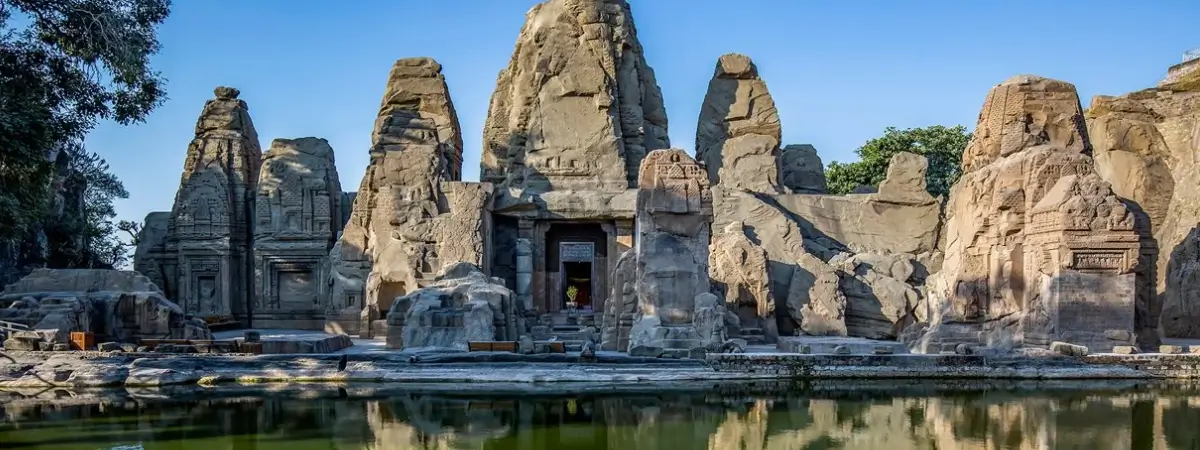
Cool mountain air, wood fires in the evening and deodar forests outside the window set the tone for this luxury India tour with Himalayan boutique retreats. Instead of racing across the plains, the itinerary climbs from Delhi into the lower Himalaya of Himachal Pradesh and stays long enough in each place to enjoy it. You ride the narrow-gauge toy train from Kalka to Shimla, spend two nights in the old summer capital of British India, then move to a forest retreat at Mashobra for three unhurried nights of spa, walks and orchard country. The final mountain stop is Dharamshala and McLeod Ganj, home of the Tibetan government in exile, where monasteries, tea gardens and the snowy wall of the Dhauladhar range fill your days. A short flight from Kangra brings you back to Delhi.
The trip suits travellers who already know the Taj Mahal and Rajasthan and now want slower, greener India with fine hotels. Our usual choices are grand colonial and forest properties such as The Oberoi Cecil in Shimla and Wildflower Hall in Mashobra, and a hillside spa resort or tea-garden boutique hotel in Dharamshala, all subject to availability. Mountain roads are narrow and winding, so a private car and driver familiar with hill driving is with you throughout Himachal, carrying your luggage up while you ride the train. Local guides join you for the Shimla heritage walk, McLeod Ganj and Kangra Fort. Spring and autumn bring clear skies and mild days; winter can bring snow above Shimla, which some guests love, and the monsoon months of July and August are best avoided.
Tour Highlights
 Package Includes:
 Package Excludes:
Reply within 24hrs
The first welcome comes the moment you leave the arrivals hall at Indira Gandhi International Airport. Your chauffeur stands with a name board, takes the luggage trolley, and walks you to an air-conditioned car where cold water and a fresh towel wait. For travellers stepping off a long-haul flight, the quiet ride into New Delhi is a relief, and within an hour you are checking in at a five-star hotel such as The Imperial on Janpath, our usual choice for its art deco corridors and colonial prints, subject to availability. A member of our team meets you to hand over train tickets for Day 3 and explain how the luggage will travel separately by road to Shimla.
That small detail matters, because the toy train has limited space for suitcases, and our driver carries your main bags up the mountain so you can ride with only a day pack. The rest of today belongs to you. Many guests head for the hotel pool or the 1911 bar, named after the year Delhi was declared capital, for a quiet drink under portraits of viceroys and maharajas. If your appetite returns, the hotel's Spice Route restaurant serves dishes from Kerala to Thailand in rooms painted with temple murals. Try to stay awake until a sensible hour so your body clock adjusts quickly. Overnight stay in Delhi.
A slow, well-chosen day in the capital eases you into India before the mountains. After breakfast, your guide takes you to Rashtrapati Bhavan, the former Viceroy's House designed by Edwin Lutyens, where guided circuits run from Tuesday to Sunday on prior booking. The tour covers the Durbar Hall under its great copper dome, the Ashoka Hall with its painted ceiling, and, in February and March, the seasonal Amrit Udyan gardens. Nearby, Gurudwara Bangla Sahib is calm in mid-morning, with its golden dome, holy tank and a community kitchen that feeds thousands each day, open to all visitors who cover their heads.
Lunch is at a smart café in the Mehrauli or Hauz Khas area. In the afternoon, visit the National Crafts Museum at Pragati Maidan, closed on Mondays, where a village complex of huts, a Gujarati haveli courtyard and working craftspeople display textiles, bronzes and folk painting from every region of India. It is a good primer for the Tibetan crafts you will see later at Norbulingka. Finish the day at Agrasen ki Baoli, a fourteenth-century stepwell hidden among the office towers of Connaught Place, before returning to the hotel to pack a small overnight bag for tomorrow's train. Overnight stay in Delhi.
An early start today, with a packed breakfast box handed over at reception. Your chauffeur drives you to New Delhi railway station for the Kalka Shatabdi Express, which leaves around a quarter to eight in the morning and reaches Kalka shortly before noon. Seats are in the executive chair car, and breakfast and tea are served on board. Meanwhile, our hill driver has already set off by road with your main luggage, and he will be waiting at Shimla station on your arrival. At Kalka you simply walk across the platform to the little blue carriages of the Kalka Shimla toy train, the Himalayan Queen, which connects with the Shatabdi.
The narrow-gauge line runs ninety-six kilometres from the plains to Shimla, climbing through 102 tunnels, past more than eight hundred bridges and around tight curves on hillsides covered in pine. Barog station, beside the longest tunnel, is a favourite halt where passengers stretch their legs and buy tea in clay cups. The ride takes about five and a half hours, so the views change from tropical scrub to cool cedar slopes as the afternoon wears on. Your driver meets you at Shimla station in the early evening and drives you the short distance to The Oberoi Cecil, our usual choice in Shimla, subject to availability. Overnight stay in Shimla.
Shimla was the summer capital of British India from 1864, and much of that history can be seen on foot, since vehicles are restricted on the upper Mall. After breakfast, your local guide leads a heritage walk along the Mall Road to the Ridge, a wide open space with views across the hills to the snow peaks. Christ Church, the second oldest church in north India, stands at one end with its stained glass windows and a clock tower. Nearby are the Gaiety Theatre, where Rudyard Kipling and Baden-Powell once performed in amateur plays, and Scandal Point, named after a story of a maharaja who eloped with a British officer's daughter.
In the afternoon your driver takes you to the Viceregal Lodge on Observatory Hill, a Scottish baronial building in grey stone, now the Indian Institute of Advanced Study. A guided tour shows you the teak-panelled hall and the rooms where the Simla Conference of 1945 took place, along with photographs of the Partition discussions. Return via Jakhu Temple, on Shimla's highest point, where a 108-foot Hanuman statue overlooks the town; hold on to sunglasses, because the monkeys here are bold. The evening is free for the woodcraft stalls of Lakkar Bazaar or a fireside dinner at the hotel. Overnight stay in Shimla.
After a lazy breakfast at the Cecil, the drive to Mashobra is short, so there is no rush. On the way, stop at the Kalibari temple and walk a stretch of the Lower Bazaar for a last look at town life, or visit the Himachal State Museum, which holds Pahari miniature paintings from the Kangra and Chamba schools, a useful introduction to the painting styles you will see later in the trip. Then the road leaves the crowded hillsides and enters thick forest. Mashobra sits higher than Shimla at more than two thousand metres, and the air is noticeably cooler and quieter. Our usual choice here is Wildflower Hall, an Oberoi Resort, built on the site of Lord Kitchener's old residence, subject to availability.
The resort stands in a forest of deodar cedar and oak with views over a deep valley to the snow peaks of the Great Himalayan range. Check-in is around lunchtime, and the afternoon is for settling in. The heated outdoor infinity pool and Jacuzzi look straight out at the mountains, and the spa offers Ayurvedic massages and Himalayan herbal treatments in private pavilions. As the light fades, take a gentle walk on the forest trails around the property, where the staff can point out barking deer tracks and the call of the Himalayan monal pheasant. Dinner is served by a log fire. Overnight stay in Mashobra.
Mashobra is best enjoyed slowly, and today is designed around that idea. After breakfast, a naturalist from the resort leads a guided walk into the Shimla Water Catchment forest, a protected forest where tall deodars, oaks and rhododendrons shelter Himalayan birds such as the white-crested kalij pheasant, the yellow-billed blue magpie and several species of tit and laughingthrush. The trail is well shaded and mostly level, and the walk can be lengthened or shortened according to your energy, with plenty of pauses for photographs. A picnic of sandwiches, salads and hot soup can be served in a clearing with views to the snow line.
In the afternoon your driver takes you to Naldehra, about twenty kilometres away, where a nine-hole golf course sits on a hilltop meadow ringed by deodars. Lord Curzon loved this spot so much he named his daughter Alexandra Naldera after it, and it is one of the highest golf courses in India. Golfers can play a round with hired clubs, and non-golfers can walk around the edge of the meadow or sit at the café with a cup of tea. Return to the retreat for a cooking demonstration of Himachali dishes such as siddu, a steamed wheat bun stuffed with walnuts, and madra, chickpeas cooked in yoghurt. Overnight stay in Mashobra.
A full-day excursion today goes deeper into the hills along the old Hindustan–Tibet road. Narkanda is about fifty kilometres from Mashobra, roughly an hour and a half by road, and from there a narrow track climbs through spruce and fir to Hatu Peak at over three thousand metres. At the top stands the wooden Hatu Mata temple with its carved pagoda-style roof, and on a clear day the view takes in a long sweep of snow-covered ranges. Your driver handles the steep turns with care, and the track is usually open from April to November, though snow can close it at other times.
Below Narkanda, the road drops into the apple country of Kotgarh and Thanedar, where an American named Samuel Evans Stokes introduced the first Red Delicious apple trees in the early twentieth century and changed the economy of Himachal for good. Visit an orchard to walk among the trees, and between August and October watch the harvest being sorted and packed. Stokes later took an Indian name and built the Paramjyoti temple nearby, still cared for by his family. Lunch is at a simple orchard guesthouse with local trout or rajma, before the drive back to Mashobra in time for a late afternoon spa visit. Overnight stay in Mashobra.
Today's drive is the longest of the trip, so we leave after an early breakfast. The road descends from the cedar forests through Shimla's outskirts and then follows the hills towards Bilaspur, where the Gobind Sagar reservoir on the Sutlej river makes a good place to pause. Further on, the landscape opens into the green Kangra valley, with the wall of the Dhauladhar range rising sharply on the right. Your chauffeur has driven this route many times and knows the clean roadside restaurants for lunch, including a stop near Hamirpur or Jawalamukhi, where the temple of the eternal flame is an optional short visit.
You reach Dharamshala in the late afternoon. Our usual choice is a hillside spa resort such as the Hyatt Regency Dharamshala, or a small boutique property set among tea gardens, subject to availability, with rooms that look straight at the snowy peaks. The town is in two parts: lower Dharamshala with its government offices and the cricket ground, and upper McLeod Ganj, where the Tibetan community lives around the Dalai Lama's residence. After a long day on the road, a quiet dinner with a view of the lights of the valley below and a hot bath are all that most guests want. Overnight stay in Dharamshala.
After breakfast your local guide accompanies you up to McLeod Ganj, sometimes called Little Lhasa, where maroon-robed monks, prayer flags and the smell of butter lamps give the town a character unlike anywhere else in India. Start at the Tsuglagkhang complex, the main temple of the Dalai Lama, which holds statues of the Buddha, Avalokiteshvara and Padmasambhava. Walk the kora, the circuit path around the complex, turning the prayer wheels clockwise as the elderly Tibetan pilgrims do each morning, and visit Namgyal Monastery next door, where young monks often debate in the courtyard in the afternoons, clapping their hands to make a point.
Next door, the Tibet Museum tells the story of the Tibetan exile since 1959 through photographs and first-hand accounts, a moving and essential visit. Lunch is at a Tibetan café in town with momos, thukpa noodle soup and butter tea for the brave. In the afternoon, take an easy drive to Bhagsunag, with its old Shiva temple and spring-fed pool, then walk to the small waterfall above it if your legs are willing. On the way back, stop at St John in the Wilderness, a stone church in the deodar forest, where Lord Elgin, a Viceroy of India, lies buried. Overnight stay in Dharamshala.
A morning of craft and calm begins at the Norbulingka Institute in Sidhbari, a short drive from the hotel. Founded to preserve Tibetan arts, it is set in Japanese-inspired gardens with streams, bridges and maple trees. In the workshops you can watch thangka painters grinding mineral pigments, woodcarvers at work on altar pieces, and tailors stitching brocade. The temple holds a fourteen-metre gilded statue of the Buddha, and the shop sells high-quality pieces that make lasting souvenirs. After the visit, stop at a tea estate in the Kangra valley, where green and black teas have been grown since the mid-nineteenth century.
Walk among the low bushes with the estate manager, see the withering and rolling rooms, and taste the fragrant Kangra green tea that was once sold in London and Amsterdam. After lunch, drive about twenty kilometres to Kangra Fort, built by the Katoch dynasty and one of the oldest surviving forts in India, sitting on a ridge above the confluence of two rivers. Your guide explains how Mahmud of Ghazni, the Mughals and the Sikhs all fought for this stronghold, and how the 1905 earthquake brought down many of its buildings. Return to the hotel for a farewell dinner in the hills. Overnight stay in Dharamshala.
The last mountain morning is free for a final walk or a last cup of tea on the terrace while the sun lights up the Dhauladhar snows. At the appointed time, your chauffeur drives you to Gaggal airport, also called Kangra airport, about fifteen kilometres from Dharamshala, for the domestic flight to Delhi. The flight takes around an hour and fifteen minutes, and on a clear day the snow peaks stay visible from the left-hand windows soon after take-off. Please keep your hand luggage light, because the small aircraft on this route have tight baggage limits, and our team can courier extra bags if needed.
On landing in Delhi, a chauffeur meets you at the domestic terminal and drives you to your hotel, our usual choice being The Oberoi, Gurgaon or a hotel in Aerocity for convenience before tomorrow's flight, subject to availability. Depending on the timing, you can visit Dilli Haat, the open-air crafts bazaar where stalls from each state of India rotate every fortnight, for a last round of shopping in pashmina, Kashmiri papier-mâché and Bengal cotton. Tonight is your farewell dinner, and the hotel's Indian restaurant serves a fine tandoori menu, with dal makhani and fresh naan, to close the trip in style. Overnight stay in Delhi.
The final day is free until your departure transfer. Enjoy a long breakfast, a swim, or one more spa treatment while your bags are packed and ready. If your flight is in the evening, we can extend the hotel checkout on request or keep the car available for a short final outing, such as Sunder Nursery for an hour of green calm, or the boutiques of Mehar Chand Market for organic tea, linen and handmade paper. Our team calls in the morning to confirm your flight time and check that nothing is missing from the mountain luggage that travelled separately.
Your chauffeur collects you from the hotel at the agreed time and drives you to Indira Gandhi International Airport, allowing at least three hours before an international departure. He helps with the bags as far as the terminal entrance, where security rules end the farewell. By the time you board, you will have travelled from the plains of Delhi up through the old summer capital, into a quiet forest retreat and on to the Tibetan heart of the Himalaya, at a pace that left time to rest. Heritage India Private Tours wishes you a safe flight and hopes to welcome you back to the mountains.
Hear what our happy guests say about their India adventures! From private drivers to guided tours, we make every journey smooth, safe & unforgettable.
 rating score: 5.0 of 5, based on 448 reviews

Complete our inquiry form

Customize your itinerary

Confirm when you're satisfied
1-to-1 Service | Reply within 24hrs | Expert's Advice