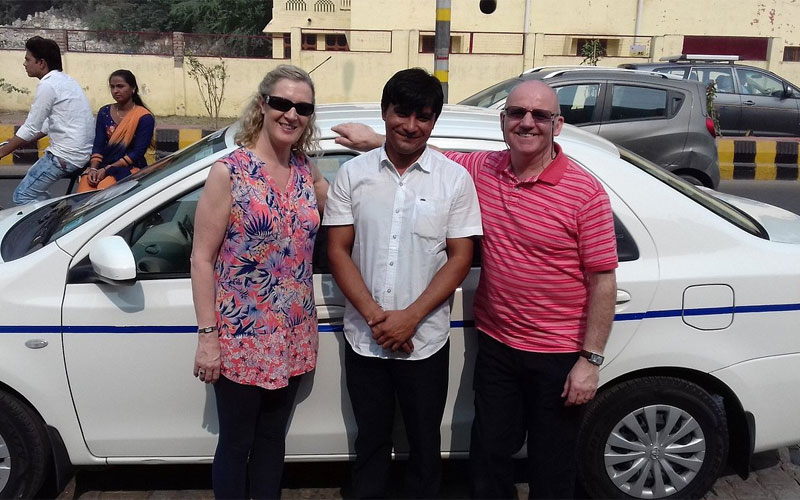
Take a retired couple from Edinburgh stepping out of the arrivals hall at Delhi's Terminal 3 just after midnight. Within thirty seconds, three men offer them a cheap taxi, one claims their hotel has been overbooked, and another waves a laminated card that looks almost official. The couple have a driver waiting with a name board, so they walk past all of it, but plenty of first-time visitors are not so lucky. Most of what goes wrong for foreigners in India is not dangerous; it is expensive, tiring or confusing. A little preparation before you land removes almost all of it, and the first piece of that preparation is knowing who to call.
India now has a single national emergency number, 112, which works much like 911 in the USA or 999 in the UK. It connects you to police, fire and ambulance through one call centre, and it works from any mobile phone, including a foreign SIM on roaming. The older direct numbers still work too: 100 for police, 101 for fire, 102 and 108 for ambulance services (108 is the general emergency ambulance in most states, while 102 is often used for maternity and child cases). For women travelling alone or in small groups, the women helpline 1091 is staffed around the clock, and several states, including Rajasthan, also run 181 for women in distress. The Ministry of Tourism runs a tourist helpline on 1363, which answers in English and several foreign languages, including German, French, Spanish, Japanese and Russian. It is the right number for problems that are not emergencies, such as a dispute with a taxi, a lost bag or confusion over a fake booking.
Save these numbers in your phone before you leave home, and write them on a card in your wallet in case your phone dies. Add your hotel's front desk number, your driver's mobile number and your embassy's emergency line. The US Embassy and the British High Commission are both in Chanakyapuri, New Delhi, and both have 24-hour duty officers for citizens in serious trouble. Australia, Canada and most European countries also have missions in Delhi and consulates in Mumbai.
The second step is your phone. Buy an Indian SIM at the airport (Airtel and Jio both have counters at Delhi and Mumbai airports) or use an eSIM. Indian SIM activation needs your passport and visa, and usually takes a few hours. A local number makes ride confirmations, hotel calls and WhatsApp messages with your driver far cheaper and more reliable than roaming.
Finally, think about keeping passport copies. Carry a colour photocopy of your passport photo page and Indian visa, keep a second copy in your main luggage, and email scans to yourself. Hotels in India are legally required to record foreign guests' passport and visa details, so you will be asked for the original at every check-in. Leave the original in the hotel safe on sightseeing days if the property has one, and carry the copy. If your passport is lost or stolen, you will need a police report (an FIR) from the local station before your embassy can issue an emergency travel document, and having a copy speeds that process enormously.
Explore India with Greater Confidence, Comfort and Peace of Mind
Discover India with the reassurance of a professionally arranged private journey. Travel with experienced chauffeurs, comfortable vehicles and dedicated local assistance.
Most scams aimed at foreigners in India follow a small number of scripts, and once you recognise the script, it loses its power. The first and most common is the fake tourism office scam, concentrated around New Delhi Railway Station, Paharganj and Connaught Place. A friendly man tells you your train ticket is invalid or that the road to your hotel is closed, then walks you to a "Government Tourist Office" with official-looking flags and maps on the walls. Inside, you are sold an overpriced package, often with low-grade hotels and unreliable cars. The genuine India Tourism office in Delhi is at 88 Janpath, and no real government office will ever approach you on the street. If anyone tells you your booking is cancelled, call the hotel or tour company directly from your own phone before believing a word of it.
The second script is the unofficial airport taxi. At Delhi, Mumbai and Jaipur airports, men inside or just outside arrivals will offer rides at what sound like fair prices. Some are honest, but many will stop on the way to "collect a friend", take you to a different hotel that pays them commission, or demand a much higher fare on arrival. The safe options are a pre-booked private transfer with your name on a board, the official prepaid taxi counter inside the terminal, or an app cab from the marked pickup zone. A pre-booked Delhi airport transfer in a sedan with an English-speaking driver usually costs INR 2,000 to 3,000 (about USD 24 to 36) to central Delhi or Aerocity, including tolls and parking.
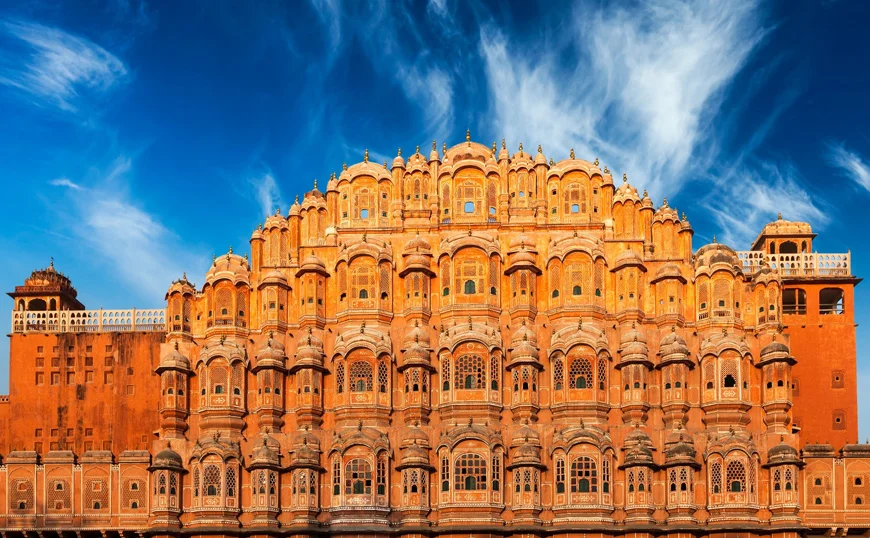
The third, and the one that costs travellers the most money, is the Jaipur gemstone scam. It usually starts with a polite young man who chats with you near the City Palace or Hawa Mahal, invites you for tea, and eventually explains that his family exports gemstones. Because of export duties, he says, he needs foreigners to carry stones home and deliver them to a buyer, and you will be paid a large commission. To show good faith, you must buy the stones first with your credit card. The stones are worth a fraction of what you pay, and the buyer abroad does not exist. Victims regularly lose USD 2,000 to 10,000 this way. The rule is simple: never buy gemstones as an investment from anyone in India, and never agree to carry goods for a stranger. If you want jewellery as a souvenir, buy from a fixed-price shop, ask for a certificate from the well-known gemstone testing laboratory in Jaipur, and only spend what you are happy to lose.
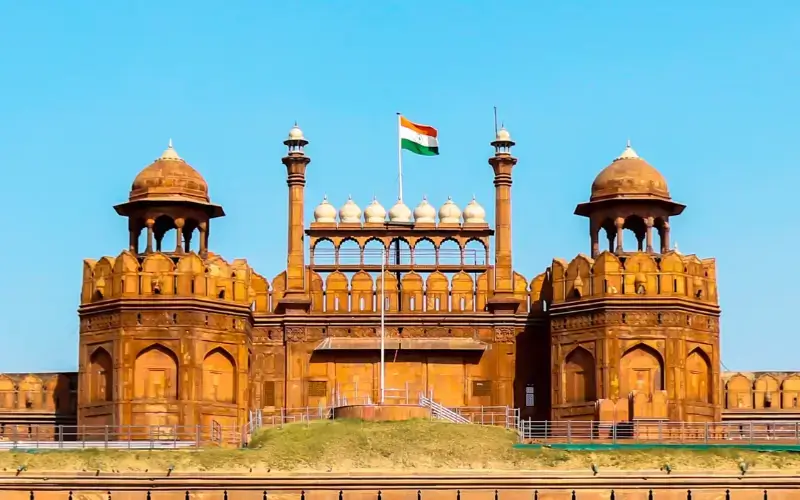
The fourth script is the "monument closed" trick. A rickshaw driver or tout tells you the Taj Mahal, Amber Fort or Red Fort is closed today for a ceremony, cleaning or a VIP visit, and offers to take you somewhere else instead, usually a shop. In reality, closures are rare and fixed. The Taj Mahal closes every Friday, the Red Fort closes on Mondays, and most other monuments are open daily. Check opening days on the Archaeological Survey of India website or ask your hotel, and walk to the entrance yourself before changing your day.
Smaller tricks include rickshaw drivers who "forget" to agree a price, shopkeepers who switch bank notes, and guides who appear at monument gates without a government licence. Approved guides carry an ID card issued by the Ministry of Tourism or the state tourism department, and they are happy to show it. Agree every fare before you sit down, count your change, and politely say no to anything that feels rushed.
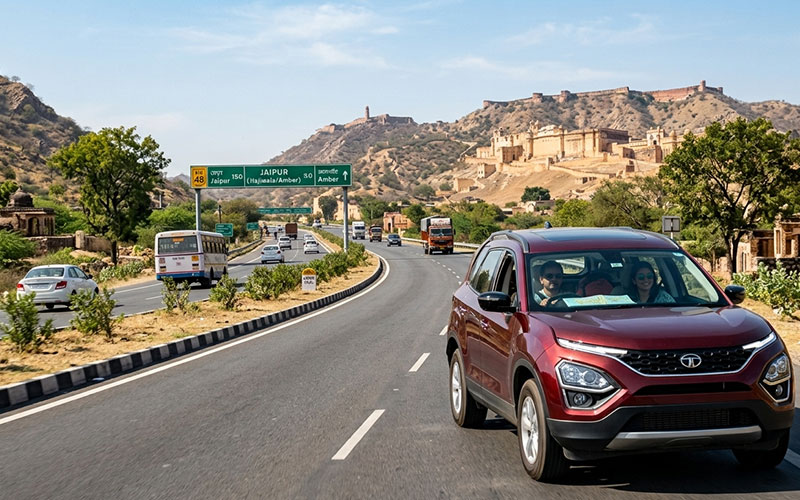
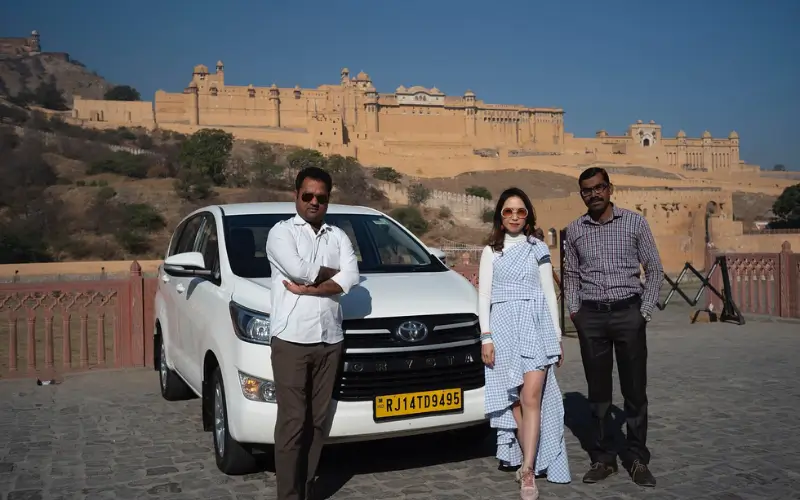
The single biggest safety decision you make in India is who drives you. Road accidents, not crime, are the main real risk for visitors, and a careful, experienced driver in a well-maintained car makes a bigger difference than any other choice. The first thing to know is how to tell a registered commercial vehicle from a private one. In India, cars licensed to carry paying passengers must have a yellow number plate with black letters. Private cars have white plates with black letters, and electric commercial cars have green plates with yellow letters. A white-plate car offering you a paid ride is operating illegally, which means its insurance will not cover you if anything goes wrong.
For long tours across states, the vehicle should also hold an All India Tourist Permit, which allows it to cross state borders without paying fresh entry tax at each checkpoint. The driver should have a commercial driving licence, often called a badge licence, which requires extra training and a clean record. You can check any vehicle's registration, insurance and permit status yourself by typing its number into the government mParivahan app. It takes about thirty seconds and is completely free.
Reviews are your next filter. On Tripadvisor, Google and Trustpilot, look for a long history of reviews rather than a sudden burst, and read the three-star and four-star reviews, not just the five-star ones. Look for drivers mentioned by name, specific routes and specific cities, because fake reviews tend to be vague. Check that recent reviews, from the last two or three months, are as strong as older ones, since companies sometimes change ownership or start subcontracting cars. Heritage India Private Tours, for example, holds a 5.0 rating from 448 Tripadvisor reviews, and most of those mention the driver by name, the car and the route, which is the kind of detail you want to see from any company you book.
Once you are travelling, sharing live location is one of the simplest safety habits. Use WhatsApp live location or Google Maps location sharing to send your route to a friend or family member at home, and ask your driver for his number on WhatsApp so your hotel and family can reach him too. Take a photo of the car's number plate and the driver's licence on the first morning, and send it home. Good drivers will not be offended; it is standard practice for careful travellers.
Night driving deserves special attention. Highways in India carry heavy truck traffic after dark, some vehicles run without proper lights, and animals cross roads in rural areas. A responsible tour company sets night driving rules: most avoid long highway drives after about 9 or 10 PM, and schedule early morning departures instead. If your flight lands late, stay overnight near the airport and set off at 7 or 8 AM rather than driving five hours to Jaipur or Agra in the dark. Drivers also need rest. Indian practice for tourist cars is around 250 to 300 km of driving per day, with a full night's sleep in proper driver accommodation, which your company should arrange.
Ask before booking whether the driver will be the same person for the whole trip, whether he speaks English, how many years he has driven tourists, and whether the car has working seat belts in the back. Rear seat belts are fitted in all modern cars, but some older vehicles have them tucked away or broken. Wear yours on every highway journey, and ask the driver to slow down if you feel uncomfortable. A good driver will do so without argument.
Discover India Beautifully, With Confidence at Every Step
From your airport arrival to journeys between India's most remarkable destinations, enjoy thoughtfully arranged private travel. With professional drivers.
Thousands of women travel through India every year, alone, with friends or with family, and the vast majority have a safe and rewarding trip. A few practical habits help a great deal. Dress choices matter more in small towns and religious sites than in big-city hotels; loose clothing that covers shoulders and knees draws far less attention. Carry a light scarf for temples and mosques. Avoid empty streets and isolated viewpoints after dark, and use a pre-booked car or a known driver rather than flagging down vehicles late at night. Safety for women travellers improves markedly with a private driver, because you always have a familiar person waiting outside the monument or restaurant, and you never need to stand on a roadside negotiating with strangers.
If someone makes you uncomfortable, speak loudly and firmly, and move towards families, shop staff or police. Indian onlookers tend to step in quickly when a foreign woman is clearly being bothered. Many cities, including Jaipur, Delhi and Agra, have dedicated tourist police posts near major monuments. Remember the women helpline 1091 and the all-in-one 112, and keep your phone charged with a small power bank. Some hotels also offer women-only floors or rooms near the lift; ask for these when you book.
Food and water safety is the other big concern, and it is where most travellers actually feel the effects of India. Drink only sealed bottled water, and check that the cap seal is unbroken before you open it. Popular brands such as Bisleri, Kinley and Aquafina cost INR 20 to 30 a litre in shops, and most good hotels provide filtered water free in your room. Use bottled water for brushing your teeth for the first few days. Avoid ice in roadside drinks, salads washed in tap water, and fruit you have not peeled yourself. Hot, freshly cooked food is almost always safe, and busy restaurants with a fast turnover are better than empty ones. Bring oral rehydration salts, a basic anti-diarrhoea medicine and hand sanitiser, and use it before every meal.
Travel insurance for India is not optional. Private hospitals in Delhi, Jaipur and Mumbai offer excellent care, but a few nights in a private room after an accident can cost USD 3,000 to 8,000, and medical evacuation home can exceed USD 50,000. Choose a policy with at least USD 100,000 of medical cover, emergency evacuation, trip cancellation and theft cover, and check that it includes road travel by private car. Keep the insurer's 24-hour helpline number with your emergency contacts, and photograph your policy documents.
Health preparation also helps. Visit a travel clinic six to eight weeks before your trip to discuss vaccinations such as hepatitis A and typhoid, and bring enough of any regular medicine for the whole trip plus a week, with the prescription. Pharmacies in Indian cities are well stocked, but brand names differ from home. Heat is a real risk from April to June, when Rajasthan regularly reaches 42 to 46°C. Sightsee early, rest through the afternoon, wear a hat, and drink far more water than you think you need. A good driver will keep cold water in the car and suggest a sensible pace for the season.
When you add up the risks above, a pattern appears. Most problems in India happen at moments of transition: arriving at airports and stations, hiring transport on the street, finding a restaurant at night, or being approached at monument gates. A private car with driver in India removes most of those moments. Your driver meets you inside the arrivals hall, takes you straight to a hotel that has already been confirmed, waits outside each monument while you visit, and knows which restaurants on the highway serve clean food and have proper washrooms. He also acts as a quiet filter. Touts are far less persistent with a traveller who steps out of a commercial car with an experienced local driver beside them, and drivers know the usual scripts better than anyone.
Experience matters here. Magan Singh, who founded Heritage India Private Tours in Jaipur, has more than 27 years of driving foreign guests across Rajasthan and North India, and the company has looked after more than 16,000 travellers, mostly from the USA, UK, Australia and Europe. That kind of track record tends to show in small, practical details: which entrance to use at Amber Fort to avoid the crowds, which highway service areas have reliable toilets, and when to leave Agra for Jaipur to avoid the worst of the afternoon traffic.
Prices for a safe private driver in India vary by car and distance. On the higher side, expect INR 3,800 to 4,800 a day (about USD 46 to 58) for a sedan like the Maruti Suzuki Ciaz, INR 5,200 to 6,500 a day (about USD 63 to 78) for a Toyota Innova Crysta or Innova Hycross, and INR 7,500 to 10,000 a day (about USD 90 to 120) for a Tempo Traveller. Luxury cars such as the Mercedes-Benz S Class or BMW 5 Series cost considerably more. These rates normally include fuel, driver allowance, tolls, state taxes and parking, but you should confirm each item in writing. Monument entry fees and local guide fees are almost never included. A good English-speaking local guide costs INR 1,800 to 3,000 for a half or full day in cities like Jaipur, Agra and Delhi. Tipping is customary; INR 500 to 800 per day for the driver is a fair norm for good service.
To book safely, start by asking for a written day-by-day itinerary, the vehicle model, the driver's name and his licence details, and a clear list of inclusions and exclusions. Pay a modest advance, usually 20 to 30 percent, and settle the balance during or at the end of the trip. Avoid any company that asks for full payment upfront to a personal account, or that cannot give you a landline, a physical office address or verifiable reviews. Confirm the cancellation policy before paying anything.
Heritage India Private Tours takes bookings on WhatsApp at +91 9799397401 and through the enquiry form on the website, and you can share your dates, group size and route there to get a written quote. Whichever company you choose, the same principles apply: registered car, experienced driver, clear paperwork, and emergency arrangements that you have sorted out before you board the plane.
Dial 112, the all-in-one emergency number that connects to police, fire and ambulance. It works from any mobile phone, including foreign SIMs on roaming. You can also call 100 for police, 108 or 102 for an ambulance, and 1091 for the women helpline. For non-emergency tourist problems, the Ministry of Tourism helpline 1363 answers in English and several foreign languages.
It is safe if you use a pre-booked transfer, the official prepaid taxi counter inside the terminal, or an app cab from the marked pickup zone. Avoid men offering rides inside or outside arrivals. A pre-booked sedan transfer to central Delhi costs around INR 2,000 to 3,000, including tolls and parking, with the driver waiting for you holding a name board.
Commercial vehicles licensed to carry paying passengers have yellow number plates with black letters, while private cars have white plates. Electric commercial cars use green plates with yellow letters. For interstate tours, the car should hold an All India Tourist Permit. You can check registration and insurance by entering the number into the free mParivahan app.
A friendly stranger invites you for tea and explains that his family exports gemstones. He asks you to buy stones by credit card and carry them abroad to a buyer, promising a large commission. The stones are nearly worthless and the buyer does not exist. Never buy gemstones as an investment in India and never carry goods for strangers.
The Taj Mahal is closed every Friday for prayers and is open from sunrise to sunset on all other days. If anyone tells you it is closed on another day, treat it as a tout's trick to take you to a shop. Foreign visitors pay INR 1,100 for entry plus INR 200 for the main mausoleum, bought online or at the gate.
It is best to avoid long highway drives after about 9 or 10 PM. Trucks dominate the highways at night, some vehicles lack proper lights, and animals cross rural roads. If you arrive on a late flight, stay near the airport and leave the next morning around 7 or 8 AM. Reputable tour companies schedule driving days in daylight.
Most solo women travellers have safe trips with sensible precautions. Dress modestly in smaller towns and religious sites, avoid isolated places after dark, and use pre-booked cars instead of street taxis at night. Save 1091 and 112 in your phone, share your live location with someone at home, and keep a power bank so your phone never runs flat.
No. Drink only sealed bottled water and check the cap seal before opening. Use bottled water to brush your teeth for the first few days, and avoid ice in roadside drinks. Good hotels provide filtered water free in rooms, and bottles cost INR 20 to 30 a litre in shops. Your driver can keep chilled water in the car.
Choose a policy with at least USD 100,000 of medical cover, plus emergency evacuation, trip cancellation and theft cover. Check that it covers road travel in a private car. Private hospital stays after an accident can cost several thousand dollars, and evacuation home can exceed USD 50,000. Keep the insurer's 24-hour helpline number with your other emergency contacts.
Send your travel dates, group size and preferred route on WhatsApp to +91 9799397401 or through the website enquiry form. You will receive a written itinerary, vehicle details and a clear list of inclusions and exclusions. A modest advance confirms the booking, with the balance paid during the trip, and an English-speaking driver stays with you throughout.