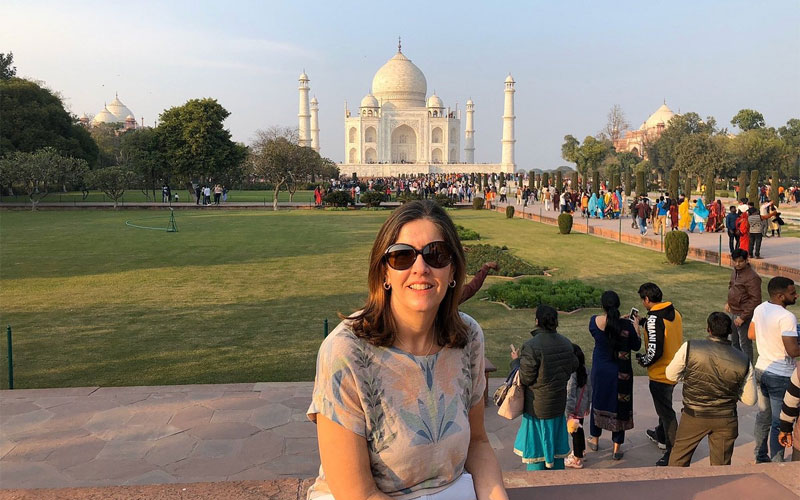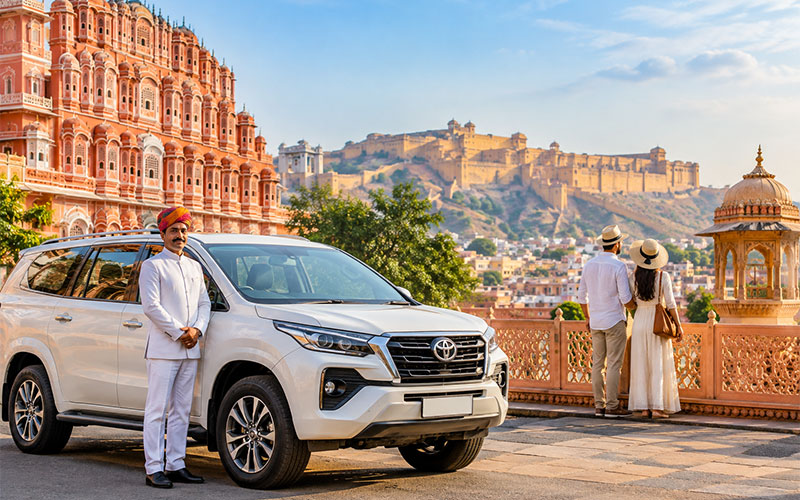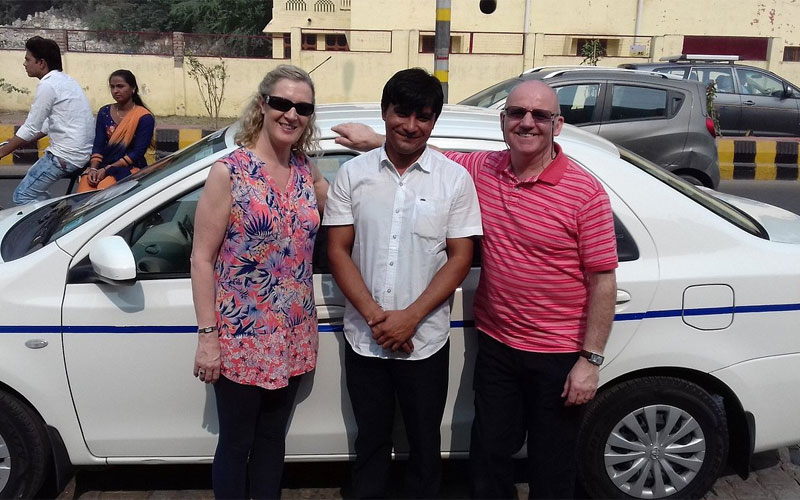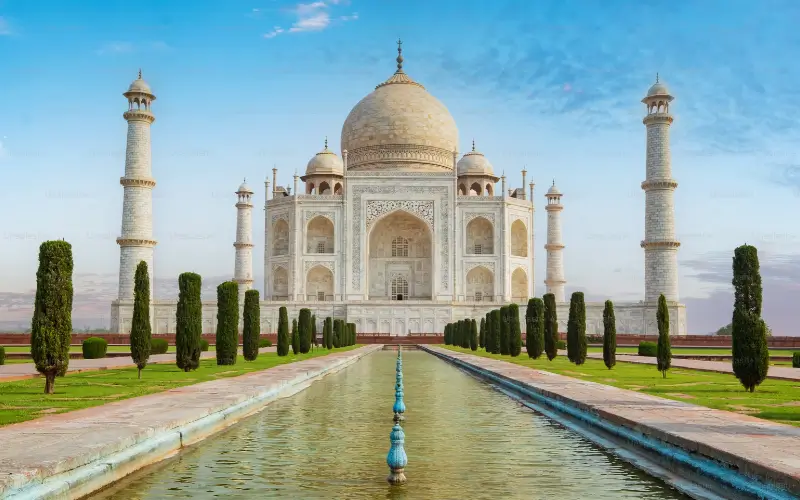
Picture a family of four from Chicago pulling up near the Taj Mahal East Gate at 5:45 AM after an early start from their Agra hotel. It is still half dark, a line is already forming, and several men in the parking area are calling out offers of cheap tours and shortcuts. Then their licensed guide steps forward, greets them by name, hands over pre-bought tickets and walks them straight to the right queue. Twenty minutes later they are standing at the main gateway as the white dome turns pale pink in the first light. That calm, well-timed start is the real reason to book a private tour guide in Agra for the Taj Mahal.
The Taj Mahal is one of the most visited monuments on earth, and on busy days it draws tens of thousands of people. Most visitors spend only an hour inside and leave with photos but very little of the story. A good Taj Mahal guide changes that. In clear English, the guide explains why Emperor Shah Jahan built the tomb for his wife Mumtaz Mahal in the 17th century, how around 20,000 craftsmen worked on it for roughly two decades, and why the four minarets lean very slightly outward. You learn to read the calligraphy that grows larger towards the top so it looks even from the ground, and to spot the optical tricks built into the gateway.
Guides also save a surprising amount of time. They know which gate has the shortest queue at each hour, which ticket line to use, where the battery carts stop and how to move through security without trouble. Inside the complex, they lead you to the best photo points before the crowds arrive, including the central platform, the reflecting pool and the side mosque with its red sandstone frame. On a hot day, they will bring you into the shade at the right moments and suggest when to see the main mausoleum.
Most importantly, a licensed guide protects you from touts. Unlicensed men outside the gates often promise a fast entry or a special price, then push guests into commission shops for marble, carpets or jewellery. Government-approved guides in Agra carry an identity card issued by the Ministry of Tourism or the Uttar Pradesh tourism authorities, and they are the only people allowed to give a full talk inside the monument. Booking your guide ahead also means you meet a named person at a fixed time and place, rather than negotiating with strangers before sunrise.
Heritage India Private Tours arranges licensed Agra guides on request together with our private cars. Our founder and head chauffeur, Magan Singh, has spent more than 27 years driving guests between Delhi, Agra and Jaipur, and our team has looked after over 16,000 travellers, mostly from the USA, UK, Australia and Europe. For many of them, the Taj Mahal is the reason they came to India in the first place, so we make sure the visit is properly organised from the first minute to the last.
The Taj Mahal opens about 30 minutes before sunrise and closes about 30 minutes before sunset, so Taj Mahal timings shift with the season. In winter, gates open around 6:15 AM and close around 5:15 PM; in summer, they open around 5:15 AM and close around 6:30 PM. The monument is closed every Friday for afternoon prayers at the mosque inside the complex, so never schedule your Agra day on a Friday. Your guide will advise on the exact opening time for your date.
The Taj Mahal foreigner ticket costs INR 1,100 (about USD 13) per person. Entry to the main mausoleum, where the cenotaphs lie, requires an additional ticket of INR 200 (about USD 2.50), so most foreign visitors pay INR 1,300 (about USD 16) in total. Children under fifteen enter free. Online tickets bought through the official Archaeological Survey of India portal are usually slightly cheaper than tickets at the counter and save time in the queue. The foreigner ticket also includes a bottle of water, shoe covers and access to the battery carts. Guides enter free, so you only pay for your own group.
There are three gates. The East Gate is our first choice for sunrise because the queue is shorter, the walk from the parking area is easy and many of the better hotels sit on this side. The West Gate is the busiest, as most coaches and domestic visitors use it, especially after 9 AM. The South Gate is mostly used as an exit and is not recommended for entry. Your driver will drop you at the right parking lot for your chosen gate and wait there.
Petrol and diesel vehicles are not allowed within 500 metres of the Taj Mahal to protect the white marble from pollution. From the East Gate and West Gate parking areas, battery carts run to the entrance. For foreign ticket holders the ride is included or costs a token fee, and the trip takes about 5 to 7 minutes. You can also walk, which takes 10 to 15 minutes. Camel carts and horse carts operate too, but your guide will usually suggest the battery cart for comfort.
Taj Mahal security rules are strict and enforced at airport-style checkpoints. Banned items include food, sweets, tobacco, lighters, matches, knives, tripods, drones, large bags, books, chargers, power banks, headphones, toys and any electronic item other than a phone or a normal camera. Small handbags with a phone, wallet, small water bottle and sunglasses are fine. Video cameras are allowed only up to the main gateway. Your guide will tell you what to leave in the car, which saves you from a long walk back to the cloakroom.
Inside the mausoleum, photography is not allowed. Shoes must be removed or covered with the shoe covers supplied with your ticket. Dress modestly, with shoulders and knees covered, as the complex includes an active mosque. Separate security lines for men and women move fairly quickly, but at peak times the wait can stretch to 30 to 45 minutes. Arriving at opening time, or late afternoon on a weekday, is the best way to avoid this.
Guide rates in Agra follow official slabs, but market rates rise in the October to March season and with special requests. We always quote on the higher side, so the final amount is often a little lower. For Taj Mahal guide fees with one to four guests, budget INR 2,500 to 3,500 (about USD 30 to 42) for a half-day of up to 4 hours. This normally covers the Taj Mahal and Agra Fort together. A full-day Agra guide for up to 8 hours costs INR 3,500 to 5,000 (about USD 42 to 60) and adds Itmad-ud-Daulah, Mehtab Bagh and other sights.
Larger groups pay more because the guide manages more people through security and crowded areas. For five to fifteen guests, expect INR 3,500 to 5,000 (about USD 42 to 60) for a half-day and INR 5,000 to 7,000 (about USD 60 to 84) for a full day. Groups above fifteen are usually split between two guides or given headsets, which cost about INR 100 to 150 per person.
A language surcharge applies if you need a guide speaking something other than English. French, Spanish, German and Italian guides typically add INR 1,000 to 1,500 (about USD 12 to 18) per day, while Japanese, Russian, Korean or Mandarin guides can add INR 1,500 to 2,500 (about USD 18 to 30) per day. Because the Taj Mahal is so popular with European and Asian visitors, these guides are booked early, so request them two to three weeks ahead in peak months.
The guide fee covers commentary, queue and ticket support, photo help and walking time. It does not include entry tickets, battery cart extras, meals, a moonlight viewing ticket or any shopping. If your tour runs over lunch, offer your guide a meal or a short break. A typical small-group half-day might look like this for two foreign guests: guide fee INR 3,500, Taj Mahal tickets with mausoleum INR 2,600, Agra Fort tickets around INR 1,300, plus tips. That adds up to roughly INR 7,500 to 8,500 (about USD 90 to 102) before the car.
Tipping your Agra guide is optional but appreciated. A tip of INR 500 to 800 (about USD 6 to 10) per group for a half-day, or INR 1,000 to 1,500 (about USD 12 to 18) for a full day, is fair for good service. Drivers are tipped separately, usually INR 300 to 500 (about USD 4 to 6) per day.
One clear rule: a licensed guide should never pressure you to buy anything. Some guides will offer a visit to a marble inlay workshop, where artisans show how semi-precious stones are cut and set into white marble in the same style as the Taj Mahal. These workshops can be genuinely interesting, and a demonstration takes about 20 to 30 minutes. However, the visit is completely optional. If you are not interested, tell us at booking and we will instruct the guide to skip all shops. If you do go and want to buy, compare prices calmly, ask for a written receipt and certificate, and never feel obliged.
A well-paced Agra full-day tour with a guide begins at the Taj Mahal at opening time. Allow two and a half to three hours here so you can walk the gardens, enter the main mausoleum, see the mosque and guest house on either side and sit for a while by the river terrace. Your guide explains the four-part garden layout, the inlay work of carnelian, lapis and jade, and the story of the false cenotaphs above and the real graves below. After the visit, most guests return to the hotel for breakfast and a short rest.
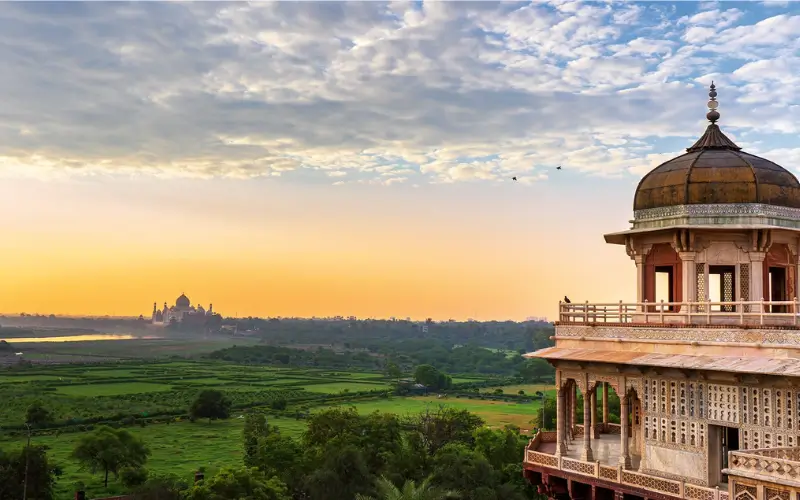
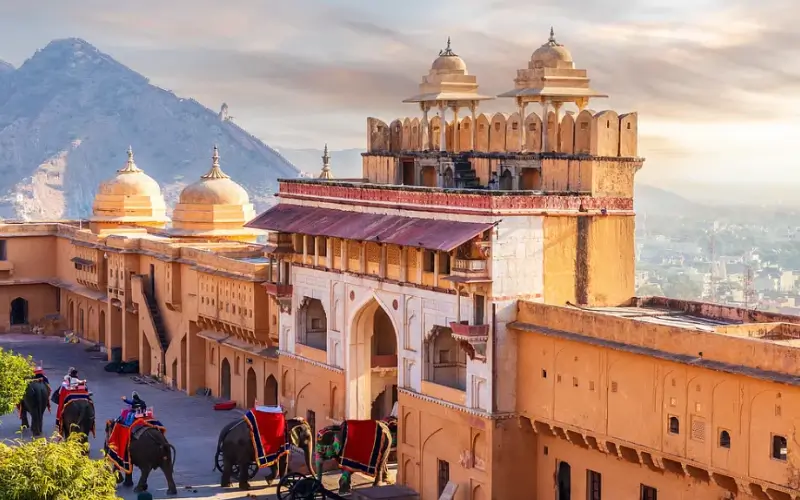
Next comes Agra Fort, a UNESCO World Heritage Site about 2.5 km from the Taj. It is open from sunrise to sunset every day, and the foreigner ticket costs around INR 650 (about USD 8). Built in red sandstone by Emperor Akbar and later extended with white marble palaces by Shah Jahan, it was the main seat of Mughal power for generations. Your guide leads you through the Amar Singh Gate, the Jahangiri Mahal, the Hall of Public Audience, the Hall of Private Audience and the Musamman Burj, the octagonal tower where Shah Jahan is said to have spent his last years looking out at the Taj Mahal. Allow 75 to 90 minutes.
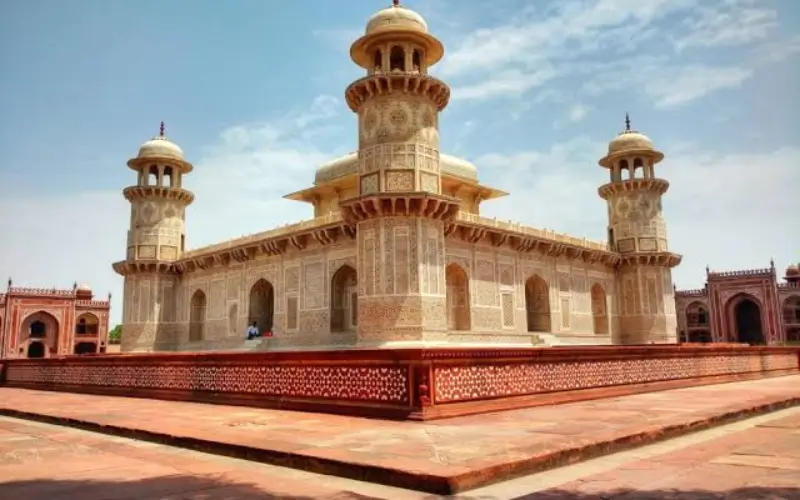
After lunch, cross the Yamuna to Itmad-ud-Daulah, often called the Baby Taj. It is open from sunrise to sunset, and the foreigner ticket costs around INR 310 (about USD 4). Built by Empress Nur Jahan for her father, this small marble tomb was among the first in India to use full stone inlay on white marble, and many historians see it as a design step towards the Taj Mahal. It is usually quiet, shaded and very peaceful, with fine lattice screens and painted ceilings. Allow 40 to 50 minutes.
The day ends at Mehtab Bagh for sunset. This Mughal garden sits on the north bank of the Yamuna, directly across from the Taj Mahal, and is open from sunrise to sunset with a foreigner ticket of around INR 300 (about USD 4). From the riverside viewing area you see the full Taj reflected in the river on calm evenings, with far fewer people than at the main complex. Your guide will explain the legend of the Black Taj and point out the foundations of the old garden. Allow 45 minutes to an hour, arriving about an hour before sunset.
Some guests also ask about Taj Mahal moonlight viewing nights. Night viewing is allowed on the full moon night and on the two nights before and after it, but not on Fridays or during the month of Ramadan. Viewing runs in batches of up to 50 people for 30 minutes each, roughly between 8:30 PM and 12:30 AM. Visitors watch from the red sandstone platform near the main gateway, not from inside the gardens. Foreigner tickets cost around INR 750 (about USD 9) and must be bought at least one day ahead at the Archaeological Survey office on Mall Road in Agra with passport details. Tickets sell out fast, so tell us early if you want this.
Other add-ons include Fatehpur Sikri, about 40 km west of Agra and roughly one hour by car, with a foreigner ticket of around INR 610 (about USD 7), and Akbar's Tomb at Sikandra. Your guide will help you choose based on time and energy.
Most guests reach Agra from Delhi, and a Delhi to Agra private car with guide is the most comfortable way to do it. The distance is about 230 km via the Yamuna Expressway, and the drive takes 3.5 to 4 hours depending on traffic leaving Delhi. For a same-day Taj Mahal tour, we usually leave Delhi at 3 AM to reach the East Gate at opening time, or at 6 AM for a mid-morning visit with fewer early crowds but a longer queue.
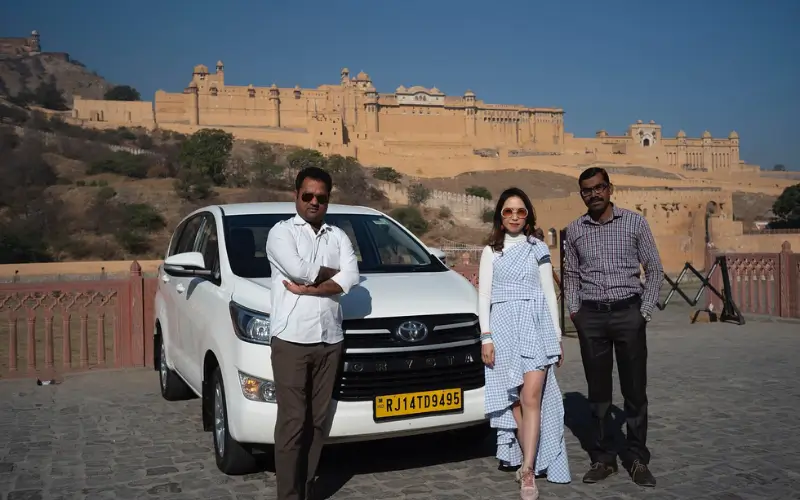
For a same-day Delhi to Agra tour by car, the round trip covers about 470 to 500 km. Our high-side rates, including fuel, driver allowance, expressway tolls of about INR 1,000 to 1,400 for the return journey and parking, are roughly INR 8,000 to 10,000 (about USD 96 to 120) in a Maruti Suzuki Ciaz for up to four guests, INR 10,000 to 13,000 (about USD 120 to 156) in a Toyota Innova Crysta or Innova Hycross for up to six guests, and INR 14,000 to 18,000 (about USD 168 to 216) in a Tempo Traveller for up to eighteen guests. A Force Urbania premium van or luxury cars such as the BMW 5 Series, Audi A5 and Mercedes-Benz S Class are available at higher rates. Guide fees and tickets are added on top.
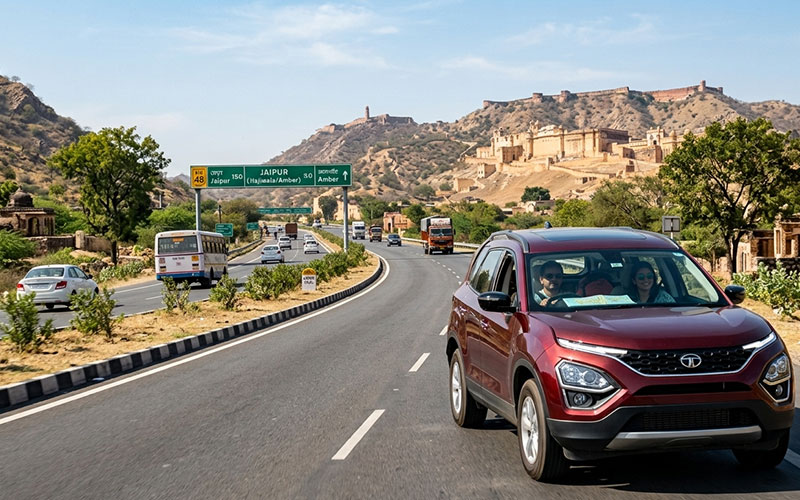
Many guests prefer an overnight stay, which allows sunrise at the Taj without the very early start, plus Mehtab Bagh at sunset. An overnight trip in the same car adds a driver night allowance of about INR 400 to 600 per night. You can also continue to Jaipur on the Golden Triangle route, about 240 km and 4 to 5 hours from Agra, with a stop at Fatehpur Sikri or the Abhaneri stepwell on the way. The same driver stays with you, and we arrange separate licensed guides in each city.
To book a private Taj Mahal guide, send your travel date, hotel or pick-up point, group size, preferred language and any interests such as photography, architecture or moonlight viewing. You can reach us on WhatsApp at +91 9799397401 or through the enquiry form on our website. We reply with a suggested schedule, a clear itemised quote and a reminder about Friday closures and security rules.
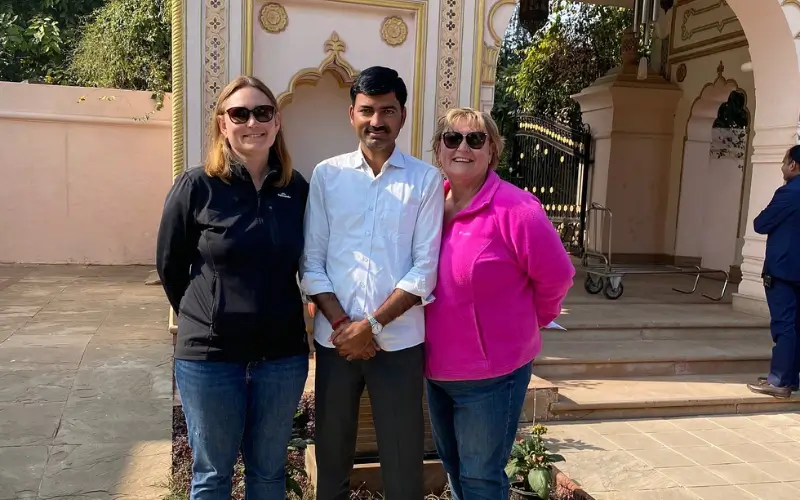
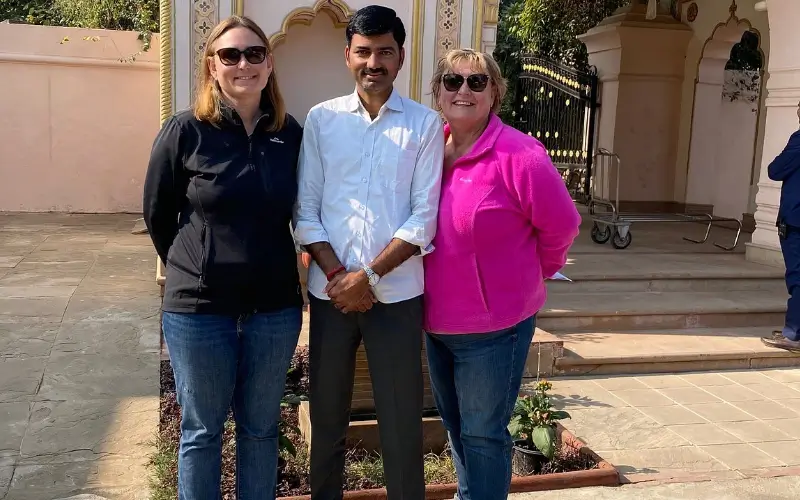
Once you approve, we confirm a licensed guide and send you the guide's name, phone number and licence details, together with the driver's name, car number and pick-up time. The guide normally meets you at your hotel or at the Taj Mahal parking area, so you never deal with touts. If you prefer, we can also pre-book your online tickets so you walk straight to the security line.
Payment is straightforward. A small advance secures your car and guide, with the balance payable in cash or by card on the day. Cancellation is normally free up to 7 days before travel and partly refundable after that. Heritage India Private Tours holds a 5.0 rating from 448 reviews on Tripadvisor and is also listed on Trustpilot, and our team handles Taj Mahal visits almost every day of the season.
For one to four guests, budget INR 2,500 to 3,500 (about USD 30 to 42) for a half-day covering the Taj Mahal and Agra Fort, and INR 3,500 to 5,000 (about USD 42 to 60) for a full day. Larger groups and non-English guides cost more. Monument tickets, meals and tips are paid separately.
The foreigner ticket costs INR 1,100 (about USD 13) per person, plus INR 200 (about USD 2.50) to enter the main mausoleum, so most visitors pay INR 1,300 in total. Children under fifteen enter free. The ticket includes a water bottle, shoe covers and battery cart access. Licensed guides enter without a ticket.
The Taj Mahal opens about 30 minutes before sunrise and closes about 30 minutes before sunset. In winter that is roughly 6:15 AM to 5:15 PM, and in summer roughly 5:15 AM to 6:30 PM. The monument is closed every Friday, so schedule your Agra visit for any other day of the week.
The East Gate is usually best for sunrise because its queue is shorter, the walk from parking is easy and many good hotels are close by. The West Gate is busier, especially after 9 AM. The South Gate is mainly an exit. Your driver drops you at the correct parking area for your chosen gate.
Food, tobacco, lighters, knives, tripods, drones, large bags, books, chargers, power banks, headphones and most electronics are not allowed. A phone, normal camera, wallet, small water bottle and sunglasses are fine. Photography is not allowed inside the main mausoleum. Leave banned items in your private car to avoid using the cloakroom.
Yes, on the full moon night and two nights before and after, except Fridays and during Ramadan. Viewing runs in 30-minute batches of up to 50 people between about 8:30 PM and 12:30 AM, from the platform near the main gateway. Foreigner tickets cost around INR 750 and must be bought a day ahead in Agra.
No. A marble inlay workshop visit is completely optional. Some guests enjoy the 20 to 30 minute demonstration of stone cutting and setting, but you are never obliged to go or buy. Tell us at booking if you want no shopping stops, and we will instruct your guide to keep the day focused on monuments only.
Book a licensed guide in advance and arrange a fixed meeting point with your driver. Politely ignore anyone offering fast entry, cheap tours or special prices near the gates, and never follow strangers to shops. Licensed guides carry official identity cards, and we share your guide's name and phone number before the visit.
Yes. Agra is about 230 km from Delhi via the Yamuna Expressway, roughly 3.5 to 4 hours each way. A same-day trip in a sedan costs about INR 8,000 to 10,000 (about USD 96 to 120) including tolls and fuel. Leave at 3 AM for sunrise, or stay overnight for a more relaxed visit.
Send your date, hotel, group size, language and interests on WhatsApp at +91 9799397401 or through our website enquiry form. We reply with a schedule and itemised quote, then confirm a licensed guide and private car. You receive the guide's and driver's names, phone numbers and pick-up time before your visit.