Jaipur - Bagru - Bundi - Udaipur - Pushkar
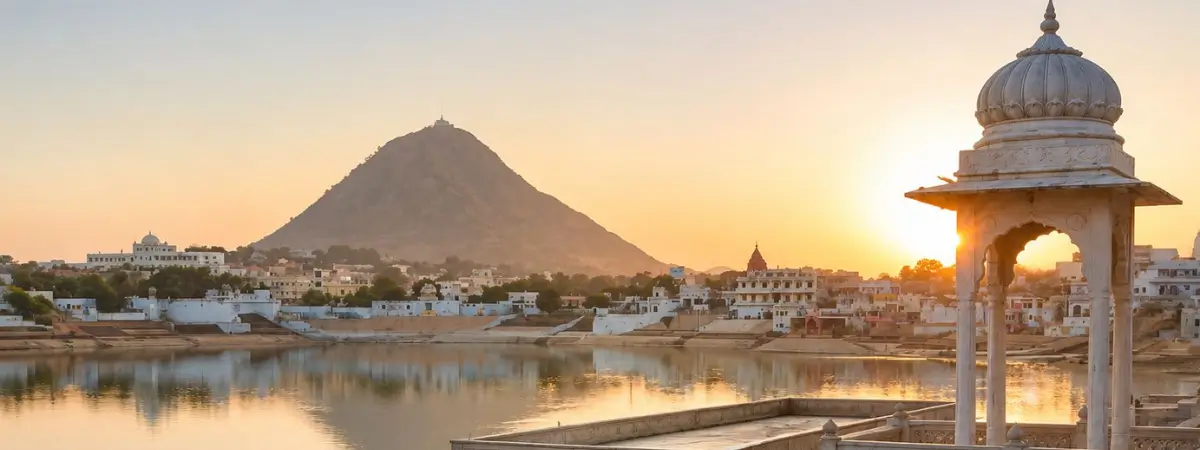
Rajasthan's palaces were full of women's spaces, from the latticed screens of the Hawa Mahal to the garden Udaipur built for forty-eight royal maids, and our Rajasthan women only private tour follows that thread across the state. The group is yours alone: a solo traveller, two sisters, a book club or a circle of old friends. Each city has an angle chosen for women travellers. In Jaipur you shop the textile bazaars with a local woman guide and cook in a family kitchen; in Bagru you print cotton with hand-carved wooden blocks beside a Chhipa artisan family; Bundi's queen-built stepwells and quiet lanes give you room to wander; Udaipur brings women's craft cooperatives and lakeside evenings; and Pushkar ends the trip with a hilltop temple to Savitri, Brahma's wife.
Safety and comfort shape every booking. Your private car and driver comes from our own Jaipur team, run by founder Magan Singh, and every chauffeur on women's tours has years of service with us, speaks English and is briefed on keeping a respectful distance. Hotels are heritage properties and boutique havelis with round-the-clock reception, well-lit entrances and staff we know personally. We request women guides in Jaipur, Udaipur and Pushkar, and a female coordinator in our office takes your calls at any hour. The pace is relaxed, with late starts after long days and free time to sit with a book on a rooftop. This women's tour of Rajasthan starts and ends in Jaipur, so there are no domestic flights, just short, scenic road transfers.
Tour Highlights
 Package Includes:
 Package Excludes:
Reply within 24hrs
Landing at Jaipur International Airport, you are greeted at the exit gate by your chauffeur and a representative from our office, both carrying a placard with your name. For solo women and small groups, we share the chauffeur's name, photograph and mobile number with you a few days before arrival, so there are no surprises at the airport. The drive to your heritage hotel in the old city or the Civil Lines area takes twenty-five to forty minutes. At check-in our coordinator gives you a local SIM card, a printed sheet of emergency contacts, and a short talk on dress, tipping and bargaining that many first-time visitors to India say they find reassuring.
The rest of the day is yours to rest. Most of our women travellers enjoy a slow late afternoon on the hotel terrace with masala chai and a plate of pakoras, watching kites drift over the pink city walls. If you feel like stretching your legs, your chauffeur can take you to Jawahar Kala Kendra, an arts centre designed by architect Charles Correa, where small exhibitions and evening performances are held in courtyards inspired by the nine planets. Its café is a calm, friendly place for a light dinner, and local women artists and students fill the space in the evenings. Back at the hotel, try a restorative oil head massage before an early night.
Overnight stay in Jaipur.
Start the day with a woman guide who grew up inside the walled city. Your first stop is the Hawa Mahal, and today you go inside, not just stop for a photo. The five-storey palace has no staircases, only gentle ramps, and its 953 small windows let the royal women of the zenana watch processions and festivals on the street below without being seen. Your guide talks about purdah, palace life and the role of queens in Jaipur's history, which turns a famous facade into a very human story. From the top floor, the view stretches over the City Palace, Jantar Mantar and the Nahargarh hills.
The second half of the morning is a slow walk through the bazaars, which is the heart of this Jaipur city tour for women. In Johari Bazaar, jewellers set kundan and meenakari pieces, and lehenga shops stack bright fabric to the ceiling. Kishanpol Bazaar sells tie-dyed bandhani and leheriya scarves, while Chaura Rasta is lined with bookshops and stationery stores. Your guide points out fair-price shops and helps with bargaining where needed. Lunch is at a popular vegetarian thali restaurant, and the afternoon is free for a nap or the spa. At sunset, the Patrika Gate at Jawahar Circle makes a colourful backdrop for photos.
Overnight stay in Jaipur.
Head out after breakfast to Amber Fort, focusing on the women's quarters. Your guide leads you through the Man Singh I Palace, the oldest part of the fort, where twelve queens had separate apartments around a central courtyard, all connected so the king could visit without anyone seeing which way he went. The Sheesh Mahal and the Sukh Niwas are shown in turn, but the stories here are about the women who lived in these rooms. Down in the old town of Amber, the Anokhi Museum of Hand Printing sits in a restored haveli, and a resident craftsman demonstrates carving and printing, a perfect introduction to tomorrow's workshop in Bagru.
Late afternoon brings one of the most loved parts of this tour: a home cooking class with a Jaipur family. The lady of the house teaches you to make dal, gatte ki sabzi with gram flour dumplings, missi roti and a simple kheer, while sharing stories about family life, festivals like Teej and Gangaur, and how recipes pass from mother-in-law to daughter-in-law. You eat what you cook together at the family table. Many women guests say this is the evening they remember most clearly from the whole trip. Your chauffeur waits outside and drives you back to the hotel afterwards, with a printed copy of the recipes.
Overnight stay in Jaipur.
After a later breakfast, drive southwest to Bagru, a village of printers whose craft dates back about three hundred years. The Chhipa community still prints by hand with carved teak blocks, using natural dyes from indigo, pomegranate rind, turmeric and a fermented iron mix that turns black when it dries. Your host family shows the full process: washing cotton in the river clay called Dabu, laying out long tables, mixing colours and stamping each block with an even, steady hand. You then print your own scarf, tote bag or table runner with your chosen blocks, which the family washes and dries for you to take home.
Lunch is a simple home-cooked meal with the artisan family, often bajra roti, dal and seasonal vegetables. On the way back to Jaipur, stop at Sisodia Rani Garden, built in the eighteenth century by Maharaja Sawai Jai Singh II for his Sisodia queen from Udaipur. Its terraced lawns, fountains and murals of Radha and Krishna are peaceful in the late afternoon light. Finish at Galta Ji, the temple complex set in a rocky gorge with natural spring tanks, where many monkeys live and pilgrims bathe. Women guides often call this their favourite quiet place in Jaipur.
Overnight stay in Jaipur.
Today's drive heads south toward the Hadoti region. Your chauffeur takes the highway via Tonk, with a chai break at a reliable highway restaurant, and you reach Bundi by lunchtime, ready for a home-cooked meal and an hour of rest. Bundi is small, quiet and walkable, with blue-washed houses spilling down the hillside below Garh Palace and Taragarh Fort. It sees far fewer visitors than the big cities, which makes it a good place for women travellers to walk freely and slowly. Your guesthouse is a family-run haveli near the palace, with a rooftop terrace, home-cooked meals and owners who have looked after our guests for many years and treat solo women travellers like visiting family.
In the late afternoon, walk with your guide to Sukh Mahal, a small white summer palace on the banks of Jait Sagar Lake. Rudyard Kipling stayed here, and it is said that parts of his novel Kim were inspired by Bundi. Lotus flowers cover parts of the lake in the monsoon months. Nearby, the Kshar Bagh royal cenotaphs carry fine carvings of elephants and horses. Return to the haveli for dinner on the roof, with Bundi's palace lit up above you. Ask the owners about the Teej festival, when women in green saris swing from decorated swings and sing songs about the monsoon.
Overnight stay in Bundi.
Spend the morning at Garh Palace, rising in tiers above the town. Your guide shows you the Hathi Pol with its twin stone elephants, the Badal Mahal with fine ceiling paintings, and the zenana chambers where queens and princesses once lived. The Chitrashala gallery, built by Rao Umed Singh, is covered in turquoise and green murals of Krishna and the gopis, court ladies on swings and women celebrating Holi with coloured water. The paintings show women at leisure, at prayer and at music, which suits the theme of the trip well. If you are fit and keen, the steep path up to Taragarh Fort gives wide views of the town and the lake.
After lunch, visit Dabhai Kund, a geometric stepwell with endless criss-cross steps, often called the Jail Kund, and then the old market streets near Chogan Gate, where women sell vegetables, bangles and lac jewellery. Bundi was once a centre of miniature painting, and a few local artists still paint in the old style; your guide can introduce you to one in his home studio if you would like to buy a small piece. Spend the evening at leisure on the haveli rooftop, watching the stars appear over the palace. It is one of the calmest nights of the whole Rajasthan women's tour.
Overnight stay in Bundi.
Leave after breakfast for Udaipur, crossing the Chambal valley and the fields around Bijolia. Your chauffeur suggests a short stop at Menal, a group of eleventh-century Shiva temples beside a waterfall that flows during and after the monsoon. The site is rarely crowded and makes a peaceful break. Lunch is at a highway restaurant near Chittorgarh, then the road rises into the green hills of Mewar. You reach Udaipur in the afternoon, and your hotel is a lakeside haveli in the old city, close to Gangaur Ghat, named for the festival when women carry painted idols of the goddess Gauri to the lake.
As the sun goes down, your chauffeur takes you to Ambrai Ghat on the western shore of Lake Pichola. It is one of the best places in Udaipur to watch the light change across the City Palace, the Lake Palace and the old havelis. Local families and young couples gather on the steps, and the area feels relaxed and safe at sunset. Have dinner at a rooftop restaurant overlooking the lake, where dishes like laal maas and ker sangri sit alongside lighter options. If you feel energetic after dinner, a short walk along the lit ghats back to your hotel makes a lovely end to the day.
Overnight stay in Udaipur.
Begin at the City Palace, but with an eye on the women who lived there. Your woman guide shows you the Zenana Mahal, the queens' wing, now a gallery with paintings, palanquins and the large courtyard where the royal ladies held celebrations. From the windows, the women once watched the lake and the city without leaving the palace. Then drive north to Saheliyon ki Bari, the Garden of the Maidens, created for a princess and her forty-eight companions. Its marble pavilions, lotus ponds and fountains still feel playful, and the rain fountain is said to have been designed to bring the sound of the monsoon into the dry months.
After lunch, visit Sadhna, a women's craft enterprise started by the Seva Mandir organisation, where rural women from villages around Udaipur stitch fine appliqué and patchwork textiles. Buying here supports their families directly. Later, drive to Shilpgram, a crafts village on the edge of the city, where huts from Rajasthan, Gujarat, Goa and Maharashtra display folk art, pottery and textiles, and women potters and weavers often work in front of their stalls. In the evening, a local mehendi artist visits your hotel to decorate your hands with henna, and our coordinator can arrange a saree or lehenga draping session with photos on the hotel terrace.
Overnight stay in Udaipur.
After breakfast, head north through the Aravalli hills toward Pushkar. The four-lane highway passes Nathdwara, home of the Shrinathji temple, and Rajsamand Lake, where white marble pavilions called nauchowki line the dam, carved with scenes of the history of Mewar. A short stop at Rajsamand gives you a quiet view of the water without the crowds of Udaipur. Lunch is at a clean highway restaurant near Bhilwara or Beawar, and the road then crosses Ajmer before rising over Nag Pahar hill into Pushkar. Remember that Pushkar is a holy town where meat, eggs and alcohol are not allowed, and modest dress is appreciated near the temples and ghats.
Check in to a boutique hotel just outside the busy centre, with a garden and a pool. In the late afternoon, walk down to the lake with your woman guide. Pushkar has dozens of ghats, and the town fills with prayer bells and the scent of rose petals as evening comes. At Gau Ghat or Brahma Ghat, a priest may offer you a short puja; your guide explains the custom and helps politely decline if you would rather not, as donation requests can be firm. Watch the sun go down from the steps, then return for a vegetarian dinner of falafel and hummus or dal and rice, both popular in Pushkar.
Overnight stay in Pushkar.
Morning starts with the Savitri Mata Temple, standing on Ratnagiri hill above the town. Savitri was Brahma's first wife, and legend says she cursed him when he performed a sacred ritual with another wife, Gayatri. A modern ropeway carries you up in a few minutes, saving a steep climb, and the view over the lake, the desert and the Aravallis is excellent. Later, visit the Brahma Temple, with its red spire and silver turtle on the floor, and the Rangji Temple, which blends South Indian gopuram style with Rajput and Mughal touches. Your guide shares the stories of women saints and goddesses connected with Pushkar.
The afternoon is free to shop at your own pace in Sadar Bazaar, the long main street of Pushkar, known for silver jewellery, mirror-work bags, cotton dresses, leather journals and incense. Prices are gentler here than in the bigger cities, and your guide is a phone call away if you need help. A small café near the bazaar serves fresh fruit juices and cakes, and the town is calm and friendly. In the evening, gather on a rooftop for a farewell dinner of Rajasthani dishes and malpua, made special by the friendships formed along the way. If you visit in October or November, ask about the famous Pushkar camel fair.
Overnight stay in Pushkar.
After a slow breakfast and a last look at the lake, your chauffeur drives you back toward Jaipur on the four-lane highway via Kishangarh. The drive takes about three hours, and he will time it to bring you to Jaipur International Airport well before your flight, whether you are heading home or to another part of India. If your flight leaves in the evening, there is time for a final stop in Jaipur, perhaps for a last round of shopping at Anokhi's store on Prithviraj Road or a quiet lunch at a café in C-Scheme. Your coordinator checks in by phone during the drive to make sure all is well.
At the airport, your chauffeur helps with your luggage to the terminal entrance, which is as far as non-travellers are allowed. This is where many women guests say goodbye to the man who has driven them safely across Rajasthan for eleven days, often with a promise to come back. If you have extra time, we can extend your stay with a few nights in Jodhpur or Jaisalmer, or add the Taj Mahal in Agra, keeping in mind it is closed on Fridays. Your Rajasthan women only private tour ends here, with printed scarves, henna-stained hands and a new circle of friends to carry home.
Hear what our happy guests say about their India adventures! From private drivers to guided tours, we make every journey smooth, safe & unforgettable.
 rating score: 5.0 of 5, based on 448 reviews

Complete our inquiry form

Customize your itinerary

Confirm when you're satisfied
1-to-1 Service | Reply within 24hrs | Expert's Advice