Delhi - Jaipur - Ranthambore - Bundi - Udaipur - Jawai
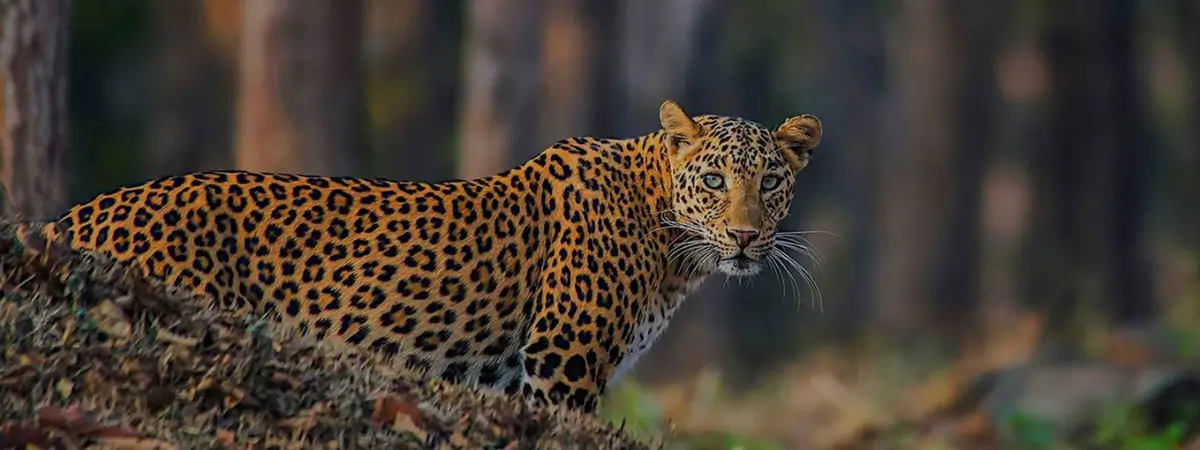
Tigers, leopards, crocodiles and a palace or two: children who join this Rajasthan tour with kids and wildlife experiences come home with stories that beat any school project. The trip mixes royal Rajasthan with two very different wild landscapes. In Ranthambore National Park, open-top jeeps roll past ruined chhatris and lakes where Bengal tigers hunt sambar deer, and the thousand-year-old fort crowns the forest. At Jawai, near the Aravalli granite hills of Pali district, leopards live alongside Rabari shepherds and their flocks, and the herders have shared the land with the cats for generations. Between the two, Bundi's painted palace and Udaipur's lakes give children a break from early wake-up calls, and Jaipur and Delhi start the holiday with museums, zoos and forts that suit young minds.
Every leg is driven by one private car and driver, so car seats, snacks, binoculars and field guides stay in the same vehicle for twelve days. Drives are kept under five hours where possible, and safari days have long midday rests by the pool. We book three game drives in Ranthambore and two jeep outings at Jawai, plus an Udaipur boat ride and a hands-on visit to a Jaipur stepwell, and we pick naturalists who enjoy answering the same question four times. The tour ends at Jawai, with a road transfer to Udaipur airport and a short flight back to Delhi for international connections. It is a family wildlife tour of Rajasthan for parents who want their children to see India's big cats in the wild while still getting the forts, food and colour the state is famous for.
Tour Highlights
 Package Includes:
 Package Excludes:
Reply within 24hrs
Young travellers off an overnight flight need two things: a bed and a calm welcome. Your chauffeur meets the family inside the arrivals hall at Delhi airport with a name board and a bag of juice boxes, and the car is fitted with the child seats you requested at booking. The ride to your hotel takes about forty-five minutes, and our representative briefs you on safari etiquette in the hotel lobby while the children watch the cartoon channel upstairs. We also hand over a small family kit: a checklist of Indian animals and birds to tick off, a pair of children's binoculars to keep, and a pocket map of the full route with each wildlife stop marked.
The rest of the day is free for adjusting to Indian time. If the children are restless by afternoon, the hotel pool is often the best medicine, and a short evening walk in a nearby park helps everyone sleep at a normal hour. For dinner, North Indian kitchens do excellent mild dishes: paneer tikka, malai kofta, plain parathas and sweet lassi make easy introductions for cautious eaters, and most hotels will happily serve pasta or fries as backup on the first night. Ask the restaurant for bottled water and avoid ice from street stalls for the first few days. Bedtime by nine sets the family up well for tomorrow's museum and garden morning.
Overnight stay in Delhi.
A child-friendly Delhi sightseeing day starts at the National Rail Museum in Chanakyapuri, open every day except Monday. More than thirty locomotives sit on the open-air grounds, including the Fairy Queen, one of the oldest working steam engines in the world, and a small toy train circles the park for rides. Children can climb into the cabin of a diesel engine and pull on brass levers. From there, drive to Gurudwara Bangla Sahib, the Sikh temple near Connaught Place. Heads are covered with scarves provided at the gate, and in the community kitchen volunteers stir enormous pots of dal and flip rotis on a machine, feeding thousands of visitors each day for free.
After lunch, the family heads to Purana Qila, the old fort of Humayun and Sher Shah Suri, where paddle boats float on the moat lake in the afternoon and the gateways make a fine backdrop for photos. The National Zoological Park sits next door, open daily except Friday, and it is a good warm-up for the safaris ahead: white tigers, one-horned rhinos, gharials and Indian gaurs share large green enclosures. Toy trains and battery carts carry tired legs around. End the day with a drive past India's Parliament on Sansad Marg and the sandstone domes of Rashtrapati Bhavan before returning to the hotel for an early dinner.
Overnight stay in Delhi.
Leave after breakfast on the expressway route toward Jaipur, aiming for a mid-morning start to slip past the commuter traffic. The drive is broken at a highway food court near Neemrana, where kids can take a break and parents can get a good filter coffee; the fifteenth-century Neemrana Fort Palace sits on the hill behind and is visible from the road. Your chauffeur keeps a cooler box of drinks in the car and is used to unplanned stops for car-sick children, so do not hesitate to ask. Long drives here are an education in themselves, with camel carts, roadside potters and village schools passing outside the window.
Reach Jaipur by early afternoon and check in. Late in the day, visit Nahargarh Biological Park, about twelve kilometres from the city on the Jaipur–Delhi road. It sits in the forested Aravalli foothills and houses Asian lions, Bengal tigers, leopards, sloth bears and a walk-through aviary, with a lion safari that runs in a closed vehicle through a fenced enclosure. Children who have only seen big cats in books will find it a thrilling introduction before the real wild animals of Ranthambore. Back in town, have dinner at a family restaurant on MI Road; Laxmi Mishthan Bhandar in Johari Bazaar is known for its ghewar and samosas.
Overnight stay in Jaipur.
Your guide picks the family up early for Amber Fort, approached on foot up the cobbled ramp or by jeep if little legs are tired. Rather than covering every hall, the visit focuses on things children remember: the Sukh Niwas, where water once flowed through channels to cool the rooms, the secret passages linking the queens' chambers, and the tunnel walk toward Jaigarh Fort, home of the Jaivana, once the largest cannon on wheels in the world. On the way back, the Panna Meena ka Kund stepwell has criss-cross staircases on all four sides, and kids enjoy counting steps while the guide explains how villagers stored rainwater in a desert climate.
After lunch, the Albert Hall Museum on Ram Niwas Garden draws young visitors with its real Egyptian mummy, brought from Cairo in the nineteenth century, plus displays of armour, puppets and carpets. Then drive through the old city for a photo stop at Hawa Mahal and an afternoon wander around the City Palace courtyards, where the Peacock Gate in Pritam Niwas Chowk is the favourite family photo. Jantar Mantar sits right next door if the group is still keen. Before dinner, pick up a set of colourful Jaipur kites from a shop in Handipura market; if your visit is in January, the whole city flies kites for Makar Sankranti.
Overnight stay in Jaipur.
The drive to Sawai Madhopur follows a smooth state highway through mustard and wheat fields, small towns and the occasional nilgai antelope grazing near the road. Leaving soon after breakfast gets the family to the lodge by lunchtime. Most Ranthambore lodges have pools, lawns and play areas, so the children can unwind before the first game drive. Your naturalist meets you after lunch, explains the zone allocated for the safari and checks that everyone has a hat, sunscreen, a light jacket and water. Safaris run in open six-seat gypsies or larger twenty-seat canters; gypsies are quieter and better for photography, though canters suit larger families travelling together.
The afternoon safari usually starts around two-thirty or three o'clock and returns by sunset, with timings shifting a little by season. Ranthambore covers dry deciduous forest, grasslands and lakes, with ruined pavilions scattered through the trees. Besides tigers, the park holds leopards, sloth bears, marsh crocodiles, spotted deer, sambar, langur monkeys and more than three hundred bird species. Children learn to listen for alarm calls, the sharp bark of a sambar or the shriek of a langur, which often mean a big cat is nearby. Tiger sightings are never guaranteed, and we always say that the forest itself is worth the drive.
Overnight stay in Ranthambore.
An early alarm is worth it today. The morning safari leaves around six-thirty in winter and earlier in summer, and the cold desert air means blankets and warm layers are essential from November to February. Morning is often the best time to find tigers walking forest roads or resting near lakes like Padam Talao and Rajbagh. Back at the lodge by ten-thirty, a big breakfast awaits. Then, after a short rest, visit Ranthambore Fort, a UNESCO World Heritage Site inside the park. The climb is steep but short, and at the Trinetra Ganesh Temple at the top, devotees mail wedding invitations to the god, which children find delightful.
After a quiet lunch and a swim, the family heads out on the third safari of the stay, this time in a different zone with new lakes and valleys. By now the children know the difference between spotted deer and sambar, can name the painted stork and the treepie, and want to scan every bush. Your naturalist may stop at a waterhole and wait in silence, which is a good lesson in patience for young wildlife lovers. In the evening, the lodge often arranges a bonfire with a short talk on tiger conservation and the people who protect the park. Pack bags before bed, as the next stop is the old Hada Rajput town of Bundi.
Overnight stay in Ranthambore.
Sleep in after two days of dawn starts. After breakfast, the road crosses the Chambal river region and passes through Kota district, where small villages and sandstone quarries line the highway. Bundi appears in the early afternoon, a compact walled town under the hilltop Taragarh Fort, far less crowded than Jaipur or Udaipur. After check-in at a haveli guesthouse, children can watch local life from the rooftop: kites in the sky, monkeys running along walls and blue-painted houses stacked below the palace. Bundi is easy to cover on foot, and its narrow lanes are quiet enough for families to walk in safety.
In the late afternoon, your guide leads you to Raniji ki Baori, a stepwell built at the close of the seventeenth century by a queen, with carved elephants and graceful arches that drop forty-six metres into the ground. Kids love peering down into its depths. Nearby, the 84-pillared cenotaph, Chaurasi Khambon ki Chhatri, has animal carvings on its base, and children can try counting the columns to check the name. Finish at Nawal Sagar Lake as the sun sets, with a temple to Varuna, the water god, half-submerged in the middle. Dinner can be on a rooftop overlooking the lit palace, with simple dal-baati and kachoris on the menu.
Overnight stay in Bundi.
Morning starts with Bundi Palace and its Chitrashala, a small gallery of eighteenth-century murals in turquoise and green showing Krishna stories, court scenes and elephant fights. The palace is a little rough around the edges, which makes it feel like a real-life adventure for children, with bats in dark corners and creaking doors. Leave by late morning for Chittorgarh, a two-and-a-half-hour drive. Chittorgarh Fort is the largest fort in India, sprawling across a hilltop plateau of about 700 acres, and the drive inside to the main monuments saves walking in the midday heat. Carry hats and water bottles, as shade is scarce on the plateau.
At the fort, which was besieged three times in its long history, the nine-storey Vijay Stambh, or Victory Tower, is covered in carved gods and figures, and the Rana Kumbha Palace ruins and Padmini's Palace by the water tank come with tales of bravery that hold a child's interest. Your guide shapes the stories carefully for young ears. Lunch is at a simple restaurant near the fort gate, where the thali is fresh and staff are used to children asking for plain rice, then the drive continues for about two hours to Udaipur on a good four-lane highway. You arrive by early evening at a hotel on or near Lake Pichola, with time for a relaxed dinner as the city lights come on across the water.
Overnight stay in Udaipur.
A gentler day for the family. Start with a morning walk up to Moti Magri, the hill overlooking Fateh Sagar Lake, where a bronze statue of Maharana Pratap riding his loyal horse Chetak stands among gardens. The story of Chetak leaping a stream while wounded is a favourite with children. Then board a motorboat on Fateh Sagar to Nehru Garden island, or take a short spin on the lakeside paddle boats. The Jagdish Temple in the old city is next: built in the mid-seventeenth century, its steps are flanked by carved elephants, and the bronze Garuda statue faces the shrine. Lunch can be at a lakeside café near Lal Ghat.
Afternoon is for animals again. Sajjangarh Biological Park, at the foot of the Bansdara hills, has leopards, tigers, Asiatic lions, sloth bears and gharials in large wooded enclosures, with a battery-car loop for tired walkers. From there, a park jeep drives up the winding road to the Monsoon Palace, built by Maharana Sajjan Singh to watch rain clouds gather. The sunset view over Udaipur's lakes and the Aravallis is one of the best in Rajasthan, and children can spot the City Palace far below. Dinner at the hotel tonight, as tomorrow takes the family into leopard country.
Overnight stay in Udaipur.
After breakfast, drive northwest through the Aravalli hills toward Jawai, near the town of Sumerpur in Pali district. The road passes small farming villages, and the landscape slowly changes to bare granite hills dotted with caves. Jawai camps are usually tented or cottage-style lodges set among the rocks, with outdoor seating and night skies full of stars; let the children know that there is limited mobile signal in some areas, which many parents count as a blessing. Lunch and an afternoon rest come first, and the lodge naturalist explains how leopards here have lived side by side with the Rabari herders for centuries, with very rare conflict between them.
At about four o'clock, set out in an open jeep for the first leopard drive. Unlike Ranthambore, there is no fenced national park here; leopards rest in caves and on granite boulders, and the jeep drives along rough tracks while the naturalist scans the rocks with binoculars. The best sightings often come in the last light, when a leopard steps out of a cave and stretches on a boulder. Hyenas, jungle cats, desert foxes and nilgai may also appear. Back at the camp, dinner is usually served around a fire, and the youngest travellers often fall asleep mid-story.
Overnight stay in Jawai.
Early morning brings a second chance at leopards. The jeep heads out around six, warm blankets on everyone's knees, and the naturalist returns to the caves where cats were seen the night before. After breakfast at camp, visit the Jawai Dam reservoir, the largest in western Rajasthan, built shortly after Independence. Mugger crocodiles bask on the banks, and between November and February the water fills with migratory birds, including bar-headed geese, ruddy shelducks, flamingos, demoiselle cranes and painted storks. Children with bird checklists can add a long string of new ticks today, and the morning light over the water makes excellent family photos.
In the afternoon, visit a Rabari settlement with your naturalist acting as interpreter. The men wear bright red turbans and white clothes, and the women dress in black with heavy silver and ivory-coloured bangles. Children are often invited to help bottle-feed a young goat or sit with a herder and his flock. It is a respectful visit, so ask before taking photos. Before sunset, the camp may arrange a sundowner on a granite outcrop, with lemonade for children and masala chai for adults, while watching for leopards on the rocks around you. This Rajasthan wildlife holiday ends tonight with a farewell dinner under the stars.
Overnight stay in Jawai.
Have an early breakfast at camp and say goodbye to the naturalists who have become the children's heroes. The drive back to Maharana Pratap Airport in Udaipur takes about three hours along the same Aravalli roads, and your chauffeur times the departure to reach the airport at least two hours before the flight. Some families prefer an afternoon flight so the youngest can nap in the car first. Pack wildlife souvenirs, feathers and any small gifts from the Rabari village carefully, as Indian law does not allow the export of animal parts, even shed porcupine quills or peacock feathers in some cases.
The domestic flight from Udaipur to Delhi takes about an hour and twenty minutes. Our Delhi representative meets you at domestic arrivals and handles the transfer to the international terminal or to an Aerocity hotel if your long-haul departure is late at night. Between the terminals, there is often time for a snack and a last round of the animal checklist. If you have extra days, we can add a stay in Agra for the Taj Mahal (closed on Fridays) before you fly home. Your Rajasthan tour with kids and wildlife experiences ends here, with tiger tracks, leopard silhouettes and Rabari smiles packed into a family's memory book.
Hear what our happy guests say about their India adventures! From private drivers to guided tours, we make every journey smooth, safe & unforgettable.
 rating score: 5.0 of 5, based on 448 reviews

Complete our inquiry form

Customize your itinerary

Confirm when you're satisfied
1-to-1 Service | Reply within 24hrs | Expert's Advice