Delhi - Jaipur - Bagru - Pachewar - Bishnoi Villages - Jojawar - Udaipur - Delhi
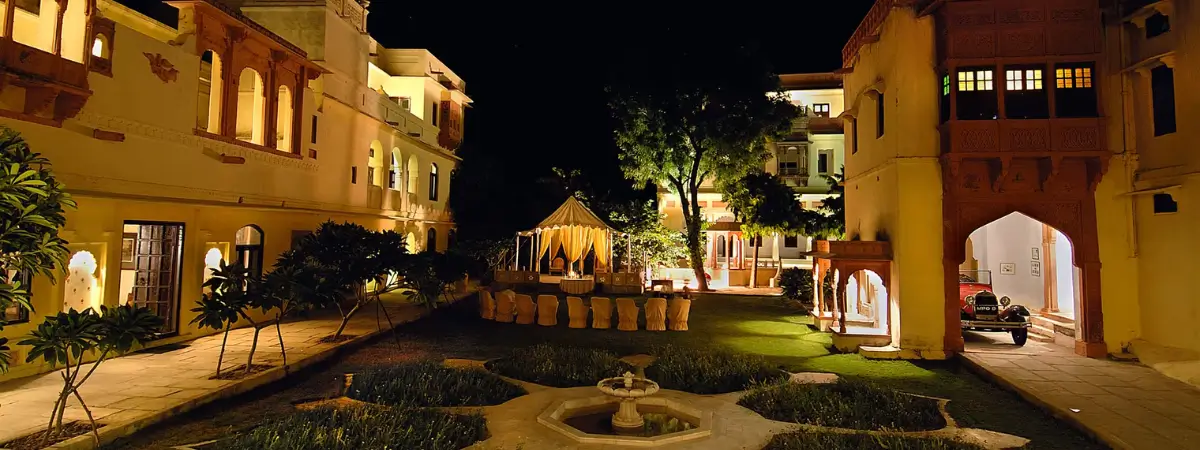
Travel can leave a place better than you found it, and that idea shapes every day of these Rajasthan responsible tourism and community experiences. Over sixteen days you meet the people who keep the state's traditions alive: block printers in Bagru who still mix dyes from pomegranate rind and indigo, farmers around a village lake in Pachewar, Bishnoi families who have protected trees and blackbuck for centuries, and Raika camel herders in the Godwar hills near Jojawar. Your money goes to family homestays, village guides, women's craft groups and small kitchens wherever possible. Visits are arranged in advance with the hosts, at times that suit them, and never as drop-in stops at schools or homes. You come as a guest who has been invited, and the conversations that follow are often the part travellers remember longest.
The route links Delhi and Jaipur with rural Rajasthan and ends in Udaipur, all by private car and driver; your chauffeur speaks English and has worked alongside our village partners for years. Driving times are kept moderate, and longer stays in Bagru, Pachewar, the Bishnoi area and Jojawar give you room to slow down. Expect hands-on workshops rather than shopping stops: you print your own length of cloth, shape a pot at a Kumhar wheel, cook dal baati with a farming family and help at an animal rescue shelter in Udaipur. This community-based tour of Rajasthan also covers the great sights, including Amber Fort, the City Palace in Jaipur and the Jain temple at Ranakpur, seen through the eyes of local guides. At the close, you fly from Udaipur back to Delhi rather than face a full day on the highway.
Tour Highlights
 Package Includes:
 Package Excludes:
Reply within 24hrs
A familiar face makes a long-haul arrival easier, so your chauffeur meets you at the exit of Indira Gandhi International Airport with a name card and helps you to the car. He will be your driver for the next two weeks and more, and you will quickly find that he knows as much about village roads and roadside tea stalls as he does about the big monuments. The drive to your Delhi hotel takes roughly an hour. We pick hotels in the capital that run sensible environmental practices, such as refillable water stations, local sourcing for the kitchen and reduced plastic in the rooms, and we brief you on these at check-in.
Our team member will meet you at the hotel to talk through the route, the hosts you will stay with and a few simple customs that help in village homes, such as removing shoes indoors, eating with the right hand and asking before taking photos of women or elders. A reusable steel bottle is handed to you today, and there is a filtered water refill in the car every day, so you will not need to buy plastic bottles on the road. The rest of the evening is free. If you feel like walking, the neighbourhood market near your hotel is a good place for a light dinner and a first taste of Delhi street life.
Overnight stay in Delhi.
Morning starts near New Delhi railway station with a street walk run by the Salaam Baalak Trust, a charity that supports children who have run away or been abandoned. The walk is led by a young guide who once lived on these streets and has been trained by the trust, and it takes you through the lanes of Paharganj, along the platforms and into one of the trust's contact points. The stories are honest and sometimes hard to hear, but they are told with pride. The fee goes straight to the trust's work, and it is one of the most moving hours many travellers spend in India.
Later, drive to Gurudwara Bangla Sahib near Connaught Place, the most visited Sikh shrine in Delhi. After covering your head and washing your feet, you can join the volunteers in the langar kitchen, rolling chapatis or stirring huge pots of dal that feed thousands of people every day, free of charge and regardless of faith. Sit on the floor with everyone else for a simple meal afterwards. In the late afternoon, walk through the Sunder Nursery, a restored Mughal garden next to Humayun's Tomb that was brought back to life with the help of local workers and craftspeople. The evening is at leisure.
Overnight stay in Delhi.
Leave Delhi after an early breakfast to beat the morning traffic on the expressway toward Jaipur. The highway is good, and your chauffeur will stop for tea at a clean roadside café near Behror or Kotputli. On the way, your chauffeur can point out the small Kotputli and Shahpura weekly markets, where farmers sell vegetables, rope and clay pots, and stop for a few minutes if one is running. Talk with him about his own village too, since many of our drivers come from farming families. Arrive in Jaipur by early afternoon and check in to a family-run heritage guesthouse in the city, where the owners live on site and can tell you plenty about their home and neighbourhood.
In the late afternoon, a local woman guide from a Jaipur walking initiative leads you through the old Pink City markets. You visit the lanes of Johari Bazaar and Bapu Bazaar, stop at a small temple where devotees ring the bells at dusk, and meet traders who make lac bangles in Maniharon ka Rasta by heating sticks of coloured lac over charcoal. Women-led walks are a good way to see the city from a different angle, and your guide can talk openly about daily life, education and work for women in Jaipur. Finish with a cup of masala chai and a hot pyaaz kachori at Rawat Mishthan Bhandar near Sindhi Camp.
Overnight stay in Jaipur.
Many visitors ride elephants up to Amber Fort, but we skip that, given the welfare concerns raised by animal charities, and go up by jeep or on foot along the old ramp instead. Inside, your guide walks you through the Diwan-i-Aam, the Ganesh Pol gateway and the Sheesh Mahal with its thousands of mirror pieces, explaining how the Kachhwaha rulers built and expanded the palace. Below the fort, the Panna Meena ka Kund stepwell has criss-cross stairs that form neat geometric patterns, and it is a good spot to see how water was stored in this dry region before piped supply.
Close by in the old Amber town, the Anokhi Museum of Hand Printing is housed in a restored haveli and tells the story of block printing in Rajasthan. You can watch a craftsman carve a wooden block by hand and try printing a small napkin with the help of a printer. The museum is closed on Mondays, so the day order is changed if needed. After lunch at a small café in Amber, return to Jaipur to rest. The evening can include a short walk through the Raj Mandir cinema area or a quiet dinner at your guesthouse with the family.
Overnight stay in Jaipur.
This morning begins at the City Palace, still home to the former royal family, where you see the Mubarak Mahal textile gallery, the four painted gates of the Pritam Niwas Chowk and the huge silver urns used to carry Ganges water to England. Next door, the Jantar Mantar observatory has instruments made of stone and brass, including a sundial that can tell the time to within two seconds. A short walk from here, the Hawa Mahal facade has nine hundred and fifty-three small windows, built so the royal women could watch street life without being seen. Your guide will explain how the city was laid out in a grid of nine blocks.
In the afternoon, visit a family workshop that makes Jaipur blue pottery, a craft that uses no clay at all but a mix of quartz powder, glass and multani mitti. The potters show you how the pieces are moulded, painted with cobalt blue and copper green, and fired at low heat. You can paint your own small tile or bowl, which the family will fire and pack for you. Buying directly from the workshop means the money stays with the artisans instead of a commission shop. Spend the evening at your guesthouse or at a nearby restaurant that serves Rajasthani thali with local produce.
Overnight stay in Jaipur.
A short drive west takes you to Bagru, a small town that has been home to the Chhipa community of block printers for more than three hundred years. Bagru prints are known for earthy colours, especially the deep red from alizarin and the black from rusted iron and jaggery, and for the dabu technique in which a paste of mud, gum and lime is printed on cloth before dyeing so the covered areas stay pale. Your homestay is with a printing family in the old part of town, and the next two nights give you time to see the whole process from start to finish.
After settling in and sharing lunch with your hosts, walk with a family member to the riverbank and open grounds where long lengths of cloth are washed and laid out to dry in the sun. Then visit the dye vats, where indigo is fermented in clay pots, and the workshop where the printers press blocks onto the fabric with a steady thump. Your host will explain how the community has had to adapt to screen printing and factory competition, and how the move back to natural dyes has helped some families earn more. Dinner is home-cooked by the family, often with bajra khichdi, kadhi and seasonal greens.
Overnight stay in Bagru.
Today is a hands-on day at the printing table. With your host printer beside you, choose a few wooden blocks from the family's collection, some of which are more than fifty years old, and learn to lay out a pattern. Printing a straight line takes more care than it looks, and your teacher will show you how to line up each block by eye, using small marks carved on its edges. Once your piece is printed with dabu paste, it is sprinkled with sawdust, dried and then dipped in the indigo vat. By late morning, you will see your cloth change from green to blue as it meets the air.
In the afternoon, visit a block carver's workshop in Bagru, where craftsmen cut teak or sheesham wood with small chisels to make the blocks used by the printers. Then join your hosts for a walk to the local market and the small Chhipa temple at the heart of the old town. Ask about the Bagru Textile Club, a cooperative set up to bring printers together, so they can share orders and get fairer prices from buyers. In the evening, help in the kitchen if you like, rolling rotis or stirring the dal on the stove. Your finished cloth will be washed and folded for you to take home.
Overnight stay in Bagru.
Say goodbye to your hosts after breakfast and drive south toward Pachewar, a farming village in Tonk district with an eighteenth-century fort, a large rain-fed lake and very few foreign visitors. The fort has been turned into a small heritage hotel by the local family, who also employ most of their staff from the village. The quiet roads pass through mustard and wheat fields, and in winter you may see sarus cranes in the wet fields. Arrive in time for lunch on the fort terrace overlooking the lake, which fills during the monsoon and supports birds and village farming for the rest of the year.
In the late afternoon, a village guide takes you on a slow walk through Pachewar. You meet the Kumhar potters who make water pots and diyas on a hand-turned wheel, and you can sit down and try shaping a small pot yourself. Further along, you pass the village well, the old temple and the homes of Meena and Gujar farming families, who may invite you in for a cup of tea. Return to the lake for sunset, when cattle are brought back to the village and the water reflects the fort walls. Dinner is served on the terrace with simple Rajasthani dishes.
Overnight stay in Pachewar.
After breakfast, join a farming family in their fields for the morning. Depending on the season, you may help pick peas or carrots, watch wheat being harvested by hand or see mustard being cut and stacked. Your host will explain the crops they grow, how they depend on rain and the lake, and the challenges they face with water and prices. The women of the house often keep cows and buffaloes, and you can help with milking or making cow dung cakes, which are still used as cooking fuel in many homes. It is a working morning, so wear closed shoes and clothes you do not mind getting dusty.
Lunch is a cooking lesson with the same family, around their clay stove. Learn to make dal baati churma, the classic Rajasthani dish of baked wheat balls, lentils and sweet crumbled bread, as well as a seasonal vegetable and fresh roti. The meal is shared on the floor of the courtyard, and the payment for the lesson goes directly to the family. In the afternoon, rest at the fort or take a short bullock cart ride to the far side of the lake for birdwatching. Herons, kingfishers and painted storks are common. In the evening, a village singer may perform folk songs by the fort fire.
Overnight stay in Pachewar.
Today's drive is the longest of the tour, so start early and break the journey at Ajmer or Beawar for lunch. The road runs west through the Aravalli hills and onto the flat Marwar plain. By late afternoon you reach the Bishnoi villages south of Jodhpur, where your lodge is a small family-run eco stay built with local stone and mud plaster, with solar lights and water drawn from a nearby well. The Bishnoi community follows twenty-nine rules set out by their founder, Guru Jambheshwar, and several of these are about protecting animals and trees, which you will see reflected in daily life over the coming days.
After checking in and resting, take a short walk with your host to the edge of the village, where blackbuck and chinkara often graze among the khejri trees without fear of people. Your host can explain how the community shares water with wild animals, leaves grain for birds and refuses to cut green trees, even for firewood. Dinner is a simple vegetarian meal cooked by the family, including bajra roti with fresh butter, ker sangri and buttermilk, and alcohol is not served here out of respect for Bishnoi custom. After dinner, the sky is dark and quiet, ideal for stargazing.
Overnight stay in the Bishnoi Villages.
Morning starts with a drive to Khejarli, about twenty-five kilometres away, where a memorial and a grove of khejri trees mark the place where Amrita Devi and three hundred and sixty-three Bishnoi villagers gave their lives in the eighteenth century to stop soldiers from cutting the trees for a royal lime kiln. The story is told by local elders with great pride, and the event later inspired the Chipko movement in the Himalayas. Continue to Guda Bishnoi lake, where blackbuck, chinkara, nilgai and many water birds come to drink in the early morning, and demoiselle cranes stop over during winter.
In the afternoon, visit Salawas, a village known for its durrie weavers, where families weave flat cotton rugs on pit looms set into the floor of their homes. Then continue to Kakani, a Kumhar potters' village, and watch the potters shape water pots and clay toys on large wheels. You can buy directly from the artisans, which helps them avoid middlemen who take a large cut. Return to your lodge in time for sunset, when the herders walk their goats back home and the village temple bell rings. Dinner tonight is with your host family, with an evening of talk around the fire.
Overnight stay in the Bishnoi Villages.
Say farewell to your Bishnoi hosts after breakfast and drive south through Pali district into the Godwar region at the edge of the Aravalli hills. The land changes from flat desert to rocky hills and seasonal rivers, and the villages here are home to Rabari and Raika herders, Rajput farmers and many artisan families. Jojawar is a small village with a nineteenth-century rawla, or noble residence, that has been turned into a heritage guesthouse by the local family, who employ staff from the village and source much of the kitchen produce from local farms. Arrive by lunchtime and enjoy a quiet afternoon in the courtyard, where peacocks often wander in from the fields.
In the late afternoon, take a jeep ride with a village guide to the Rabari dhanis, the scattered hamlets where herders live with their camels, sheep and goats. The Rabari women are known for their black head coverings, heavy silver jewellery and fine embroidery, while the men wear white dhotis and bright red turbans. With your guide translating, you can sit with a family, drink a cup of sweet tea made with goat's milk and learn how their way of life is changing as grazing land shrinks. Return to Jojawar for dinner and an early night.
Overnight stay in Jojawar.
Today's excursion goes by car to Sadri, about fifty kilometres or an hour from Jojawar, to visit the camel conservation centre run by the Lokhit Pashu-Palak Sansthan, a non-profit that works with Raika herders. The centre explains how the Raika have bred camels for centuries, why camel numbers in Rajasthan have fallen sharply, and how herders now earn from camel milk, cheese, soap and paper made from camel dung. Their shop, Camel Charisma, sells these products, and the money goes back to herding families. You can also meet herders who bring their animals for health checks, and see the young calves in their enclosures. Visits run best in the morning, before the midday heat.
On the way back, stop at a small Raika settlement where camels are grazing in the dry hills, and learn how the herders move with their animals in search of fodder. In the late afternoon, return to Jojawar and take a walk around the village with your guide, visiting a local blacksmith, a cobbler making traditional jootis and a weaver at his loom. Ask your hosts about the history of the rawla and the nobles who ruled the area under the Marwar kingdom. Dinner is served by candlelight in the courtyard, often with Marwari dishes such as gatte ki sabzi and papad ki sabzi.
Overnight stay in Jojawar.
After breakfast, drive south toward Udaipur, stopping at Ranakpur on the way. The Chaumukha Jain temple, built in the fifteenth century in pale marble, is famous for its 1,444 carved pillars, no two of which are exactly alike. The temple opens to non-Jain visitors from noon to five in the afternoon, and leather items such as belts, shoes and bags must be left outside. Your guide will point out the carved ceiling domes, the marble elephants and the knotted snake carving near the main shrine. The temple is set in a forested valley, and langur monkeys often play around the steps.
After lunch at a small village restaurant near the temple, continue through the Aravalli hills to Udaipur, arriving in the late afternoon. Your hotel is a family-run heritage guesthouse in the old city near Lal Ghat, with rooftop views over Lake Pichola. In the evening, take a slow walk with a local guide along the narrow lanes near the Jagdish Temple and down to Ambrai Ghat, a quiet spot where families gather on the steps at dusk and the City Palace glows across the water. Dinner is at a rooftop restaurant that sources its vegetables from nearby farms.
Overnight stay in Udaipur.
This morning, drive to Animal Aid Unlimited in Badi village, about twenty minutes outside Udaipur, a rescue centre that treats injured and sick street dogs, cows, donkeys and other animals. Visitors are welcome in the morning to help with simple tasks such as feeding, comforting animals after treatment and cleaning. Staff will guide you on what to do and what to avoid. Many travellers say this was one of the most meaningful mornings of their trip. On the way back, stop at Sadhna, the women's craft enterprise of the Seva Mandir organisation, which sells patchwork quilts and embroidered clothes made by women from local villages.
After lunch, your guide leads you around the City Palace, focusing on the Mor Chowk peacock mosaics and the views over the lake. Later, join a local family in their home in the old city for an evening cooking class. Learn to make masala chai, paneer curry, vegetable pulao and chapati, and then share the meal with your hosts. The family will talk about life in Udaipur, festivals and how tourism has changed their neighbourhood. This is a warm and relaxed way to end your community-focused tour of Rajasthan. Return to your guesthouse afterwards to pack.
Overnight stay in Udaipur.
After a final breakfast overlooking Lake Pichola, your chauffeur will drive you to Maharana Pratap Airport for your domestic flight to Delhi. If your flight is in the afternoon, there may be time for a short walk to Fateh Sagar lake or to the Shilpgram crafts village on the city edge, where artisans from across western India have workshops. Before you leave, your chauffeur will ask for your honest feedback on the homestays, hosts and village visits, as this helps us choose and support the right partners for future travellers. Say goodbye to the driver who has been with you since the first day in Delhi, and who by now probably knows exactly how you like your chai.
Once you land in Delhi, a member of our team is at the arrivals gate to take you to the international terminal or to a hotel near the airport if your flight leaves the next day. We hope the people you met along this route, the printers of Bagru, the farmers of Pachewar, the Bishnoi families and the Raika herders of Godwar, stay in your memory long after the trip. Many guests stay in touch with their hosts by phone or letter, and some return a few seasons later to visit them again. Thank you for choosing a slower and more thoughtful way to travel through Rajasthan with Heritage India Private Tours.
Hear what our happy guests say about their India adventures! From private drivers to guided tours, we make every journey smooth, safe & unforgettable.
 rating score: 5.0 of 5, based on 448 reviews

Complete our inquiry form

Customize your itinerary

Confirm when you're satisfied
1-to-1 Service | Reply within 24hrs | Expert's Advice