Jaipur - Bagru - Pushkar - Udaipur
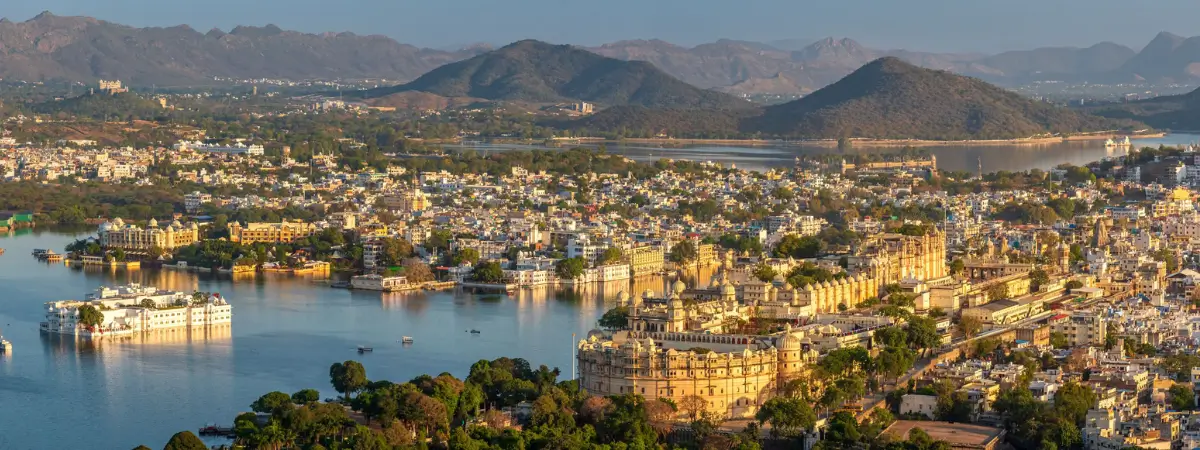
Some trips are about ticking off forts, but a holiday shared by a mother and her daughter is really about time together, and that is the thinking behind this Rajasthan mother daughter private tour. Over ten unhurried days you travel from Jaipur to the block-printing village of Bagru, on to the lake town of Pushkar and finally to Udaipur, all in a private car and driver that belongs to the two of you alone. Days are shaped around shared hands-on moments rather than long lectures: printing your own scarves with carved wooden blocks, learning to drape a saree, having henna painted on your palms, and cooking a Mewari lunch side by side. Hotels are characterful, with twin or double rooms chosen to suit how you like to share, plus pools and garden courtyards for slow afternoons.
The route is short on driving and long on conversation, with no transfer longer than about five and a half hours and most days ending by late afternoon. Jaipur gives you palaces and jewellery bazaars, Bagru a quiet night in a rural haveli among working artisans, Pushkar a gentle pilgrim town and rose fields, and Udaipur the romance of palaces reflected in still lakes. Female guides are arranged in Jaipur and Udaipur wherever available, which many mothers and daughters find makes conversations about Rajput queens, purdah and women's lives in Rajasthan easier and more personal. A Jaipur city tour, a Lake Pichola boat ride and a folk dance evening at Bagore ki Haveli are all included. The tour ends with a transfer to Udaipur's Maharana Pratap Airport for your onward flight.
Tour Highlights
 Package Includes:
 Package Excludes:
Reply within 24hrs
Welcome to the Pink City. Whether you fly into Jaipur International Airport directly or connect through Delhi, our representative meets you both at the arrivals exit with fresh marigold garlands and a cold bottle of water. Your chauffeur, who will drive you for the full ten days, loads the bags while you settle into the back seat of an air-conditioned car. The airport sits about thirty minutes south of the old city, and the drive passes the white domes of Birla Mandir and the busy junction at Ajmeri Gate. Your hotel is a restored haveli with painted ceilings, a central courtyard and a quiet swimming pool.
Once you have checked in and rested, the late afternoon is gentle. Take a short drive to Patrika Gate at Jawahar Circle, a gateway whose pillars and arches are painted in every shade of pink, orange and blue, and one of the most photogenic spots in Jaipur for a first picture of mother and daughter together. Return to the hotel for a welcome dinner in the courtyard, where the kitchen serves a gentle introduction to Rajasthani food: dal baati churma, kadhi and a dish of ker sangri made from desert beans and berries. Your coordinator stops by to talk through the days ahead.
Overnight stay in Jaipur.
Today's Jaipur city tour is led by a female guide who tells the story of the city through the women who lived in it. Begin at the City Palace, where the zenana, or women's quarters, of Chandra Mahal were once screened from public view. In the Mubarak Mahal textile gallery, look at the embroidered royal saris and the pashmina shawls woven for queens. The Sarvato Bhadra hall holds two enormous silver urns made to carry Ganges water to England for a royal visit. Your guide will share how royal women ran households, managed estates and influenced politics from behind latticed screens.
Hawa Mahal makes even more sense after the palace. Its 953 small windows allowed royal ladies to watch festivals in the street below without being seen, and from the top floor you look straight down onto Siredeori Bazaar. In the afternoon, walk to Maniharon ka Rasta, the lane of lac bangle makers, where craftsmen heat sticks of coloured lac over small coal fires and press in glass stones while you wait. Then a local stylist joins you at the hotel for a saree draping session, teaching you both how to pleat and pin six yards of silk. Dinner can be in your new saris at a rooftop restaurant.
Overnight stay in Jaipur.
Drive 11 km north to Amber after breakfast, arriving early while the fort walls are still in shade. Your guide leads you up past the Diwan-i-Aam into the palace of Raja Man Singh I, whose twelve wives each had their own apartment around a shared courtyard, with secret corridors that allowed the king to visit without the others knowing. The Sheesh Mahal, lined with tiny mirrors set in plaster, glows when the guide closes the doors and lights a match, scattering points of light across the walls and ceiling like stars. From the ramparts, look down on the Kesar Kyari, the saffron garden floating in Maota Lake.
Below the fort, in a restored haveli in Amber village, the Anokhi Museum of Hand Printing gives a perfect preview of tomorrow, with displays of carved blocks, natural dyes and a craftsman who demonstrates printing on the spot. The museum is closed on Mondays and for part of the summer, so we adjust the day if needed. After lunch, drive to Galta Ji, the monkey temple set in a rocky gorge east of the city, where natural springs fill a series of sacred tanks and macaques leap between the pavilions. Return to the old city at dusk to see the walls glow pink.
Overnight stay in Jaipur.
A short drive west along the Ajmer road brings you to Bagru, a village where the Chhipa community has printed cloth by hand for around four hundred years. Unlike the larger workshops of Sanganer, Bagru still uses natural dyes, and you will see indigo vats, iron rust mixed with jaggery for black, and pomegranate rind for yellow. Fabric dries in long strips laid across open ground, and the riverbed is stained in soft colours. Check in at a rural haveli turned guesthouse, with thick walls, painted doorways and a rooftop where peacocks sometimes land in the evening. Simple, home-cooked meals are served on the terrace.
After lunch, a master printer welcomes you both into his family workshop. He shows you how dabu, a resist paste of black clay, wheat flour and lime, is printed onto cloth before dyeing, and then hands you each a teak block carved with a flower or a paisley. With a little guidance you print a cotton scarf or a set of napkins, choosing your own colours, and the family will dye and wash them so they are ready in the morning. As the sun lowers, walk through the village with your host, meeting women at the well and visiting a potter at his wheel.
Overnight stay in Bagru.
Collect your printed scarves after breakfast, still crisp from the sun, and say goodbye to your host family. The road to Pushkar follows the Ajmer highway past salt-white fields near Sambhar and low hills dotted with goats. Your chauffeur stops for chai at a roadside stall where the tea comes boiled with ginger and cardamom in a blackened pan. Crossing the edge of Ajmer, you climb over Nag Pahar and drop into Pushkar, where houses crowd around a sacred lake said to have formed where a lotus fell from the hand of the god Brahma. It is one of the oldest towns in India.
Your hotel sits on the quiet edge of town among gardens, a short walk or rickshaw ride from the lake. Pushkar is entirely vegetarian and alcohol-free, which gives the town a calm, unhurried feel. In the afternoon a local artist comes to your hotel's rooftop for a henna session, painting fine mehndi patterns on your hands and explaining what each motif means at Indian weddings, where brides and their mothers spend hours being decorated together. Let it dry in the sun, then rub in a little lemon and sugar to deepen the colour. Dinner is a thali by the pool, under strings of lanterns.
Overnight stay in Pushkar.
Your guide meets you for a morning walk to the lake, which is ringed by fifty-two ghats where pilgrims bathe and pray. Remove your shoes at Gau Ghat and watch the morning rituals in quiet light, before strolling to the Brahma Temple with its red spire and the swan, Brahma's mount, carved at the entrance. The main bazaar runs right around the lake, so browse together for silver anklets, embroidered bags, mirror-work skirts and small bottles of rose oil. Your guide will gently steer away anyone offering unsolicited puja, which is the only real irritation in Pushkar. Pause for a glass of saffron milk at a sweet shop along the way.
Pushkar's rose gardens supply flowers to temples across India. In the afternoon visit a small farm where women pick the pink Damask roses and learn how they are turned into gulkand, a sweet rose petal preserve, and rose water. Then climb aboard a decorated camel cart for a slow ride out to the dunes on the town's western edge, an easy and comfortable way to enjoy the desert for anyone who would rather not sit on a camel. Watch the sunset from the sand, then return for the evening aarti, when the ghats fill with oil lamps and ringing bells.
Overnight stay in Pushkar.
Leave after an early breakfast for the longest drive of the tour, made easy by a good four-lane highway through Beawar and Bhim. The landscape shifts from dry scrub to the green, folded hills of the Aravalli range, with marble quarries cut into the slopes around Rajsamand. Break the journey at Rajsamand Lake, where the Nauchowki embankment is lined with carved marble pavilions and panels telling the history of Mewar, and the cool breeze off the water is welcome. Lunch is at a comfortable highway restaurant, with clean washrooms, before the last hour into Udaipur, and your chauffeur will stop for photos whenever you ask.
You arrive in the City of Lakes in mid-afternoon and check in to a lakeside hotel with balconies or a terrace facing the water. After a rest, take a short walk along Gangaur Ghat, named after a spring festival when women carry decorated clay idols of the goddess Gauri to the lake and pray for happy marriages, a fitting introduction for a mother and daughter. At seven the Dharohar folk dance show begins in the courtyard of Bagore ki Haveli, with women performing the bhavai dance while balancing a tower of brass pots on their heads. Dinner is at a lakeside café nearby.
Overnight stay in Udaipur.
With your female guide, start at Saheliyon ki Bari, the Garden of the Maidens, laid out in the eighteenth century for a princess and the forty-eight young women who came with her as part of her dowry. Fountains imported from England are fed by gravity from Fateh Sagar Lake, and if you clap near the lotus pool, the water is said to begin to play. Then visit the City Palace, walking through the Zenana Mahal, the women's palace, now a gallery of painted walls, and climbing to the Amar Vilas courtyard garden at the top of the building, where a marble pool sits among trees and arches.
After lunch and a rest, the afternoon brings a sunset boat ride on Lake Pichola, starting from the jetty at Rameshwar Ghat. Your boat circles the white Lake Palace and stops at Jag Mandir, an island palace with stone elephants standing at the water's edge. Sit in the garden café with a cold drink and watch the City Palace turn gold and then rose as the light fades. Back on shore, wander through the lanes around Jagdish Temple for silver jewellery and embroidered cushion covers, then sit down for dinner at a rooftop restaurant overlooking the lit palace.
Overnight stay in Udaipur.
Spend this morning in a family kitchen in old Udaipur, where a mother and daughter of the household teach you to make Mewari dishes together. Learn the right order for tempering mustard seeds, cumin and curry leaves, roll stuffed parathas, and stir a pot of dal bati with spiced lentils. Your teachers often tell stories of their own family recipes, passed from grandmother to granddaughter, which gives the class a warmth that a restaurant lesson cannot match. Aprons are provided, and spices can be bought afterwards. You sit down with the family afterwards to eat everything you have cooked, with a printed recipe card to take home.
In the afternoon, drive past Fateh Sagar Lake to Shilpgram, a crafts village on the edge of town with traditional houses from Rajasthan, Gujarat, Goa and Maharashtra, where artisans sell pottery, weaving and terracotta, and folk musicians play between the courtyards. On the way back, stop at the Vintage and Classic Car Collection, where the Mewar royal family's Rolls-Royces, Cadillacs and a Mercedes used in the James Bond film Octopussy are displayed in the old palace garage. Your farewell dinner is in a lakeside garden restaurant, a good place to thank your chauffeur and swap favourite memories.
Overnight stay in Udaipur.
Enjoy a slow last breakfast on the terrace, watching washerwomen at the ghats and the morning mist rising off Lake Pichola. If your flight leaves in the afternoon, there may be time for one more stroll through the lanes of Hathi Pol, a final cup of masala chai, or a last purchase of miniature paintings or tie-dyed leheriya scarves. Your chauffeur helps you pack the many bags of shopping into the car, carefully wrapping fragile pieces such as blue pottery, and checks that both of you have your passports, tickets and printed scarves from Bagru safely in hand. Hotel staff can also arrange a late checkout if your flight is in the evening.
The drive to Maharana Pratap Airport at Dabok takes about forty minutes along a good road east of the city. From there, domestic flights connect to Delhi and Mumbai for your international departure, and we can arrange a hotel room or an airport transfer at the connecting city on request. Your chauffeur sees you to the terminal doors and waits until you are safely inside. You fly home with hands still faintly orange with henna, recipes to cook together at home, and ten days of shared stories that only the two of you will fully understand, and perhaps an idea already forming for the next trip together.
Hear what our happy guests say about their India adventures! From private drivers to guided tours, we make every journey smooth, safe & unforgettable.
 rating score: 5.0 of 5, based on 448 reviews

Complete our inquiry form

Customize your itinerary

Confirm when you're satisfied
1-to-1 Service | Reply within 24hrs | Expert's Advice