Delhi - Agra - Jaipur - Lucknow - Varanasi - Delhi
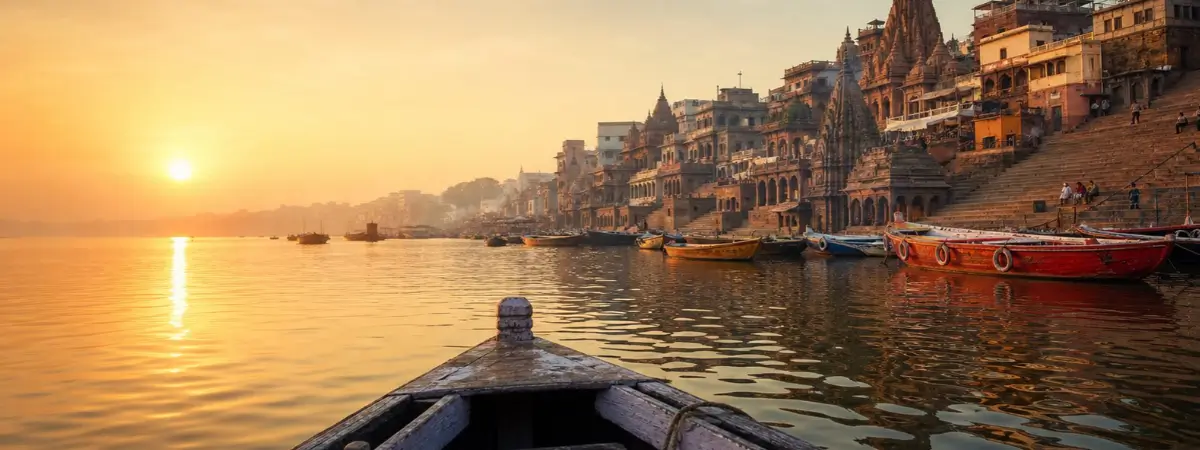
Every great monument in northern India has a kitchen story behind it, and the Luxury India Food and Heritage Private Tour follows both threads at once. Over eleven days you taste your way from Old Delhi's parathas to the Mughal-inspired dishes of Agra, the royal game recipes of Jaipur, the slow-cooked dum pukht of Lucknow and the street breakfasts of Varanasi. Historians and food writers walk with you in each city, so the Red Fort, Amber Fort and the Bara Imambara come with the meals served inside them centuries ago. Road sections run with a private car and driver, while a flight from Jaipur to Lucknow and a short drive or train to Varanasi spare you the long distances in between.
Luxury here means access and quiet more than gold taps. You eat at the chef's table of a palace hotel, cook with a Rajput family in their haveli kitchen and sit down to a private Awadhi dinner hosted by a Lucknow family whose recipes have passed down through generations. Stays are in properties such as The Leela Palace in Delhi, The Oberoi Amarvilas in Agra, Rambagh Palace in Jaipur, the Taj Mahal Lucknow and Brijrama Palace on the ghats of Varanasi, our usual choice and subject to availability. Each food walk in Old Delhi, Lucknow and Varanasi is kept to small, hygienic stalls our guides know personally, with bottled water, hand sanitiser and the option to taste lightly. Vegetarians and guests with allergies are fully catered for with advance notice.
Tour Highlights
 Package Includes:
 Package Excludes:
Reply within 24hrs
Touchdown at Indira Gandhi International Airport brings you straight into the care of our representative, who waits at the arrival exit with a placard bearing your name. A short walk later, you are seated in an air-conditioned car with your English-speaking chauffeur, cold water within reach, heading towards Chanakyapuri, the leafy diplomatic enclave of the capital. The Leela Palace, a grand modern property with gold-toned interiors and a rooftop pool, is our usual choice for Delhi, subject to availability. On the way, your representative explains the shape of the coming eleven days, which tastings to save room for and how dietary needs will be handled at each stop.
If you land by early evening, a welcome dinner is reserved at a restaurant known for its North-West Frontier cooking, where kebabs and breads emerge from clay tandoors and black dal simmers overnight before it reaches the table. Sikandari raan, a whole leg of lamb marinated in spices and roasted slowly, is a good first taste of the rich dishes that the Mughal and Punjabi kitchens gave to Delhi. Eat as much or as little as jet lag allows, because tomorrow begins with one of the city's great food mornings. Ask the hotel for a light wake-up call and a pot of masala chai, since the walk starts early. Overnight stay in Delhi.
Old Delhi wakes early, and so do you. The Old Delhi food walk begins at the steps of Jama Masjid, built by Shah Jahan in 1656, before moving into the lanes behind it for nihari, a slow-cooked beef or mutton stew traditionally eaten for breakfast. Next come the parathas at Paranthe Wali Gali, stuffed with potato, radish or paneer and fried in ghee, and syrup-soaked jalebi near the Gurudwara Sis Ganj. The walk ends in the Spice Market on Khari Baoli, where sacks of turmeric, cardamom and dried red chillies line the alleys and the rooftops of Gadodia Market give you a view over the old city.
After freshening up at the hotel, the afternoon turns to the heritage side of the capital. Visit Humayun's Tomb, the garden tomb that inspired the Taj Mahal, and then Qutub Minar, the fluted sandstone tower started in 1192 that stands nearly 73 metres high beside the rust-free Iron Pillar. The Red Fort is closed on Mondays, so your guide fits it in on another day if needed. Tonight, dine at a restaurant serving modern Indian food, where chefs turn street snacks like chaat and kulfi into refined tasting plates. Indian Accent at The Lodhi is our usual choice for this meal, and its blue cheese naan and pulled pork phulka show how far Indian cooking has travelled. Overnight stay in Delhi.
Leaving after breakfast, your car takes the Yamuna Expressway south, reaching Agra in about three and a half hours. Lunch is taken at a hotel restaurant serving the dishes of the Mughal court, such as murgh musallam and shahi korma made with cream, nuts and saffron. Then visit Agra Fort, where your guide shows you the halls where Akbar held court and the marble terraces where Shah Jahan, the builder of the Taj, was confined by his son Aurangzeb in his last years. Your guide also points out the Shahi Burj and the marble Moti Masjid from the courtyard, and explains how food was carried from the royal kitchens to the private apartments.
Later in the afternoon, cross the Yamuna to Itimad-ud-Daulah, often called the Baby Taj, whose marble walls are inlaid with flowers, cypress trees and wine vessels, an echo of the Persian origins of the family who built it. Before dinner, our guide takes you to a small sweet shop to taste fresh petha, the translucent candy made from ash gourd that has been Agra's signature sweet since Mughal times. The Oberoi Amarvilas, where every room faces the Taj Mahal, is our usual choice, subject to availability. Dinner at its restaurant is an elegant affair. Esphahan, the hotel's Indian restaurant, prepares dishes in clay tandoors, accompanied by live classical music. Overnight stay in Agra.
The Taj Mahal opens about thirty minutes before sunrise every day except Friday, and this is when you see it at its best, as the marble changes colour with the light. Your guide explains the story of Shah Jahan and Mumtaz Mahal, the pietra dura inlay and the clever optical tricks of its calligraphy. Back in town, enjoy a classic Agra breakfast of bedai, a crispy fried bread served with spicy potato curry, followed by hot jalebi, at one of the old shops near the Kinari Bazaar. The shops have been run by the same families for decades, and your guide tells you which ones locals trust and how to order like an Agra resident without fuss.
Drive west towards Jaipur after checkout, stopping at the village of Abhaneri to see Chand Baori, a deep stepwell built in the ninth century, with more than three thousand steps arranged in perfect geometric patterns down thirteen levels. Lunch on the way is a simple Rajasthani thali at a heritage property near Dausa. Arrive in Jaipur by late afternoon and check in at Rambagh Palace, the former residence of the Maharaja of Jaipur, our usual choice and subject to availability. In the evening, enjoy a drink on the Verandah overlooking the lawns, where peacocks call at dusk. Overnight stay in Jaipur.
Start early with a visit to the flower market near Choti Chaupar, where sellers sit among piles of marigolds and roses meant for temples and weddings. Then drive to Amber Fort, about eleven kilometres north of the city, where your guide leads you through the Diwan-i-Am, the Ganesh Pol gateway with its painted frescoes and the Sheesh Mahal, whose walls are covered in tiny mirrors that glitter in candlelight. On the way back, stop at the lake to see the Jal Mahal palace floating in the middle of Man Sagar. Your guide explains how Raja Man Singh's builders filled the lake and why the palace has more floors under the water than above it.
In the afternoon, the Jaipur city tour continues at the City Palace, where members of the royal family still live, and Jantar Mantar, an eighteenth-century observatory with a sundial that measures time to within two seconds. A short walk takes you to Hawa Mahal, the five-storey honeycomb facade where royal women once watched street processions. Before dinner, our guide takes you to a famous sweet shop for a taste of ghewar, a honeycomb-like disc of fried batter topped with cream, and a glass of thick lassi in a clay cup. For dinner, the Suvarna Mahal at Rambagh Palace offers dishes from royal kitchens in an old ballroom. Overnight stay in Jaipur.
Today is set aside for the food of Rajasthan's desert kingdoms. In the morning, you visit the home of a Rajput family in an old haveli, where the lady of the house leads a private cooking class in her kitchen. Together you prepare laal maas, a fiery mutton curry made with mathania chillies, ker sangri, a dish of dried desert berries and beans, and bajra roti, the millet bread that sustained travellers on the long camel routes across Marwar. Lunch is the meal you have cooked, served in the family courtyard. Your host shares stories of family weddings and festivals, and you leave with handwritten recipes so you can make the dishes at home.
The afternoon is free to rest or shop in Johari Bazaar for gemstones and silver jewellery, or Bapu Bazaar for block-printed textiles and leather slippers known as mojari. In the evening, dine at a special royal dinner arranged at your hotel or a nearby palace, with dishes like safed maas, a white mutton curry cooked with cashews and cream, and the game recipes that the Rajput kings once served after hunts. Musicians and a puppet show often accompany the meal, giving a sense of how a royal feast was once enjoyed. Your guide explains the customs of the royal table, from silver thalis to the order in which dishes were served. Overnight stay in Jaipur.
After breakfast, your chauffeur takes you to Jaipur airport for a direct flight to Lucknow, around an hour and a half in the air. A Lucknow chauffeur meets you at Chaudhary Charan Singh airport and drives you to the Taj Mahal Lucknow in the Gomti Nagar area, our usual choice, subject to availability. Lucknow was the capital of the Nawabs of Awadh, who in the eighteenth and nineteenth centuries made the city a centre for poetry, music, refined manners and some of the most delicate cooking in India. The Nawabs employed master chefs, known as rakabdars, who competed to create dishes that were light, fragrant and richly spiced, and their legacy lives on in the city's kitchens today.
In the late afternoon, your guide introduces you to the old city with a walk through Aminabad, where you taste the famous Tunday galouti kebab, made with minced meat so soft that it melts on the tongue, according to legend created for a toothless Nawab. Try also the sheermal, a saffron-flavoured bread, and finish with kulfi falooda in a clay bowl. Vegetarian guests can enjoy basket chaat, a crisp potato basket filled with chickpeas, yoghurt and chutneys. Before returning, walk past the lit Hazratganj shopping street, the old heart of the British cantonment, with its colonial facades and cafes. Overnight stay in Lucknow.
The morning is devoted to the monuments of the Nawabs. Start with the Bara Imambara, built in 1784 during a famine as a public works project, with one of the largest vaulted halls in the world built without beams. Climb into the Bhool Bhulaiya, a maze of narrow passages on its upper level, and see the baoli, a stepwell built alongside. Walk through Rumi Darwaza, a sixty-foot gateway in the Awadhi style, to the Chota Imambara, decorated with chandeliers and calligraphy, and see the Clock Tower and the Picture Gallery of the Nawabs nearby. The building of the Bara Imambara gave work to thousands of people at a time of hunger, and your guide explains how the tradition of dum cooking grew from feeding those labourers.
In the afternoon, see the ruins of the British Residency, scarred by cannon fire from the siege of 1857, and visit a chikankari workshop, where women embroider fine white thread onto muslin and cotton. In the evening, a Lucknow family welcomes you into their home for a private Awadhi dinner. The meal might include mutton biryani cooked dum style, with the pot sealed with dough, nihari, warqi paratha and shahi tukda, a rich bread pudding. Your hosts share stories of their family and the culture of the old city. Many guests say this evening is the highlight of the tour, simply because of the warmth of the welcome. Overnight stay in Lucknow.
After breakfast, drive east to Varanasi on the highway through Sultanpur and Jaunpur, about six hours with stops. Jaunpur is worth a short break to see the Atala Masjid and the Shahi Bridge over the Gomti river, built in the sixteenth century during the reign of Akbar. Lunch is on the way, and your chauffeur keeps the car well stocked with water and snacks. If you prefer to travel by rail, a morning express train can replace the drive, and our team will arrange the tickets. Either way, your bags are taken care of and transferred to your hotel in Varanasi, so you can travel light during the day.
Arrive in Varanasi by late afternoon and check in at Brijrama Palace, an eighteenth-century palace on Darbhanga Ghat that is reached by boat, our usual choice and subject to availability. As darkness falls, a private boat takes you to Dashashwamedh Ghat to watch the Ganga aarti from the water. Young priests in saffron robes swing heavy brass lamps in unison, while bells ring and conch shells sound across the river. Dinner tonight is a vegetarian thali, since much of the old city of Varanasi keeps to vegetarian food. The hotel kitchen serves classic Banarasi dishes, such as kachori, aloo dum and the sweet called rabri. Overnight stay in Varanasi.
At dawn, a rowing boat takes you along the river past the ghats as pilgrims bathe, pray and offer flowers to the river. Your guide points out Manikarnika Ghat, the main cremation site, where fires burn day and night, and explains the beliefs about life and death that bring people here from all over India. After the boat, the Varanasi food walk begins in the lanes of the old city, with hot kachori and spicy potato sabzi, fresh jalebi and, in winter, malaiyo, a light foam of milk, saffron and pistachio collected with the morning dew. Your guide keeps the portions small, so you can try a little of everything at the old stalls.
Later in the morning, visit the Kashi Vishwanath Corridor, which now opens the way from the temple to the river, and the Banaras Hindu University campus. In the afternoon, walk through Madanpura to see weavers working on looms making Banarasi silk saris with gold and silver thread, and stop for a paan-making demonstration at a family shop, learning how the betel leaf is folded with fennel, rose petal jam and areca nut. Tonight, a farewell dinner is served on the hotel terrace overlooking the river. The kitchen prepares a menu inspired by the dishes you tasted across the tour. Overnight stay in Varanasi.
Enjoy a slow breakfast on the terrace as the boats begin their first runs of the day along the river below. If time permits before your flight, take a short drive to Sarnath, about thirteen kilometres from the city, where the Buddha gave his first sermon in the Deer Park, and see the Dhamek Stupa and the lion capital of Ashoka in the museum. Note that the Sarnath Museum is closed on Fridays. Then your chauffeur takes you to Lal Bahadur Shastri airport for your flight to Delhi. Your chauffeur carries your bags and helps you check in before saying goodbye.On arrival in Delhi, our representative meets you at the domestic terminal and helps you transfer to the international departures area, or takes you to an airport hotel if your onward flight is the next day. Before leaving, many guests pick up packets of spices, tea or sweets to bring home, and your representative is happy to suggest the best places at the airport. Our team in Jaipur stays in touch until you have boarded, ready to help with any last changes. We hope the flavours of Delhi, Jaipur, Lucknow and Varanasi stay with you for a long time. Do share photos of the dishes you try at home with us.
Hear what our happy guests say about their India adventures! From private drivers to guided tours, we make every journey smooth, safe & unforgettable.
 rating score: 5.0 of 5, based on 448 reviews

Complete our inquiry form

Customize your itinerary

Confirm when you're satisfied
1-to-1 Service | Reply within 24hrs | Expert's Advice