Kochi - Munnar - Kumarakom - Kovalam
Kerala has practised Ayurveda continuously for more than two thousand years, and many of its oldest physician families still treat patients in the same districts where their ancestors once worked. Our Luxury India Wellness and Ayurveda Retreat Tour builds twelve days around that living tradition, beginning in the port city of Kochi and climbing into the cool tea hills of Munnar before settling beside the backwaters of Kumarakom and the Arabian Sea at Kovalam. A qualified Ayurvedic doctor sees you on arrival at your first wellness resort, reads your pulse and constitution, and prescribes a sequence of therapies, diet and gentle yoga that continues, adjusted as needed, through every stop. Travel between the regions is by private car and driver, on routes chosen for calm rather than speed.
The pace is deliberately soft. Mornings begin with yoga or pranayama on a hillside deck, a lake jetty or a sea-facing pavilion, and most days include at least one long treatment such as abhyanga, the warm four-handed oil massage, or shirodhara, the steady stream of herbal oil across the forehead. Sightseeing is kept light and well chosen: the Chinese fishing nets of Fort Kochi, a sunrise over the Kolukkumalai tea estate, birdlife at dawn in Kumarakom, and a single night aboard a private houseboat on Vembanad Lake. Resorts are selected for genuine medical credentials as well as comfort. This Kerala Ayurveda wellness tour suits couples, solo travellers and anyone recovering from a demanding year who wants rest with real structure behind it.
Tour Highlights
 Package Includes:
 Package Excludes:
Reply within 24hrs
Kochi International Airport sits about forty-five kilometres north of the historic quarter, and our representative meets you in the arrivals hall with a fresh tender coconut and a cool towel before your chauffeur loads the bags into an air-conditioned car, with chilled water and a light snack on the back seat. The drive to Fort Kochi takes roughly an hour and a quarter, crossing the bridges over the backwater channels that thread through this island city. As you approach the old town, colonial bungalows with tiled roofs, rain trees and small churches announce a port that has traded with Arab, Chinese, Portuguese, Dutch and British merchants for six centuries, and every one of them left a building, a recipe or a family name behind.
Our usual choice is Brunton Boatyard, a restored Victorian shipyard on the harbour front where ferries and fishing boats pass close to the windows, or a similar heritage property subject to availability. After check-in, the hotel team brings you a cup of ginger and tulsi tea and leaves the afternoon free for sleep, the most useful remedy for long-haul fatigue. In the early evening, a gentle stroll along the waterfront promenade toward the fishing nets lets your legs recover from the flight, and dinner is a light Kerala meal of appam, vegetable stew and steamed fish in banana leaf, all of it gentle on a stomach still adjusting to the time difference. Overnight stay in Kochi.
Your local guide meets you at seven, when the air is cool and the fishermen are lifting the great cantilevered Chinese fishing nets from the water, each rig needing four or five men to lower and raise it. The walk continues to St Francis Church, the oldest European-built church in India, where Vasco da Gama was buried before his remains were returned to Portugal, and past the Santa Cruz Basilica with its painted ceilings. Breakfast follows at a quiet cafe on Princess Street, after which you drive the short distance to the old spice warehouses of Mattancherry, still smelling faintly of ginger and pepper.
In Mattancherry, the Dutch Palace, closed on Fridays, holds some of the finest temple murals in Kerala, with scenes from the Ramayana painted in natural pigments on its bedroom walls. Nearby, the Paradesi Synagogue, closed on Fridays, Saturdays and Jewish holidays, has hand-painted Chinese floor tiles and a Belgian chandelier. The afternoon is kept for rest before you return to the Kerala Kathakali Centre at four, where you watch the dancers apply their elaborate green and red face paint, followed by the performance itself, in which every flicker of the eyes and fingers carries meaning that a narrator explains in English beforehand. The full show lasts about an hour, so you are back at the hotel for an early dinner. Overnight stay in Kochi.
After a late breakfast, your chauffeur leaves the coast and heads east through rubber plantations and pineapple farms before the road begins to climb the Western Ghats. The first waterfalls appear near Cheeyappara and Valara, both easy roadside stops where the water drops in white ribbons through the forest. As you gain height, the air cools noticeably and the hillsides turn into the clipped green rows of tea that define Munnar, a former British planting centre at about 1,600 metres. Spice stalls along the route sell fresh cardamom, cinnamon bark and homemade chocolate, which makes a pleasant reason to pause and stretch your legs.
Our usual choice is a wellness resort in the hills around Munnar, such as Windermere Estate or a similar property on a working cardamom plantation, subject to availability. On arrival, the resident Ayurvedic doctor holds your formal consultation, checking your pulse, tongue and digestion to determine your dosha balance, and sets out the therapies, diet and yoga routine you will follow over the coming days. Your first treatment, a full-body abhyanga with warm medicated oil, is scheduled for the late afternoon, followed by an early, light dinner prepared to the doctor's guidance, usually a vegetable soup, red rice and a small bowl of moong dal. Overnight stay in Munnar.
The day begins in the dark, when a four-wheel-drive jeep collects you for the rough climb to Kolukkumalai, one of the highest tea estates in South India at around 2,200 metres. The track is bumpy for the last stretch, so this outing is optional for anyone with back or neck concerns. At the top, the clouds lie below you in the Tamil Nadu valleys, and the sunrise breaks over the ridges in bands of pink and gold. Tea plucked here is still processed in a factory using machinery largely unchanged since the 1930s, and a short tour of the works follows.
Back at the resort for a nourishing breakfast and a rest, you have a midday treatment such as elakizhi, in which warm herbal poultices are pounded gently over the body to ease stiffness in muscles and joints. In the afternoon, a visit to the Tata Tea Museum in town, closed on Mondays, explains how the high ranges were cleared and planted in the late nineteenth century and shows old rollers and tea-grading equipment. The evening includes a guided pranayama session on the resort deck as the mist rolls in across the estate, teaching slow alternate-nostril breathing that helps the body adapt to the thinner mountain air. Overnight stay in Munnar.
Eravikulam National Park, fifteen kilometres from town, protects the largest population of the endangered Nilgiri tahr, a sure-footed mountain goat that grazes on the high grasslands below Anamudi, the tallest peak in South India. The park usually closes for the calving season between February and early April, and in those weeks we replace this visit with a forest walk at Lakkam. Forest department buses take you up the hillside to the viewing area, where the tahr often stand calmly beside the path, and the shola forest patches below are full of birdsong in the early morning, with the Nilgiri pipit and the white-bellied shortwing among the species your naturalist may point out.
After lunch at the resort, your plantation naturalist leads a slow walk through the cardamom, pepper and coffee grown under the shade trees, explaining how each crop is harvested, dried and graded. Many of these plants also appear in Ayurvedic formulations, and the naturalist points out medicinal herbs such as brahmi and tulsi along the way. The late afternoon brings your next therapy, often shirodhara, chosen to settle the nervous system and improve sleep at altitude. Dinner is a light vegetable kootu, red rice and a spiced buttermilk known as sambharam, flavoured with curry leaves, ginger and green chilli. Overnight stay in Munnar.
The descent from the hills is slow and winding, so your chauffeur leaves after a morning yoga session and breakfast, allowing time for tea stops along the way. The road drops through the forested ghat sections near Neriamangalam, crosses the Periyar River and passes through the town of Kottayam, known for its printing presses and churches. Gradually the land flattens into paddy fields and coconut groves edged by narrow canals, and the temperature rises with the humidity, signalling your arrival in the backwater country around Vembanad, the longest lake in India, stretching nearly a hundred kilometres from Kochi to Alappuzha.
Our usual choice in Kumarakom is Kumarakom Lake Resort, whose heritage villas come from relocated traditional Kerala homes, or Coconut Lagoon, reached only by boat, both subject to availability. The resort's Ayurveda centre continues the programme started in Munnar, with the doctor reviewing your progress and adjusting the therapies to suit the warmer, wetter climate of the lowlands. Your evening treatment is a gentle head and shoulder massage to ease the effects of the drive, followed by a lakeside dinner as fishermen paddle their canoes home in the last light, their silhouettes sliding past the palms on the far shore. Overnight stay in Kumarakom.
The Kumarakom Bird Sanctuary covers fourteen acres of mangrove and swamp on the edge of Vembanad Lake, and the best time to visit is just after dawn, when the herons, egrets, cormorants and kingfishers are most active. In winter, migratory birds from the Himalayas and Siberia arrive, and your naturalist guide carries binoculars and a field guide to help identify each one. A short canoe ride along the canal afterwards takes you past homes where women wash clothes on stone steps and men repair fishing nets on the bank, and toddy tappers climb the palms with a rope loop around their ankles.
The afternoon brings a sattvic cooking session with the resort chef, built around Ayurvedic food principles: fresh, seasonal, lightly spiced and suited to your dosha. You learn to prepare dishes such as avial, a mixed vegetable curry with coconut and yogurt, thoran with grated coconut and mustard seeds, and a ginger and cumin rasam that aids digestion. Recipes are printed for you to take home. Your evening therapy is udvarthanam, a dry herbal powder massage that improves circulation, followed by a quiet dinner of the dishes you cooked earlier with the chef, served on the lawn under a canopy of coconut fronds. Overnight stay in Kumarakom.
Around noon, you board a private houseboat, a kettuvallam once used to carry rice and spices along the canals and now fitted with air-conditioned bedrooms, a sun deck and its own crew of a captain, a deckhand and a cook. Lunch is served on board as the boat moves slowly across Vembanad Lake and into the narrow waterways around Kuttanad, where paddy fields sit below the level of the water behind earthen dykes. Village churches, temples and small shops pass by, and children wave from the banks as the boat glides along at walking pace, and ducks are herded along the canals by farmers in small canoes.
The afternoon is spent on deck, reading or watching kingfishers dive, while the cook prepares tea with banana fritters and later a dinner of karimeen, the pearl spot fish, fried in a coconut and spice paste, served with rice and vegetables. In the evening, the houseboat anchors in a quiet backwater for the night, and the only sounds are frogs and the occasional splash of a fish. Your therapist from the resort visits by country boat for a short foot massage before sleep, and the crew sets up mosquito nets and fresh linen in your cabin. The generator is switched off late in the evening to keep the night quiet, with the air conditioning running on battery. Overnight stay in Kumarakom aboard the houseboat.
Breakfast is served on deck before the houseboat returns to the jetty in the morning, and your chauffeur collects you for the drive south toward the coast. The road, mostly the national highway, runs along the lowlands through the towns of Changanassery and Kollam, a historic port where Chinese and Arab traders once met. If you wish, a short stop at the Ashtamudi Lake viewpoint near Kollam breaks the journey, along with a lunch of seafood or vegetarian meals served on a banana leaf. By mid-afternoon, the coconut palms thin out and the sea appears beyond the cliffs, with fishing canoes drawn up in rows on the sand.
Our usual choice in Kovalam is a dedicated Ayurveda resort such as Niraamaya Retreats Surya Samudra or Somatheeram, both on the cliffs south of the main beach, subject to availability. These centres are certified for Ayurveda, and the resident physician reviews your progress and sets a final three-day programme. Your evening begins with a sea-facing yoga session on an open pavilion as the waves break below, followed by a short abhyanga and a dinner of fresh fish, steamed vegetables and red rice, prepared according to your dosha, eaten on a terrace above the waves while the lights of the fishing boats appear one by one on the horizon. Overnight stay in Kovalam.
Today is the most intensive treatment day of the tour, scheduled now because the body has adjusted to the oils and diet. Depending on the doctor's advice, the morning may include pizhichil, in which two therapists pour warm medicated oil continuously over the body while massaging it, a treatment once reserved for Kerala royalty and their senior courtiers. Pizhichil lasts about ninety minutes, and you rest afterwards with herbal tea and fresh fruit. Lunch is light, perhaps a kanji rice gruel with green gram and coconut chutney, as the doctor recommends after strong oil treatments, followed by a long, unhurried afternoon nap.
In the late afternoon, your chauffeur drives about thirty minutes south to Poovar, where a country boat takes you through the estuary where the Neyyar River meets the sea. Mangroves, water lilies and fishing hamlets line the channels, and the ride ends at a golden sand bar between the river and the Arabian Sea, a fine place to watch the sunset. On the way back, the driver can stop at Vizhinjam, an old fishing harbour where the evening catch is auctioned on the beach, a loud and cheerful scene of shouted bids and baskets of sardines, mackerel and tuna. Overnight stay in Kovalam.
After yoga and breakfast, a short drive of sixteen kilometres takes you to Thiruvananthapuram, the state capital, for a light morning of culture. The Kuthiramalika Palace Museum, closed on Mondays, was built by Maharaja Swathi Thirunal in traditional Kerala style with 122 carved wooden horses supporting its eaves. Next door stands the Sri Padmanabhaswamy Temple, whose gopuram you see from outside, since entry is restricted to Hindus. The Napier Museum, closed on Mondays and Wednesday mornings, holds bronze sculptures and ivory carvings in a Victorian building with Kerala-style roofs, and its painted gables are as much an attraction as its collection.
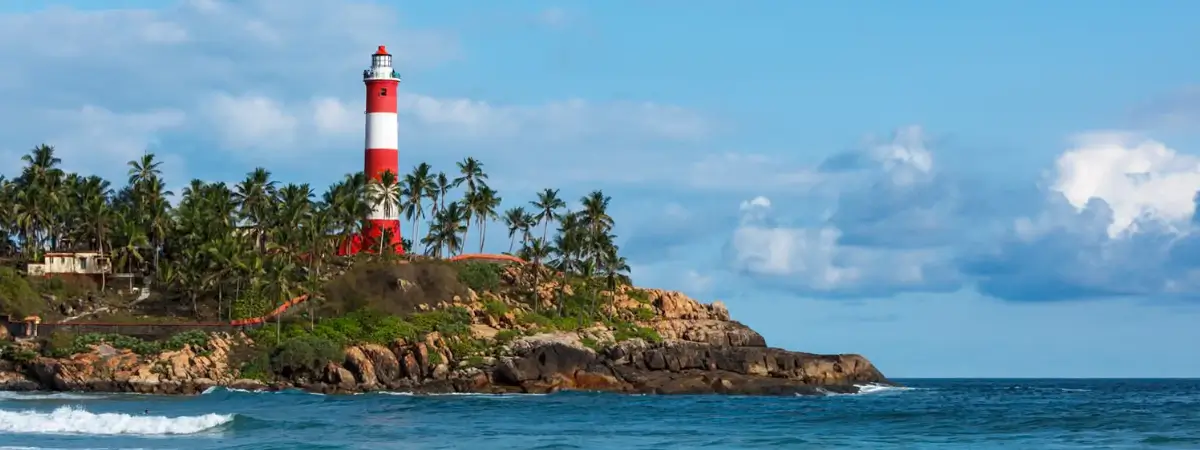
You return to the resort for lunch and a final consultation with the Ayurvedic physician, who reviews your progress and gives you personal guidance on diet, daily routine and herbal supplements to continue at home. Packaged medicines can be prepared by the resort pharmacy, with instructions in English. The afternoon is free for a last treatment, perhaps a soothing netra tarpana for tired eyes, or simply time by the pool. As the sun sets, take a walk along Lighthouse Beach, with its red and white striped tower on the headland, and climb to the top for a last view of the coastline curving south toward Kanyakumari. Overnight stay in Kovalam.
Your final morning begins with a short yoga session on the sea pavilion and a breakfast of fresh fruit, idli and coconut chutney, after which the resort team helps you pack your medicines, cookbook notes and any spices or oils you bought along the way. If your flight leaves later in the day, a last visit to the beach or a final short massage can be arranged, and a late checkout is requested where the resort allows. Your doctor's written notes and recommended daily routine are handed to you in a printed folder for easy reference at home, along with the contact details of the physician should questions arise after you leave.
Thiruvananthapuram International Airport is about fifteen kilometres from Kovalam, a drive of thirty to forty minutes depending on traffic, and your chauffeur collects you from the resort with enough time for an unhurried check-in. On the way, the road passes through Vizhinjam and the coastal villages for a last glimpse of the fishing boats drawn up on the sand and the small coloured houses of the fishing families. We hope you leave Kerala rested, lighter, and with daily habits that keep the benefits of these twelve days going for many months to come, long after the oils have washed off.
Hear what our happy guests say about their India adventures! From private drivers to guided tours, we make every journey smooth, safe & unforgettable.
 rating score: 5.0 of 5, based on 448 reviews

Complete our inquiry form

Customize your itinerary

Confirm when you're satisfied
1-to-1 Service | Reply within 24hrs | Expert's Advice