Delhi - Agra - Chambal - Fatehpur Sikri - Jaipur - Delhi
Less than two hours from the Taj Mahal, the Chambal River runs clean and quiet through a maze of eroded ravines, and on its sandbanks lie hundreds of gharials, the slender-snouted crocodiles found almost nowhere else on earth. Our Golden Triangle Tour with Chambal River Safari adds two nights on this protected river to the classic Delhi, Agra and Jaipur route, so that you see India's Mughal and Rajput heritage and then one of its least-visited wildlife areas in the same week. The National Chambal Sanctuary protects a long stretch of the river where Madhya Pradesh, Rajasthan and Uttar Pradesh meet. You travel throughout with a private car and driver, and on the river you are guided by naturalists who know every sandbar.
The river is home to the critically endangered gharial, the mugger crocodile, the Gangetic river dolphin, smooth-coated otters and several freshwater turtle species. Bird lovers come for the Indian skimmer, a black-and-white tern-like bird that slices the water surface with its orange lower bill, as well as for black-bellied terns, great thick-knees and, in winter, flocks of bar-headed geese. The boat safari season usually runs from October to June, and the hottest months are the least comfortable. Close to the lodge, the village of Bateshwar has a long row of riverside Shiva temples on the Yamuna. This Chambal safari tour from Agra suits nature lovers, keen photographers and repeat visitors to India who want something quieter than the usual circuit.
Tour Highlights
 Package Includes:
 Package Excludes:
Reply within 24hrs
When you land at Indira Gandhi International Airport, our representative will be waiting outside the arrival hall with a placard bearing your name. You will also meet your chauffeur, an experienced driver who knows the roads of Delhi, Uttar Pradesh and Rajasthan well and who will be with you until your final departure. The drive to your hotel takes about forty minutes. On the way, we give you a short note about the Chambal leg of the trip, including suggested clothing, which is neutral-coloured layers, a sun hat and comfortable walking shoes, and a reminder to bring binoculars if you have them.
After checking in, spend the rest of the day resting. Delhi is surprisingly green, and even from the hotel you may hear black kites, rose-ringed parakeets and common mynas. If you want a gentle first outing in the evening, ask your chauffeur to drive you through Lutyens' Delhi, where wide avenues are lined with neem, jamun and arjuna trees, and stop for a short walk on the lawns around India Gate as the lights come on. Then enjoy an early dinner at a restaurant near your hotel and a good night's rest before the city tour tomorrow. Overnight stay in Delhi.
Your Delhi sightseeing starts in Sunder Nursery, a sixteenth-century Mughal garden next to Humayun's Tomb that was restored and reopened as a city park. Among its lawns and ponds stand small garden tombs and pavilions, such as the Sunderwala Burj and the Lakkarwala Burj, and its trees attract more than eighty bird species, so it is a fitting start for a nature-themed tour. Walk through to Humayun's Tomb itself, whose high double dome and red sandstone facade set the template for the later Mughal tombs. Your guide will also show you Isa Khan's octagonal tomb, which predates Humayun's by about twenty years.
In the afternoon, drive to Old Delhi. The Red Fort is closed on Mondays, so on other days your guide will take you through the Lahori Gate and the covered bazaar of Chhatta Chowk to the Diwan-i-Khas, where the Peacock Throne once stood. Afterward, walk to Jama Masjid and climb its southern minaret, if open, for a view across the rooftops. Before returning to the hotel, visit Raj Ghat, the simple black marble platform marking the spot where Mahatma Gandhi was cremated, set in quiet lawns. In the evening, try a Mughlai dinner of kebabs and nihari at Karim's near the mosque. Overnight stay in Delhi.
Leave Delhi after breakfast and drive down the Yamuna Expressway to Agra. After check-in and lunch, your guide takes you to the Taj Mahal, which opens every day except Friday. Walk through the forecourt and the great gate and stop at the edge of the long water channel for the classic view. Your guide explains how the gardens were laid out in four quarters, each divided again into four, to represent the gardens of paradise, and how the marble was brought from Makrana in Rajasthan, more than four hundred kilometres away, using carts pulled by oxen and elephants. Go armed with sunglasses, as the reflected glare is strong at midday.
Later, visit Agra Fort to see the halls and balconies where Shah Jahan held court, including the Diwan-i-Aam with its throne alcove and the delicate Nagina Masjid, a small mosque reserved for the women of the court. From the Musamman Burj you will see the Taj downstream across the river, the very view the emperor had during his last years. In the evening, wander through Kinari Bazaar near the fort, or simply relax at your hotel. Agra's most loved street snack is bedai with spicy potato curry, followed by a hot jalebi, usually eaten for breakfast. Overnight stay in Agra.
After a relaxed breakfast, drive south-east from Agra through mustard and wheat fields to the Chambal area near the small town of Bah. Your lodge for the next two nights is a family-run eco-lodge in a restored colonial-era farmhouse surrounded by mango and guava orchards, with simple, comfortable cottages. The owners have worked for many years with conservation groups to protect the river, and the lodge naturalists lead all outings. After lunch, the naturalist gives you a short briefing on the river and its creatures, and you can stroll through the grounds, where peacocks, Indian grey hornbills and colonies of fruit bats in the old trees keep you company.
In the late afternoon, drive about ten kilometres to Bateshwar on the banks of the Yamuna. Here, a long row of more than forty temples dedicated to Shiva stands along the curve of the river, built over centuries by local rulers. A bund was built in the river so that the water would flow past the temples in a crescent shape. Walk the steps as the evening aarti begins, with bells ringing and lamps waving in front of the shrines. If you visit around Kartik Purnima, you may also see the edge of Bateshwar's traditional livestock fair. Overnight stay in Chambal.
After an early breakfast, drive about twenty minutes to the riverbank inside the National Chambal Sanctuary, where your Chambal river safari begins. The motorboat moves slowly along the clear water, with the naturalist pointing out gharials lying on the sand with their mouths open to cool down. Adult males have a bulbous growth at the tip of the snout, called the ghara, from which the species gets its name. Mugger crocodiles, broader and heavier, rest in the same areas. Keep an eye on the deeper stretches for the brief rolling dive of a Gangetic river dolphin, which is almost blind and finds its prey by echolocation.
Birding is excellent throughout. Indian skimmers nest on the sandbars, especially from March to May, and you may see them gliding inches above the water with their lower bill open. Also look for black-bellied terns, great thick-knees, river lapwings, pied kingfishers and, in winter, bar-headed geese and ruddy shelducks. After lunch at the lodge and an afternoon rest, set off with the naturalist on a guided walk into the Chambal ravines, a labyrinth of crumbling clay ridges carved by centuries of erosion. Once the hideout of bandits, they now shelter nilgai, jackals and the occasional jungle cat. Overnight stay in Chambal.
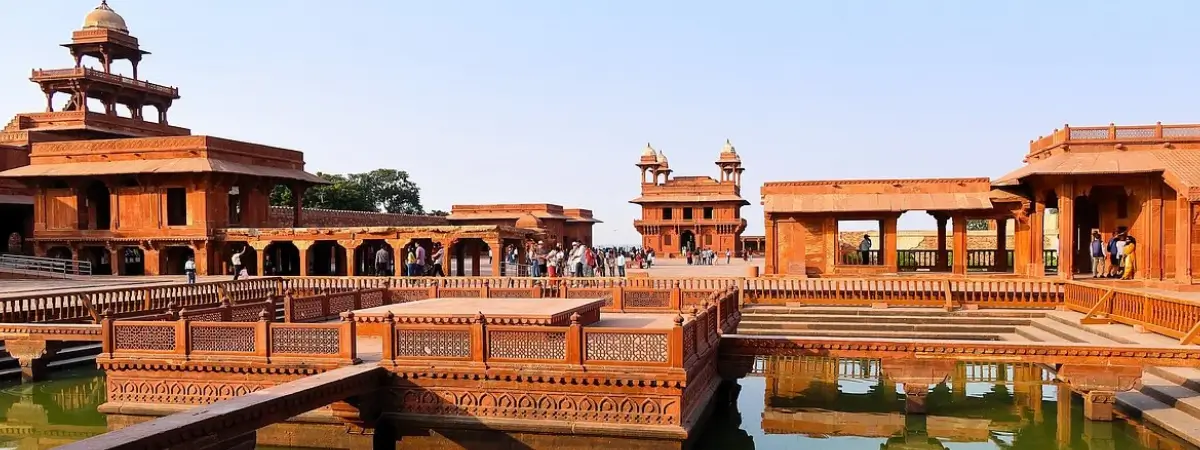
Rise early for an optional morning walk along the ravine edge with the naturalist, when the light is soft and the birds are most active. Watch for Indian coursers, sandgrouse and Egyptian vultures before returning to the lodge for breakfast. Then check out and drive west with your chauffeur, bypassing Agra and stopping at Fatehpur Sikri, Akbar's abandoned red sandstone capital. Your guide shows you the Diwan-i-Khas, where the emperor held debates with scholars of different religions, and the Jodha Bai palace, which mixes Hindu and Islamic design, before you visit the shrine of Salim Chishti inside the Jama Masjid.
Continue on the highway to Jaipur, arriving in the late afternoon. Check in at your hotel and relax after the long drive. In the evening, your chauffeur drives you around the old walled city to see the Hawa Mahal glowing in the evening light and the shops of Johari Bazaar, where jewellers sell gemstones, kundan jewellery and silver. If you are hungry, stop at a sweet shop such as Laxmi Mishthan Bhandar for ghewar or a plate of dal kachori, and try a cup of strong cutting chai at one of the street stalls before heading back to the hotel. Overnight stay in Jaipur.
On your final day, rise early for a morning Jaipur city tour before the heat and crowds build. Drive to Amber Fort and walk through its courtyards with your guide, from the Diwan-i-Aam to the Sheesh Mahal and the Sukh Niwas. Bird lovers can look down on Maota Lake at the foot of the fort for egrets and cormorants. Afterward, stop for a photograph of the Jal Mahal floating in Man Sagar Lake, and finish with a short visit to the City Palace with its Pritam Niwas Chowk courtyard and the Mubarak Mahal textile museum. The palace's courtyards are also busy with pigeons and house sparrows in the morning.
After an early lunch, check out and start the drive to Delhi along the national highway. The road journey takes five to six hours, with a comfortable stop at a highway restaurant along the way. Your chauffeur will take you directly to Indira Gandhi International Airport for your evening or late-night flight home. If you prefer to fly out the next day, we can reserve a hotel near the airport for an extra night. We hope the gharials of the Chambal and the domes of Agra and Jaipur stay with you for a long time, and that India calls you back soon.
Hear what our happy guests say about their India adventures! From private drivers to guided tours, we make every journey smooth, safe & unforgettable.
 rating score: 5.0 of 5, based on 448 reviews

Complete our inquiry form

Customize your itinerary

Confirm when you're satisfied

1-to-1 Service | Reply within 24hrs | Expert's Advice