Delhi - Sikandra - Agra - Fatehpur Sikri - Jaipur - Delhi
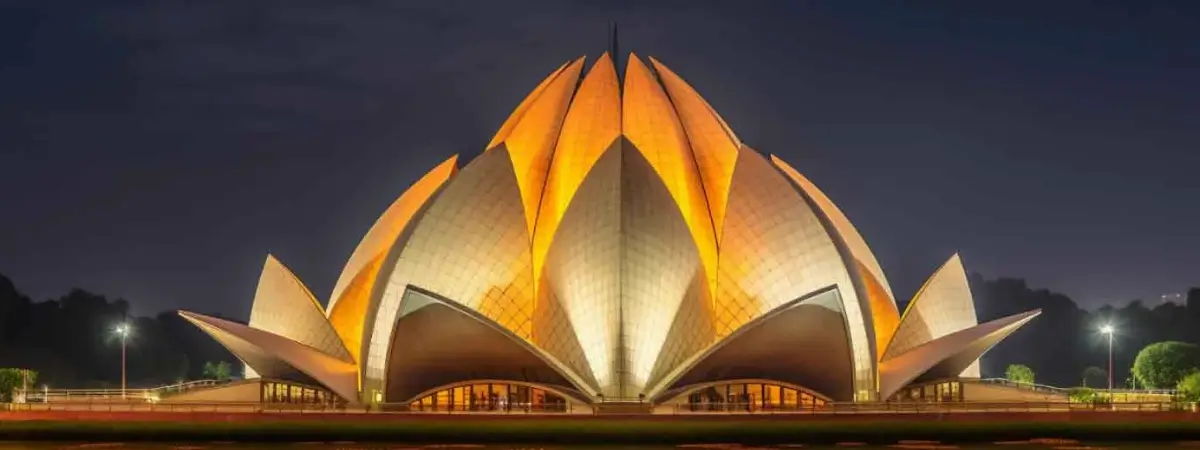
Three nights in every city, sightseeing finished before the afternoon heat and a comfortable chair never far away: those are the promises behind our Golden Triangle tour for seniors with relaxed itinerary. Most Delhi, Agra and Jaipur tours squeeze the three cities into five or six days, which suits young backpackers but tires older travellers quickly. Over ten days, this route halves the daily pace. Mornings carry one or two main visits, afternoons are for rest, and long drives are broken with clean rest stops every couple of hours. Hotels are chosen for lifts, ground-floor or low-floor rooms, step-free restaurants and in-house doctors on call, and your guides are briefed on any mobility, diet or medical needs before you land.
Older guests often travel with questions their children cannot answer: will there be stairs, how far is the walk, can I sit down, is the food too spicy? We answer every one of them in advance. Your private car and driver pulls up as close to each entrance as rules allow, wheelchairs are arranged at the Taj Mahal, Agra Fort and Amber Fort when needed, and battery carts replace long walks wherever they operate. Our team in Jaipur, led by Magan Singh, has hosted retired travellers from the USA, the UK and Australia for many years, including guests in their eighties. The goal is simple: to see India's great monuments properly, and to come home rested rather than exhausted.
Tour Highlights
 Package Includes:
 Package Excludes:
Reply within 24hrs
On landing at Indira Gandhi International Airport, a representative meets you inside the arrivals hall, takes charge of the luggage trolley and walks at your pace to the car park. If you requested a wheelchair from your airline, our representative coordinates with the airline staff so there is no gap in assistance. Your chauffeur, who will be with you for all ten days, settles you into an air-conditioned sedan or SUV with easy-entry seats. The drive to your hotel in central New Delhi takes about 45 minutes, and check-in formalities are completed in advance so that you can go straight to your room.
There is no sightseeing today. After a long international flight, the most useful thing is sleep, water and a light meal, and we ask the hotel to have a simple dinner of soup, rice and mild dal available in the room if you prefer not to go downstairs. Your local guide telephones in the evening to introduce himself and confirm tomorrow's start, which will be no earlier than 9 am. If you have any medication that needs refrigeration or a dietary need such as low salt or diabetic meals, let him know now so the hotels and restaurants can be informed. Overnight stay in Delhi.
Start mid-morning at Gandhi Smriti on Tees January Marg, the former Birla House where Mahatma Gandhi lived during his last 144 days and was assassinated in January 1948. The house is kept much as he left it, and a line of concrete footsteps marks his final walk across the lawn to the prayer ground. It is a quiet, moving place with level paths and benches throughout, and the museum is closed on Mondays. From here, your driver takes a slow route down Rajpath, now Kartavya Path, past the President's House and the North and South Blocks, stopping at India Gate for photographs.
Lunch is at a calm restaurant in Khan Market or Lodhi Colony, where your guide can recommend mild North Indian dishes such as paneer butter masala or chicken tikka, and continental choices as well. Then return to the hotel for an afternoon rest. Around 4 pm, when the sun softens, take a gentle stroll in Lodhi Garden among the fifteenth-century tombs of the Sayyid and Lodi rulers. The paths are flat and there are benches in shade, and many retired Delhi residents walk here every evening. Your driver waits at the gate nearest the car, so you can stop whenever you like. Overnight stay in Delhi.
After a relaxed breakfast, visit Raj Ghat, the black marble platform on the bank of the Yamuna marking the spot where Gandhi was cremated, with an eternal flame burning beside it. Shoes are removed at the entrance, and our guide carries clean socks for those who find the stone hot. Next, the National Museum on Janpath holds one of the best collections in Asia, from the bronze Dancing Girl of Mohenjo-daro to relics of the Buddha and miniature paintings. It is closed on Mondays. Wheelchairs are available at the entrance, and your guide picks five or six galleries rather than attempting everything.
After lunch and a rest, your chauffeur drives slowly through Old Delhi in the late afternoon, past the red walls of the Red Fort (closed Mondays) and the domes of Jama Masjid, so you can see the old city's character from the comfort of the car without walking crowded lanes. If you are feeling energetic, a short cycle rickshaw ride through the edge of Chandni Chowk can be added, and you can taste jalebi fried fresh in a giant pan at a sweet shop dating back more than a century. Return to the hotel for an early dinner. Overnight stay in Delhi.
Leave at a comfortable hour after breakfast and drive along the Yamuna Expressway, a smooth, well-maintained road with modern rest stops, which keeps this transfer far more restful than the older highways. Your chauffeur will stop roughly every hour and a half for tea and washrooms. Shortly before reaching Agra, turn off at Sikandra to visit the Tomb of Emperor Akbar, a broad sandstone and marble mausoleum set in large walled gardens. Blackbuck and spotted deer graze on the lawns, monkeys play in the trees, and the place is usually quiet, with level pathways from the gate to the tomb.
Continue a short distance into Agra and check into your hotel, where you will stay for the next three nights. We select hotels with lifts, ramps and rooms close to the restaurant, and request a room with a view of the Taj Mahal whenever possible. The rest of the afternoon is free to unpack and settle in. In the evening, enjoy dinner at the hotel; Agra is known for its petha, a translucent sweet made from ash gourd, and for bedai, a crisp fried bread served with potato curry at breakfast, both of which your guide can arrange for you to taste. Overnight stay in Agra.
The Taj Mahal is closed on Fridays, so this day is never scheduled on one. Rather than a pre-dawn start, many seniors prefer arriving about an hour after opening, when the light is still soft but you have had tea first. Electric carts carry visitors from the parking area to the eastern gate, and wheelchairs are available at the entrance. Your guide takes the family-and-elderly security lane where one is open, then leads you to the platform in front of the Great Gate, where benches face the tomb. Take your time here. The view along the water channel is the one that most people come to India to see.
Your guide explains the story of Shah Jahan and Mumtaz Mahal, and, for those comfortable with the steps up to the plinth, accompanies you inside to see the cenotaphs and the screen of carved marble. Shoe covers are provided so you need not remove your shoes. Afterwards, return to the hotel for lunch and a long rest. Late afternoon, if you feel like going out again, a short visit to a marble inlay workshop lets you sit and watch craftsmen shaping semi-precious stones into flowers, using methods passed down from the families who decorated the Taj. Overnight stay in Agra.
A mid-morning start takes you to Agra Fort, the vast red sandstone citadel where Akbar, Jahangir and Shah Jahan ruled. Your guide follows a route that keeps walking manageable: in through the Amar Singh Gate, a short ramp up to the Jahangiri Mahal and then the white marble Khas Mahal, with views across the river to the Taj Mahal. Wheelchairs can be arranged, though some sections have uneven ground, and your guide will suggest where to sit and where to skip. The marble Diwan-i-Khas and the Musamman Burj, where Shah Jahan spent his last years, are highlights for most visitors.
After lunch and rest, cross the river to Itimad-ud-Daulah, built by Empress Nur Jahan for her father between 1622 and 1628. It is smaller and calmer than the Taj, with almost no crowds, and its walls of inlaid marble are just as fine. A level path leads from the gate to the tomb and gardens by the Yamuna. If you are not too tired, finish at Mehtab Bagh for the sunset view of the Taj from the opposite bank, where you can sit on a bench and watch the marble change colour. Return to the hotel for dinner. Overnight stay in Agra.
Check out after breakfast and drive about 40 km to Fatehpur Sikri, the red sandstone city built by Akbar and abandoned soon after. A battery bus runs from the parking area to the entrance, which saves a steep walk. Your guide keeps the visit to about an hour and a half, focusing on the most important buildings: Jodha Bai's Palace with its blend of Hindu and Islamic design, the Panch Mahal pavilion, and, in the mosque courtyard, the white marble tomb of the Sufi saint Salim Chishti, where visitors tie threads to the screen and make a wish. Seating is available in the shaded cloisters around the courtyard.
Continue towards Jaipur on a good highway, with a lunch stop at a clean restaurant and a further tea break midway. You arrive in Jaipur in the late afternoon and check into a hotel where you will stay for the final three nights, with a lift, garden and quiet rooms away from the road. After a long day of travel, we suggest a gentle evening with dinner at the hotel. Ask for ker sangri, a Rajasthani dish of desert beans and berries, or, if you prefer milder flavours, the kitchen will gladly prepare simple vegetables and rice. Overnight stay in Jaipur.
Leave mid-morning for Amber Fort, 11 km north of the city. Instead of climbing the long ramp from the lake, your chauffeur hands you over to a jeep that drives up to the fort's main courtyard, Jaleb Chowk. From there your guide leads a short circuit through the Diwan-i-Am, the painted Ganesh Pol and the Sheesh Mahal with its mirrored ceilings, keeping stairs to a minimum and pausing in the shade of colonnades. There are a few steps in places, but the guide knows the gentlest routes and will point out where to rest. The view over Maota Lake from the upper terraces is worth the effort.
Below the fort, in Amber village, the Anokhi Museum of Hand Printing sits in a carefully restored eighteenth-century haveli. It is small and calm, and a craftsman demonstrates traditional block printing in the courtyard, so you can watch the patterns appear one stamp at a time. The museum is closed on Mondays and through part of the summer. Return to Jaipur for lunch and an afternoon rest. In the evening, take a short drive to Birla Mandir, a white marble temple that looks lovely when lit up after sunset, with a level approach from the side entrance. Overnight stay in Jaipur.
This morning focuses on the old walled city. Your chauffeur stops at the best viewpoint across from Hawa Mahal, so you can photograph its pink honeycomb facade without climbing it. Then visit the City Palace, where most of the important rooms are on the ground floor: the Mubarak Mahal textile gallery, the armoury, and the Pritam Niwas Chowk with its four painted doorways. Across the road, Jantar Mantar's large stone instruments are spread out on level ground, so you can walk at your own pace while the guide explains how astronomers used them to predict eclipses. Shaded benches are close at hand throughout.
After lunch and a rest, the afternoon includes a visit to a Jaipur family home for a seated cooking demonstration. The family shows you how to make chapati, a simple vegetable curry and masala chai, and invites you to join them for an early dinner afterwards. It is a warm, relaxed way to see everyday Indian life, and the host family is used to welcoming older guests. Your guide will also help with any last shopping, such as soft cotton quilts, block-printed tablecloths or light pashmina shawls, delivered to your hotel so you need not carry them. Overnight stay in Jaipur.
After breakfast and a leisurely check-out, there are two ways back to Delhi. Your chauffeur can drive you along the expressway in about five to six hours, with two comfortable rest stops on the way, or, if you prefer to avoid a long road journey on your last day, we can book a short domestic flight from Jaipur to Delhi of about one hour, arranging wheelchair assistance at both airports. Either way, the timing is set around your international flight, with plenty of buffer so that there is no rush at the airport. Your chauffeur will also help pack fragile purchases securely for the flight.
On reaching Indira Gandhi International Airport, your chauffeur or our representative helps with luggage to the terminal entrance and makes sure airline wheelchair assistance is in place if you need it. Our office stays available by phone throughout, right up until your departure. Many of our senior guests have told us the unhurried pace made all the difference: three nights in each city meant they never felt rushed, and the afternoons of rest left energy for the next day. If you would like to return for a slow tour of Udaipur or the Kerala backwaters, we would be delighted to arrange it.
Hear what our happy guests say about their India adventures! From private drivers to guided tours, we make every journey smooth, safe & unforgettable.
 rating score: 5.0 of 5, based on 448 reviews

Complete our inquiry form

Customize your itinerary

Confirm when you're satisfied
1-to-1 Service | Reply within 24hrs | Expert's Advice