Delhi - Agra - Jaipur - Amritsar - Dharamshala
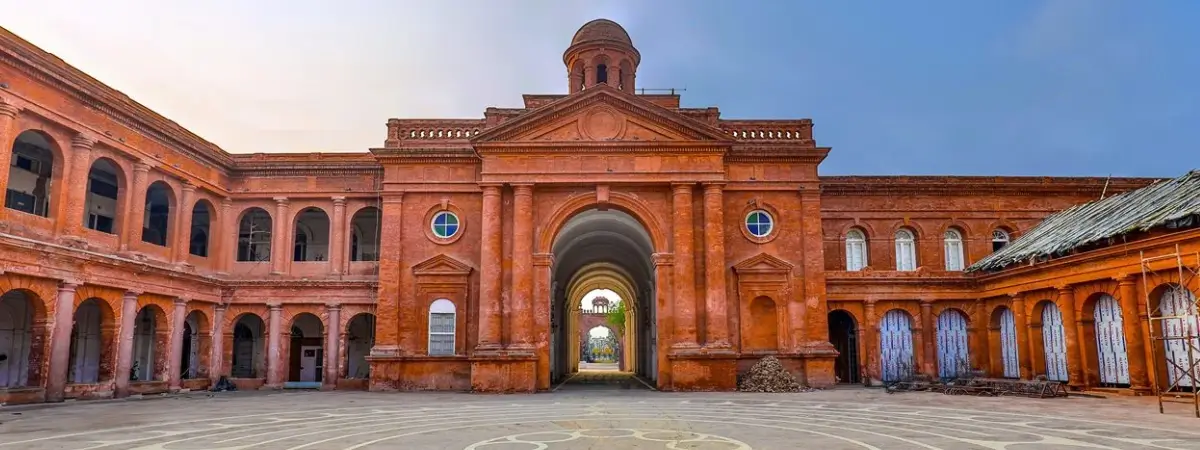
From the deserts of Rajasthan to the snowy ridges of the Dhauladhar range, our Golden Triangle Tour with Amritsar and Dharamshala covers more of North India's landscapes and faiths in eleven days than most travellers manage in a month. The first half follows the classic loop of Delhi, Agra and Jaipur, with the Taj Mahal at sunrise and the hill forts of the Kachwaha kings. Then a domestic flight takes you north to Amritsar in Punjab, home of the Golden Temple, where volunteers feed tens of thousands of people every day in the free community kitchen. The final leg climbs into the Himalayan foothills to Dharamshala and McLeod Ganj, home of the Dalai Lama and the Tibetan community in exile, with pine forests, prayer flags and cool mountain air.
Few routes in India offer such contrast, and the tour is arranged to keep it comfortable. All road travel is by private car and driver with an English-speaking chauffeur, and the long hops are handled by air: Jaipur to Amritsar on the way north and Kangra to Delhi at the end, so there are no punishing drives. Local guides lead each Delhi, Agra, Jaipur and Amritsar city tour, while in Dharamshala a guide familiar with Tibetan culture introduces you to monasteries, a nunnery and the Norbulingka Institute. You will witness the lively flag-lowering ceremony at the Wagah border, walk the marble parikrama of the Golden Temple at night and sip tea among the gardens of the Kangra valley. It is a fine choice for families, couples and anyone curious about faith, food and mountain scenery.
Tour Highlights
 Package Includes:
 Package Excludes:
Reply within 24hrs
A member of our team will be waiting for you outside the arrival hall at Indira Gandhi International Airport, holding a sign with your name. After warm greetings and a little help with any currency exchange or a local SIM card, you meet your chauffeur for the drive into the city, which takes about 45 minutes. In the car you will find chilled water and a folder holding your full itinerary, flight tickets for the domestic sectors, hotel vouchers and our support numbers. If you have any special requests, such as a vegetarian diet, a wheelchair or extra time at a particular site, this is the moment to mention them.
Your first day is free so you can settle in and rest. If you land early and feel like a short outing, ask your driver to take you to the Lotus Temple in South Delhi, a Bahai house of worship shaped like a half-open lotus flower in white marble. It is open to people of all faiths and silence is kept inside the prayer hall, which makes it a calm first stop after a long flight. Note that it is closed on Mondays. For dinner, a South Delhi restaurant serving tandoori dishes, butter chicken and fresh naan is an easy start to Indian food. Overnight stay in Delhi.
Today's Delhi city tour begins in the old city built by Shah Jahan. Your guide meets you at the hotel and drives to Raj Ghat, the black marble platform marking the place where Mahatma Gandhi was cremated, with an eternal flame burning at one end. Continue to the Red Fort, closed on Mondays, and walk through the Lahori Gate into the Mughal palace complex. A short drive brings you to Jama Masjid, where the steps lead up to the great courtyard and its three onion domes. A cycle-rickshaw ride through the narrow lanes of Chandni Chowk then takes you past cloth merchants, silversmiths and stalls selling stuffed parathas.
After lunch at a local restaurant, the tour moves to New Delhi. Pass India Gate, a war memorial arch built by the British, and drive along the wide avenue to the President's House and the Parliament area. Visit Humayun's Tomb, a red sandstone garden tomb that set the model for later Mughal architecture, and stroll through its symmetrical gardens with water channels and fountains. End the day at Gurudwara Bangla Sahib, where you can see the sacred pool and the community kitchen, a small preview of the much larger langar you will see in Amritsar later in the tour. Overnight stay in Delhi.
Leave Delhi after breakfast and drive along the Yamuna Expressway to Agra, a smooth journey of around four hours with a short stop for tea. After checking into your hotel, your guide takes you to Agra Fort, the vast red sandstone fortress begun by Akbar. Inside, the Diwan-i-Khas, the Sheesh Mahal and the Musamman Burj tell the story of three generations of emperors. The fort also shows how Mughal tastes changed, from Akbar's sturdy red stone to the soft white marble Shah Jahan preferred. From the terraces you get your first distant view of the Taj Mahal across the bend of the river.
In the afternoon visit the tomb of Itimad-ud-Daulah, the so-called Baby Taj, on the opposite bank of the Yamuna. Built by Empress Nur Jahan for her father, it is smaller and more intimate than the Taj Mahal, and its inlaid marble walls are decorated with flowers, wine vessels and cypress trees in coloured stone. The garden is quiet, which makes it a pleasant spot for photographs in the late light. For dinner, sample Mughlai dishes such as murgh korma or a fragrant biryani. Remember that the Taj Mahal is closed every Friday, so your visit tomorrow is set for an open day. Overnight stay in Agra
Rise before dawn for your visit to the Taj Mahal, timed for the moment the gates open. Your guide shares the story of Shah Jahan and Mumtaz Mahal as you approach through the grand red sandstone gateway, and the first sight of the white dome framed in the arch is a moment most people never forget. Walk along the reflecting pools to the main platform and step inside the mausoleum to see the marble cenotaphs behind their carved screen. The mosque and the guesthouse on either side, both in red sandstone, complete the perfect symmetry of the complex. Return to the hotel for breakfast and check out.
On the way to Jaipur stop at Fatehpur Sikri, the city Akbar built in the sixteenth century and abandoned soon after, probably because of water shortages. Your guide shows you the Buland Darwaza, the tallest gateway in the Mughal world, and the white marble tomb of Salim Chishti, where visitors tie threads on the lattice screens to make a wish. Continue through the countryside of eastern Rajasthan, passing villages and mustard fields, and reach Jaipur in the late afternoon. After check-in, enjoy a quiet dinner at your hotel or a rooftop restaurant with views of the Pink City. Overnight stay in Jaipur.
After breakfast your guide meets you for the Jaipur city tour, starting at Amber Fort, built in the sixteenth century by Raja Man Singh. Walk through the courtyards to the Diwan-i-Am, the Ganesh Pol gateway with its fine frescoes, and the Sheesh Mahal, whose ceiling glitters with tiny mirrors. Then drive further up the ridge to Jaigarh Fort, which holds the Jaivana cannon, one of the largest wheeled cannons in the world, and offers views over Amber and the surrounding hills. On the way back to the city, stop at Jal Mahal for photographs of the palace sitting in the middle of Man Sagar Lake.
In the afternoon visit the City Palace, where the museum galleries hold royal costumes, weapons and miniature paintings, and the Jantar Mantar, an open-air observatory with giant stone instruments built by Maharaja Sawai Jai Singh II. Afterwards stop at Hawa Mahal, the pink honeycomb facade with 953 small windows that let royal women watch the street below. Finish with shopping in Johari Bazaar for jewellery and gemstones, or Bapu Bazaar for printed textiles and leather mojaris, where polite bargaining is expected. In the evening try Rajasthani dishes such as dal baati churma and laal maas at a heritage restaurant. Overnight stay in Jaipur.
After breakfast, your chauffeur drives you to Jaipur International Airport for your flight to Amritsar, which takes about one hour and forty minutes. On arrival at Sri Guru Ram Dass Jee International Airport, our Amritsar chauffeur meets you and drives you to your hotel close to the old city. After a light lunch, perhaps your first taste of Amritsari kulcha, a crisp stuffed bread served with chole and butter, you set out in the afternoon for the Attari–Wagah border, about 30 km west of the city, on the old Grand Trunk Road to Lahore in Pakistan. Your driver knows the parking routine well, which saves time at the busy entrance.
The Wagah border ceremony, officially called the Beating Retreat, takes place every evening before sunset. Soldiers of India's Border Security Force and the Pakistan Rangers perform a dramatic drill with high kicks, stamping feet and a fast march before the gates are closed and the flags lowered at the same moment. Crowds on both sides cheer, sing and dance to patriotic music, and the energy is remarkable. Arrive at least two hours early to get good seats, and carry only small items, as bags are not allowed. Return to Amritsar for dinner at a Punjabi restaurant, where dal makhani and tandoori fish are local favourites. Overnight stay in Amritsar.
Start very early with a visit to the Golden Temple, Harmandir Sahib, the holiest shrine of the Sikh faith. At dawn the gilded temple glows in the middle of the Amrit Sarovar pool, and pilgrims walk the marble parikrama reciting prayers. Your guide explains the history of the Sikh Gurus and the meaning of the Akal Takht facing the temple, and leads you to the Guru Ram Das Langar, the community kitchen where volunteers prepare free meals for tens of thousands of people each day. You can help roll chapatis or simply sit with pilgrims on the floor to share a simple meal.
After breakfast, walk to the nearby Jallianwala Bagh, the garden where British troops fired on a peaceful gathering in 1919, killing hundreds of people. The bullet marks on the walls and the martyrs' well are a sobering reminder of India's freedom struggle. Then visit the Partition Museum, closed on Mondays, in the old Town Hall, which tells the personal stories of the millions displaced in 1947 through letters, objects and oral histories. In the evening, return to the Golden Temple for the Palki Sahib ceremony, when the holy book is carried to its resting chamber for the night. Overnight stay in Amritsar.
After a hearty Punjabi breakfast, perhaps aloo paratha with white butter and a tall glass of lassi, leave Amritsar and drive north-east towards the mountains. The first part of the drive crosses the flat green farmland of Punjab, where wheat and rice fields stretch to the horizon. After Pathankot, the road begins to climb into the foothills of Himachal Pradesh, and the scenery changes to pine forests, terraced fields and small villages with slate roofs. On a clear day the snow-covered peaks of the Dhauladhar range appear ahead, rising sharply above the valley. Your driver stops for tea at a roadside dhaba near Shahpur.
You reach Dharamshala in the afternoon and check into your hotel, which may be in lower Dharamshala or in McLeod Ganj, the upper town where the Tibetan community is centred. After the heat and crowds of the plains, the cool fresh air is a welcome change. In the evening, take a slow walk through the main square of McLeod Ganj, lined with Tibetan shops selling prayer flags, singing bowls and woollen shawls, and cafes serving momos, thukpa and butter tea. Remember that it can be cold after sunset, even in the warmer months, so carry a light jacket. Overnight stay in Dharamshala.
Today your guide introduces you to the Tibetan side of Dharamshala sightseeing. Begin at the Tsuglagkhang complex, the main temple and residence of His Holiness the Dalai Lama, where monks debate philosophy in the courtyard with sharp claps and gestures. Inside the temple are statues of the Buddha, Avalokiteshvara and Padmasambhava, and the small Tibet Museum next door tells the story of the Tibetan exile since 1959. Follow pilgrims along the Lingkor, a forest path around the complex, lined with prayer wheels and fluttering flags, and enjoy views across the Kangra valley. Photography is allowed in the courtyard but not inside the main shrine.
In the afternoon visit the Bhagsunag Temple, dedicated to Shiva, and walk up to the Bhagsu waterfall, a short and easy trail. Afterwards, drive to the St John in the Wilderness Church, a stone church built by the British in the nineteenth century, surrounded by deodar trees, where the Viceroy Lord Elgin is buried. If you have more energy, take the short walk to Dharamkot village for views of the snow peaks and a coffee at one of the quiet cafes. In the evening, a Tibetan cooking class can be arranged to learn how to make momos and thenthuk noodle soup. Overnight stay in Dharamshala.
After breakfast drive to the Norbulingka Institute, about 10 km from Dharamshala, set up to preserve Tibetan arts and crafts. Walk through peaceful Japanese-style gardens with small streams and bridges, and watch artists at work on thangka paintings, wood carving, metal statues and embroidery. The temple at the centre holds a large gilded statue of the Buddha, and the shop sells pieces made at the institute. Then continue to Kangra Fort, one of the oldest forts in India, built by the Katoch dynasty on a ridge above the Banganga and Manjhi rivers, with sweeping views of the valley. A small museum near the entrance is run by the Katoch family.
In the afternoon drive through the countryside to Palampur, known for its tea gardens set against the backdrop of the Dhauladhar peaks. Walk among the neat rows of tea bushes and visit a small tea factory to see how the leaves are withered, rolled and dried, followed by a tasting of the local Kangra tea. On the way back, you can stop at the Chamunda Devi temple on the banks of the Baner River, a popular Hindu shrine. Return to Dharamshala in the evening for your farewell dinner with views of the lights of the valley below. Overnight stay in Dharamshala.
After breakfast, check out of your hotel and drive to Kangra Airport at Gaggal, about 15 km from Dharamshala, for your domestic flight to Delhi. The flight takes about one hour and twenty minutes and on a clear morning offers wonderful views of the snow-capped Himalaya as you climb out of the valley. Since mountain weather can affect flight schedules, our team monitors the timings closely and keeps a backup option ready, such as a road transfer to Pathankot or Chandigarh for an onward train or flight, to make sure you reach Delhi with time for your international departure, even on a cloudy morning.
On arrival in Delhi, our representative meets you and assists with your transfer to the international terminal for your flight home, or to a nearby hotel if your flight leaves late at night. If you have a few hours to spare, a visit to Dilli Haat for crafts from across India or a final meal of Delhi street food can be arranged. Thank you for travelling with Heritage India Private Tours. We hope your Golden Triangle Tour with Amritsar and Dharamshala has given you lasting memories of India, from the marble of the Taj Mahal to the golden domes of Amritsar and the prayer flags of the Himalaya.
Hear what our happy guests say about their India adventures! From private drivers to guided tours, we make every journey smooth, safe & unforgettable.
 rating score: 5.0 of 5, based on 448 reviews

Complete our inquiry form

Customize your itinerary

Confirm when you're satisfied
1-to-1 Service | Reply within 24hrs | Expert's Advice