Delhi - Agra - Fatehpur Sikri - Jaipur - Delhi
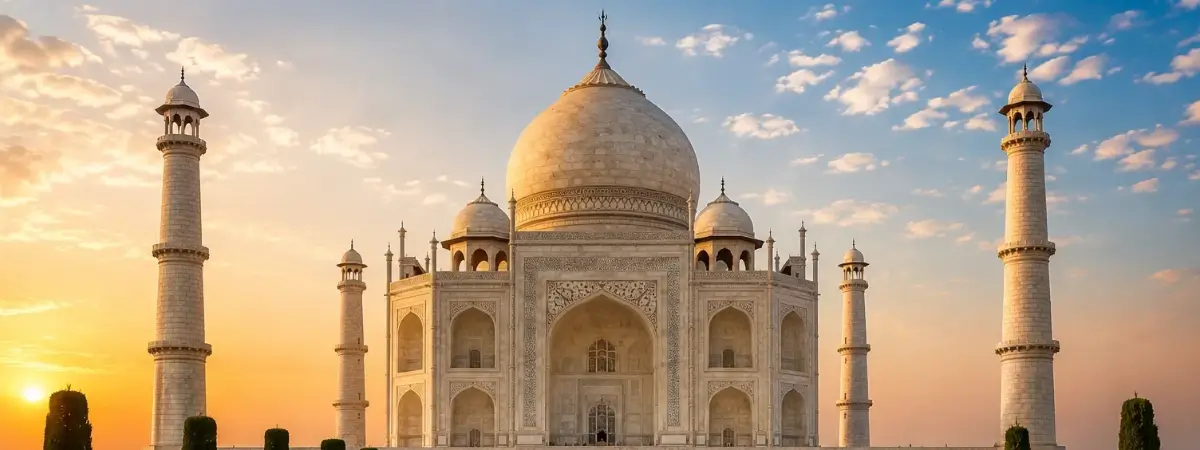
Light decides everything in travel photography, and in north India it is at its kindest in the first hour after sunrise and the last hour before dusk. Our Golden Triangle Photography Tour with Taj Mahal Sunrise is timed around those two windows rather than around hotel breakfast hours. You will stand at the Taj Mahal gate before it opens, photograph the spice porters of Khari Baoli while the shutters are still half down, and watch Amber Fort turn amber in the waters of Maota Lake. Between the golden hours, the schedule slows down so you can rest, back up your cards and review the day's frames over a long lunch.
Every day runs with a private car and driver, which matters more to a photographer than to most travellers. Your chauffeur waits wherever the best angle happens to be, carries the tripod bag when you need both hands, and knows which car parks sit closest to the east gate in Agra. Local guides in Delhi, Agra and Jaipur are chosen for their patience with lenses and their knowledge of where tripods are allowed, where they are not, and which rooftop cafes look straight onto the Hawa Mahal. The pace suits both serious amateurs carrying two bodies and travellers who simply want better phone pictures. Expect early alarms, quiet afternoons and a Delhi Agra Jaipur photo tour built around shadows, reflections and faces.
Tour Highlights
 Package Includes:
 Package Excludes:
Reply within 24hrs
Your chauffeur meets you outside the arrivals hall at Indira Gandhi International Airport with a name board, helps with the bags and settles you into a private air-conditioned car. The drive to your hotel takes forty minutes to an hour depending on traffic, which gives you time to talk through the week ahead: early starts, where he will park near each monument, and how quickly he can reach you if you spot a scene from the window. Most long-haul flights land late at night or very early, so nothing is fixed for today beyond check-in. Charge every battery, format your memory cards and clean the sensor tonight, because tomorrow begins before the city is awake.
If you land in daylight and feel fresh, a short evening walk around Connaught Place makes a gentle warm-up. The white colonnades of the inner circle look handsome under street lamps, and the radial roads give easy leading lines for a few test frames at high ISO. Your tour specialist will also hand over a printed shot list with sunrise and sunset times for each city and notes on where tripods are permitted. Drones are not allowed at any protected monument in India, so keep them packed for the entire trip. Dinner is at leisure, and the hotel restaurant is usually the simplest choice after a long flight. Overnight stay in Delhi.
Leave the hotel around 6 am for Khari Baoli, Asia's largest wholesale spice market, where porters haul sacks of red chillies, turmeric and dried fruit while the light is still soft and low. Your guide knows the stairway up to the rooftop of Gadodia Market, where you can shoot the lanes from above and the domes of Fatehpuri Masjid at the end of the street. From there, a cycle rickshaw carries you through Chandni Chowk to the red sandstone steps of Jama Masjid, a fine spot for wide-angle frames and candid portraits. A small camera ticket is charged at the mosque, and visitors are not admitted during prayer times.
After a slow breakfast and a rest at the hotel, the afternoon is spent at Qutub Minar, where the carved bands of Quranic script on the 73-metre tower reward a longer lens. Save the best light for Humayun's Tomb, which glows a deep red in the last hour before closing at sunset. The long water channels of the charbagh garden give natural symmetry, and the side tombs of Isa Khan make a quieter frame with fewer people. Note that the Red Fort is closed on Mondays, so your guide will swap days if needed. Your Delhi photography tour ends with an easy dinner close to the hotel. Overnight stay in Delhi.
Drive south on the Yamuna Expressway after breakfast, a smooth six-lane road with a clean food court roughly halfway. The flat farmland on either side holds brick kilns with tall chimneys and mustard fields in the winter months, and your chauffeur will pull over safely if a scene catches your eye. Check in at your Agra hotel around lunchtime and rest through the harsh midday light, which flattens marble and burns out highlights. In the mid-afternoon, head to Itimad-ud-Daulah, the tomb that many call the Baby Taj. Its walls carry some of the finest pietra dura inlay in India, and a macro lens picks up every petal of semi-precious stone.
As the sun drops, cross the river to Mehtab Bagh, the moonlight garden built on the opposite bank in line with the Taj Mahal. From here you photograph the mausoleum across the Yamuna without crowds, framed by the river and, in the dry season, by grazing buffalo on the sandbanks. Mehtab Bagh shuts at sunset, so arrive at least forty-five minutes early to set up. A short lens shows the whole riverfront, while a 200 mm frame isolates the dome and its four minarets against an orange sky. Back at the hotel, your guide confirms the timing for tomorrow's sunrise entry. Overnight stay in Agra.
The alarm rings in the dark. The Taj Mahal opens about thirty minutes before sunrise, and your guide will have you in the East Gate queue early, where lines are usually shorter than at the West Gate. Tripods are not permitted inside the complex, so bring a fast lens and steady elbows. The first frame most people want is the classic view from the Darwaza-i-Rauza, the great red gateway, but the real reward comes when pink light touches the dome and the long water channel holds its reflection. Walk on to the mosque on the western side for a framed view through its arches. The Taj Mahal is closed every Friday, so this morning is fixed around that.
Return to the hotel for breakfast and a nap, then spend the late afternoon at Agra Fort. Inside, the octagonal Musamman Burj looks straight down the river to the Taj, and the white marble Diwan-i-Khas gives clean lines in raking light. The Jahangiri Mahal, with its carved brackets and red sandstone courtyard, suits a wide lens and a slow shutter. In the early evening, a guided walk through Kinari Bazaar brings a change of pace: sweet shops frying petha, wedding stalls glittering with sequins and shopkeepers who are often happy to pose. Ask first and show them the frame afterwards. Overnight stay in Agra.
Forty kilometres out of Agra lies Fatehpur Sikri, the abandoned capital Akbar built in red sandstone and left after barely fifteen years. Arrive at opening time, before the tour coaches, and the courtyards are almost empty. The five-tiered Panch Mahal gives repeating columns that work well in black and white, while the Diwan-i-Khas holds a single carved pillar that fans out like a tree at the top. Inside the Jama Masjid enclosure, the white marble tomb of Salim Chishti has some of the finest lattice screens in the country. Step back through the Buland Darwaza, fifty-four metres high, for a dramatic upward frame.
Continue west on the highway to Jaipur, arriving in the mid-afternoon. Your chauffeur will suggest a lunch stop at a clean roadside restaurant, and the stretch near Dausa passes villages where women in bright odhnis carry water pots, a scene best captured through an open window at a respectful distance. Check in, rest and use the evening to sort images from the last two days. If energy allows, a short drive to Jal Mahal, the water palace sitting in Man Sagar Lake, makes a calm blue-hour frame with the Aravalli hills behind. Long exposures work well from the promenade wall. Overnight stay in Jaipur.
Start before sunrise at the edge of Maota Lake, below Amber Fort, where the honey-coloured walls appear twice on still water. This is one of the best reflection shots on the whole Jaipur photography tour, and the light lasts only about twenty minutes. Walk up the ramp, or take a jeep, as the gates open. Inside, the Ganesh Pol is painted with floral frescoes, and the Sheesh Mahal is lined with thousands of tiny convex mirrors that sparkle when the guide raises a small light. Avoid flash, which flattens the effect, and lift your ISO instead. The Sukh Niwas next door has a carved marble water channel once used for cooling.
After lunch and a quiet afternoon, drive to Patrika Gate at Jawahar Circle, a modern gateway painted in pinks, blues and yellows, where every column frames a different motif. It gets crowded with selfie-takers, so your guide will point out the less busy side arches. Finish on the ramparts of Nahargarh Fort, high on a ridge above the city, as the sun sets behind you and the lights of Jaipur come on below. A medium telephoto picks out Jal Mahal and the old city walls in the haze. Dinner is at the cafe inside the fort or back near the hotel. Overnight stay in Jaipur.
The Hawa Mahal faces east, so its 953 small windows catch the very first sun. Your guide will take you to a rooftop cafe across Sireh Deori Bazaar for an uninterrupted, eye-level view of the pink facade before traffic builds up. Order a cup of masala chai and wait for the light to warm the stone. Next comes the City Palace, where the Pritam Niwas Chowk holds four painted doorways, each dedicated to a season, with the Peacock Gate the most photographed. Jantar Mantar, the stone observatory next door, gives strong graphic shapes, particularly the giant sundial and the curved Jai Prakash Yantra.
In the afternoon, walk through Johari Bazaar and Bapu Bazaar, where shop fronts are painted the same terracotta pink as the old city and vendors stack bangles, quilts and block-printed fabric. Later, drive out to Galta Ji, a temple complex built into a narrow gorge on the eastern edge of town, with water tanks fed by a natural spring. The golden light here arrives about an hour before sunset, and the resident macaques and langurs make lively subjects, but keep food out of sight. Your final evening is free for editing, packing or a relaxed farewell dinner. Overnight stay in Jaipur.
Take one last early walk if you wish. The streets around the hotel are quiet at sunrise, milk sellers make their rounds and the light falls sideways across the pink facades of the old city. After breakfast and check-out, your chauffeur drives you back to Delhi on the National Highway, with a comfortable stop for tea along the way. Departure times are matched to your flight, and for late evening international departures there is no need to rush. If you have an afternoon flight, your specialist will suggest an earlier start so you reach the airport with a healthy margin.
Use the drive to back up your cards to two separate drives, a habit worth keeping on any photography trip. Your guide's shot list from Day 1 makes a handy checklist for what you captured and what you might return for on a future visit, perhaps Ranthambore for tigers or Varanasi for the river ghats. On arrival at Indira Gandhi International Airport, your chauffeur drops you at the departures terminal and helps with the bags as far as the entry gate. Our team stays reachable by phone and message until your flight is in the air, and we would love to see your favourite frames once you are home.
Hear what our happy guests say about their India adventures! From private drivers to guided tours, we make every journey smooth, safe & unforgettable.
 rating score: 5.0 of 5, based on 448 reviews

Complete our inquiry form

Customize your itinerary

Confirm when you're satisfied
1-to-1 Service | Reply within 24hrs | Expert's Advice