Kochi - Munnar - Thekkady - Kumarakom - Alleppey - Marari Beach - Varkala - Kovalam
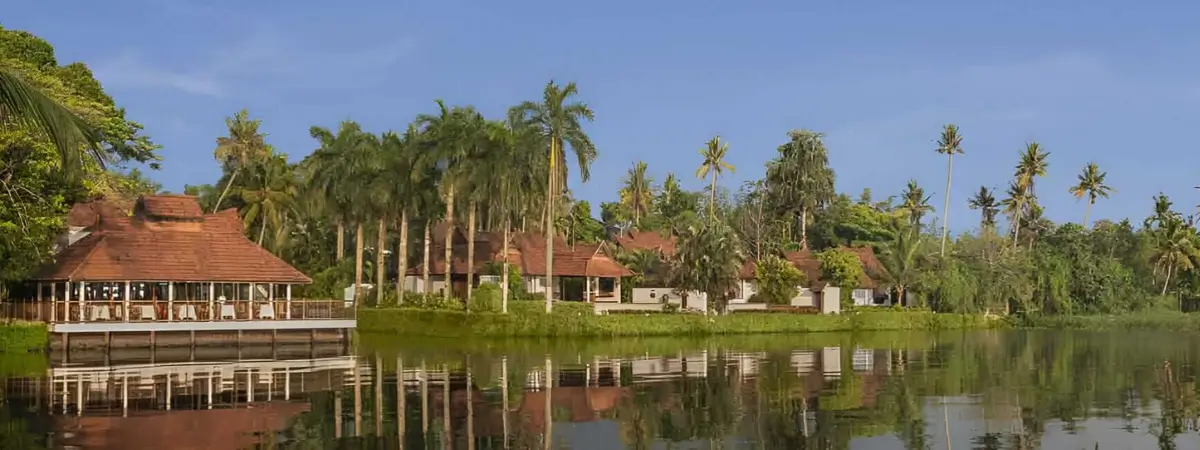
Kerala rewards the traveller who stays long enough to learn its rhythm of tides, tea-plucking shifts and temple drums. Our Kerala Slow Travel and Boutique Heritage Tour gives you twenty-one nights across eight bases, with no stop shorter than one full day and most stays running to three nights. That pace leaves room for the things a rushed itinerary skips: a second morning walk through a cardamom garden, an unhurried lunch on a Fort Kochi verandah, a lazy afternoon watching fishermen haul their nets at Marari. You travel throughout by private car and driver, a Kerala-born chauffeur who speaks English and knows which roadside shop fries the best banana chips. Days start late when you want them to, and there is never a 6 am departure unless you ask for one, for birds or for sunrise over the tea.
The places you sleep matter as much as the places you see. We base you in heritage and boutique properties: a restored shipyard on the Kochi waterfront, an estate bungalow above the Munnar tea, thatched cottages near Periyar, an island farmhouse on Vembanad Lake, a palm-shaded villa at Marari and a clifftop retreat on the Varkala coast. Between them sit a private houseboat night through the Kuttanad canals and guided walks with local naturalists, historians and home cooks. Meals lean towards Syrian Christian, Moplah and Nair home cooking, from appam and stew to karimeen pollichathu wrapped in banana leaf. The route then runs south to Kovalam, finishing a short drive from Trivandrum airport, so your final days are spent on sand rather than in transit. It is a boutique Kerala heritage tour for those who prefer depth over distance.
Tour Highlights
 Package Includes:
 Package Excludes:
Reply within 24hrs
Your flight lands at Cochin International Airport, about 40 km north of Fort Kochi, and our representative meets you outside the arrivals hall holding a name board. The drive to the old town takes roughly an hour and a quarter, depending on traffic through Aluva and Ernakulam, and your chauffeur will happily stop for tender coconut water if you are thirsty after the flight. As you cross onto the Fort Kochi peninsula, the city thins into narrow lanes of tiled roofs, rain trees and old Portuguese walls. Check-in is at Brunton Boatyard, our usual choice, subject to availability, a restored Victorian shipyard on the harbour mouth whose rooms look straight onto passing container ships and wooden fishing boats.
Nothing is scheduled today, and that is deliberate. Long-haul travel deserves a proper recovery, so spend the afternoon on a shaded verandah with a ginger lime soda, or take a nap before dusk. Around sunset, if you feel like stretching your legs, the flat walk along the waterfront to the Chinese fishing nets takes barely ten minutes. Watch the crews lower the huge cantilevered frames using stone counterweights, then wander past the fish stalls where the day's catch is sold to anyone willing to carry it to a nearby café for grilling. Dinner can be at the hotel restaurant, which serves recipes drawn from Kochi's Arab, Dutch, Jewish and Portuguese households.
Overnight stay in Kochi.
Mornings in Fort Kochi are best before ten, while the sea breeze still moves through the lanes. After breakfast, a local heritage guide meets you for a slow two-hour walk through the old Portuguese and Dutch quarter. Begin at St Francis Church, built by Portuguese Franciscans in the early sixteenth century, where Vasco da Gama was first buried before his remains were carried back to Lisbon; the original gravestone is still set into the floor. Continue past the Dutch Cemetery, its laterite tombs visible through the gate, and on to Santa Cruz Cathedral Basilica with its painted ceiling and pastel interior. Your guide points out details you would miss alone, such as carved wooden balconies, old warehouse crests and the whitewashed Bastion Bungalow.
Return to the hotel through Princess Street for lunch and a rest through the warmest hours. In the late afternoon, take a short ride to the Kerala Kathakali Centre, where the make-up session starts about an hour before the show. Watching performers paint their faces green, red and white using rice paste and natural pigments is as rewarding as the dance itself. The performance that follows is a shortened episode from the Mahabharata, with an English introduction beforehand so you can follow the eye movements and hand gestures. Afterwards, walk back for a seafood supper at a family-run garden restaurant near Burgher Street, where the grilled tiger prawns and fried squid rings are worth ordering.
Overnight stay in Kochi.
Today moves inland to Mattancherry, a ten-minute drive from Fort Kochi and the old trading heart of the spice coast. Start at Mattancherry Palace, built by the Portuguese around 1555 and later repaired by the Dutch, which holds some of the finest mural paintings in Kerala, with scenes from the Ramayana covering entire walls of the royal bedchamber. The palace is closed on Fridays. A short walk brings you into Jew Town and the Paradesi Synagogue, dating from 1568, with its hand-painted Chinese floor tiles and Belgian glass chandeliers. The synagogue is closed on Fridays, Saturdays and Jewish holidays, so we arrange this day around those closures. Along Synagogue Lane, antique godowns sell everything from temple doors to old ship lamps.
Spice warehouses still line Bazaar Road, and the smell of dried ginger and pepper drifts out of open doors where workers sort sacks by hand. Your guide takes you into one of the trading houses to see how produce is graded before it goes to auction. Late morning, step into a home kitchen in Fort Kochi for a hands-on cooking session with a local family. You will learn to temper mustard seeds and curry leaves in coconut oil, grind fresh coconut for a thoran, and prepare a fish moilee gentle enough for first-time palates. Lunch is the meal you cook, eaten together at the family table. The afternoon is free for a book or a slow stroll to Kashi Art Café for coffee.
Overnight stay in Kochi.
Leave Fort Kochi after a relaxed breakfast for the climb into the Western Ghats. The first stretch crosses the flat country around Kothamangalam, with rubber trees and pineapple fields lining the road, before the highway starts to rise beyond the Neriamangalam bridge over the Periyar River. Your chauffeur stops at the Cheeyappara and Valara waterfalls, both visible from the roadside, so you can stretch your legs and take photographs without any hiking. Above Adimali the air cools noticeably, and the first tea gardens appear, clipped into tidy waist-high rows that follow every contour of the hills. Expect around four hours on the road with these stops, arriving in time for a late lunch.
Your base for three nights is Windermere Estate, our usual choice, subject to availability, a former estate bungalow set among cardamom and tea about 3 km outside Munnar town. The cottages have their own sit-outs, and the estate's naturalist leads a free walk most afternoons through the private grounds. Spend the rest of today settling in with a pot of tea and a woollen layer, because evenings at around 1,600 metres can drop to 12 degrees. If you have energy left, a short guided stroll introduces cardamom pods growing at ground level beneath shade trees, a sight many visitors mistake for weeds until the pods are split open for them. Dinner is served in the bungalow's dining room, with Kerala dishes and simple continental options.
Overnight stay in Munnar.
For one morning on this trip, it is worth leaving at 4 am. A 4x4 jeep collects you from the hotel and drives about 35 km to Suryanelli, then switches to the rough private track that climbs to Kolukkumalai, often called the highest tea estate in the world at around 2,200 metres. The last stretch takes close to an hour, bumpy but safe with a local jeep driver who makes the run every day. At the top, the sun lifts over the Tamil Nadu plains far below, with clouds lying in the valleys like milk poured into a bowl. The estate's small factory still runs machines installed in the 1930s, and you can watch leaves being withered, rolled and dried by hand-fed rollers.
Return to Munnar by mid-morning for breakfast and a long rest; the early start deserves it. In the afternoon, drive the short distance to the Tata Tea Museum at Nallathanni, which is closed on Mondays. Exhibits include photographs of the early British managers, a rotorvane machine and the original estate telephone exchange, and a short film explains how tea growing here took off in the 1880s. A demonstration in the museum's working unit shows how orthodox and CTC tea differ, and you finish with a tasting of high-grown Munnar leaf. On the way back, stop at a family spice shop on the main bazaar road for homemade chocolates, vanilla pods and fresh cardamom.
Overnight stay in Munnar.
A gentler day begins at Eravikulam National Park, 13 km from Munnar, home to the endangered Nilgiri tahr, a mountain goat found only in the southern Western Ghats. Private vehicles stop at the Fifth Mile entrance, and a forest department bus carries visitors up to the Rajamalai section, where a paved path follows the slope for about a kilometre. The tahr here are used to people and often graze close to the walkway, while the grassland behind them hides the Neelakurinji shrubs that bloom only once every twelve years. The park closes for roughly February and March during calving, so in those months we replace it with a walk near Lockhart Gap. Go early, because the bus queue grows long after 10 am.
After lunch, the afternoon is yours. Many guests use it to sit on the cottage balcony with a novel, while others ask for a short drive to Mattupetty Dam, 13 km away, where the reservoir is ringed by eucalyptus and patches of shola forest and wild elephants sometimes come down to drink towards evening. Continue to Echo Point and Kundala Lake, where pedal boats are available, though the quieter option is a walk along the bank among the wild lilies. Before dinner, the hotel can arrange a traditional Kerala massage with warm herbal oils, which is best booked in the morning so a therapist is on hand. Tonight's dinner might include a Munnar speciality of kappa with beef fry or a vegetable ishtu.
Overnight stay in Munnar.
The road south from Munnar to Thekkady is one of the prettiest drives in Kerala. It passes Lockhart Gap on the way out of town, then Poopara, Nedumkandam and the cardamom hills of Idukki district. Pepper vines climb every second tree, and small farmhouses dry cardamom on bamboo mats beside the road. Ask your chauffeur for a tea stop at one of the roadside shacks above the valley, where the glasses come frothy and very sweet. The drive takes about three and a half hours with breaks, descending gradually to Kumily at roughly 900 metres. You arrive for lunch at Spice Village, our usual choice, subject to availability, a cluster of thatched cottages modelled on local tribal homes.
Spice Village runs on a strong conservation ethic, with no plastic bottles, its own organic kitchen garden and a resident naturalist who gives an evening talk on the Periyar landscape. After settling in, walk with him through the gardens to see nutmeg, cinnamon, clove and bird's eye chilli growing within arm's reach. In the evening, drive five minutes to the Kadathanadan Kalari Centre in Kumily for a one-hour kalaripayattu performance, Kerala's ancient martial art, featuring sword and shield bouts, high leaps and a closing act through a ring of fire. Arrive twenty minutes early to secure front seats. Return for a Kerala thali served on banana leaf in the main dining hall.
Overnight stay in Thekkady.
Periyar Tiger Reserve covers about 925 sq km around a reservoir formed in 1895, when the Mullaperiyar Dam was built across the river. The Kerala Forest Department runs boat cruises on this lake from the Thekkady boat landing, with the first departure at 7:30 am and several more through the day. We book the early boat, because wildlife is most active and the light is softest. Over roughly ninety minutes you often see gaur, sambar deer, wild boar, smooth-coated otters and water birds such as darters and cormorants perched on the dead tree stumps rising from the water. Elephant herds come down to the shore in the drier months. Tigers are rarely seen, and we prefer to say so honestly.
After the cruise, return to the cottages for a late breakfast and some downtime through the midday heat. In the afternoon, a guided visit to a working spice garden near Kumily shows how cardamom flowers grow from the base of the plant, how vanilla is pollinated by hand, and how black, white and green pepper all come from the same vine. The farming family usually serves cardamom tea at the end, and buying spices here is fresher than in the tourist shops. Later, browse along Kumily's main road, where cooperative stores sell cardamom by grade, clove oil and forest honey collected by tribal families. The evening is free to sit by the lily pond.
Overnight stay in Thekkady.
Thekkady's most rewarding activity is on foot. The forest department's Nature Walk starts at 7 am from the reserve entrance and lasts about two and a half to three hours, led by trained guides from the Mannan and Paliyan tribal communities whose families once lived inside the park. Groups are small, and the trail is mostly level, running along the lake shore and through open grassland. Your guide reads fresh tracks, identifies Malabar giant squirrels and Nilgiri langurs, and names medicinal plants his relatives still use. Leeches appear after rain, so the forest office issues leech socks; wear closed shoes. Those wanting more can book the full-day Bamboo Rafting trek instead, run by the same eco-development committee.
Return to Spice Village for a late breakfast, then keep the rest of the day entirely open. Slow travel works only if some days have nothing written on them. You might join a cooking demonstration with the resort chef, who shows how a proper Kerala parotta is layered, stretched and slapped by hand. Or borrow a bicycle for a quiet ride along the village lanes behind the resort, where children walk home from school and women spread laundry across hedges to dry. Before sunset, a short drive towards the Tamil Nadu border at Kumily gives long views over the plains, and the border tea stalls serve strong filter coffee with crisp vadai.
Overnight stay in Thekkady.
Today you descend from the Cardamom Hills to the backwaters. The road drops through Vandiperiyar, Peermade and Kuttikkanam, where the Ammachi Kottaram, a former summer residence of the Travancore royal family, stands among old trees above the tea gardens. A halt at Kuttikkanam breaks the journey with misty views across the Peermade estates. Below Mundakayam, rubber trees take over, then paddy fields, coconut groves and white-fronted churches around Kottayam. Total driving time is about four hours, with a lunch stop at a simple restaurant serving rice meals on a steel plate. By mid-afternoon you reach the jetty at Vechoor, on the edge of Vembanad Lake, where a small boat waits.
Your home for three nights is Philipkutty's Farm, our usual choice, subject to availability, a family-run farm on a reclaimed island in the lake. There are only a handful of waterfront villas, and the family cooks meals themselves, using vegetables, coconuts and fish raised on the farm. Dinner is served at a long communal table, and the hosts are generous with stories of Syrian Christian family life in Kuttanad. Spend the afternoon in a hammock as kingfishers dive into the canals, or walk the farm bunds among nutmeg, banana and rambutan trees. Evenings here are dark and very quiet, broken only by frogs, crickets and the soft splash of a passing country boat.
Overnight stay in Kumarakom.
Kumarakom Bird Sanctuary sits on the eastern shore of Vembanad Lake, a 14-acre patch of mangrove, canal and old rubber trees that is at its best between 6:30 and 9 am. A local birding guide meets you at the entrance and walks the raised path with you, pointing out purple herons, little cormorants, darters drying their wings, Indian pond herons and, if you are lucky, a brahminy kite circling overhead. During the winter months, migrant waders join the resident birds along the muddy edges. The path is easy and shaded, and the guide carries a spotting scope. Bring binoculars if you have them, and insect repellent for the mangrove stretch near the water.
After breakfast back on the island and a rest, set off in the afternoon on a small canoe paddled by a local boatman through the narrow village canals that larger boats cannot reach. You glide past women washing pots on stone steps, coir workers twisting coconut fibre into rope, and men diving for black clams that are later burned to make lime. A stop at a licensed toddy shop lets you taste fresh palm toddy alongside spicy tapioca and a red fish curry, the classic Kuttanad combination. The canoe brings you back to the farm jetty around sunset, when the lake turns pink and the egrets fly home to roost.
Overnight stay in Kumarakom.
Sleep in this morning, then take a motorboat across the lake to Pathiramanal, a small wooded island in the middle of Vembanad whose name means midnight sands. Local legend says a Brahmin dived into the lake at night and the island rose from the water to meet him. Today it is a protected patch of trees, with a narrow walking path that loops around the island in about forty minutes. Cormorants and night herons nest here in good numbers, and the silence is broken only by birdsong and distant boat engines. On the way back, the boatman passes long lines of Chinese nets, rice barges and the occasional fisherman casting by hand from a narrow wooden canoe.
Lunch on the farm is long and unhurried, perhaps with duck roast, beef ularthiyathu or a vegetarian spread of avial, olan and pachadi. The afternoon is free for reading, a swim or an ayurvedic massage arranged with a therapist from a nearby centre. Just before sunset, the family takes guests out on a country boat with tea and pazhampori, ripe plantain fritters dipped in batter, as the light fades over the water. Many travellers say this third day on the island is when they finally stop checking their phones. Before dinner, the hosts might show you their old family photographs and tell you how the island was claimed from the lake by hand.
Overnight stay in Kumarakom.
After a final breakfast on the farm, take the boat back to the mainland, where your chauffeur is waiting for the short drive to Alleppey. The road runs along a narrow strip between canal and paddy, crossing several small bridges, and takes about an hour. Your private houseboat, a kettuvallam made from jackfruit wood and coir rope with a woven bamboo roof, is moored at Punnamada near the finishing point of the Nehru Trophy snake boat race. A crew of three, a captain, a cook and a deckhand, welcomes you with a glass of fresh lime juice before the boat pulls away around noon. Your chauffeur drives on to Marari to meet you tomorrow.
The houseboat drifts south into Kuttanad, a region where farmers grow rice below sea level, protected by mud dykes built over generations. Lunch is served on deck around 1:30 pm: rice, sambar, a vegetable thoran and fried karimeen, the pearl spot fish found in these waters. In the afternoon, the boat passes churches with tall bell towers, village schools and long rows of ducks herded along the canal by a man with a stick. Boats must anchor by 5:30 pm under local regulations, so the evening is spent moored beside a paddy field with tea, banana fritters and the sound of frogs. Dinner is cooked fresh on board.
Overnight stay in Alleppey.
Wake early on the houseboat to watch the backwaters come alive. Fishermen are already out, women are collecting water, and the ferry boats that serve as school buses for Kuttanad children chug past full of uniforms. Breakfast on deck is typically appam with egg curry or puttu with kadala, a black chickpea curry. The houseboat returns to the jetty around 9 am, and your chauffeur meets you for the short drive north to Marari, about thirty minutes along a road lined with coconut palms and small Catholic shrines. The change of pace from canal to coast is gentle, and the sea air is noticeable as soon as you step out of the car.
Your base for three nights is Marari Beach, our usual choice, subject to availability, a resort of palm-thatched villas spread across a coconut grove beside a working fishing village. The resort grows much of its own produce and keeps a butterfly garden and a small lotus pond, and its beach is shared with local fishing boats rather than hawkers. Spend the afternoon on the sand, which is wide, clean and rarely busy. Swimming is possible on calm days, though the currents can be strong in the monsoon months, so check the lifeguard flags. In the late afternoon, fishermen land their catch on the beach, and you are welcome to watch the boats come in.
Overnight stay in Marari Beach.
Mararikulam is a real village rather than a resort strip, and the best way to see it is with the resort's naturalist on an early walk or bicycle ride. Set out around 7 am through the coconut groves, past houses where women spin coir yarn on wooden wheels and toddy tappers climb palms with a loop of rope around their ankles. You will see the small Kanichukulangara Devi temple, the village school and fishing families mending nets in the shade. Your guide explains how the community divides the catch, why boats go out at different hours and how the coastline has changed since the tsunami of 2004. The walk takes about two hours, with tea and a snack at a village stall.
After breakfast and a midday rest, drive 12 km south to Arthunkal for St Andrew's Basilica, founded by Portuguese missionaries and rebuilt several times since. Its whitewashed façade faces the sea, and the church is the focus of a major feast in January, when pilgrims walk here from across Kerala. The interior is calm and simple, and the beach behind it is a good place to watch the evening light. Back at the resort, there is an optional yoga session in the open pavilion before dinner. Tonight's meal could include Alleppey fish curry, sour with kodampuli, the dried fruit used across this coast instead of tamarind.
Overnight stay in Marari Beach.
Keep the morning entirely for yourself. Walk barefoot along the beach at low tide, swim in the resort pool, or lie under a palm with a book while the waves do the rest. If you have been curious about Ayurveda, the resort's centre offers single treatments such as abhyangam, a full-body oil massage, or shirodhara, where warm oil is poured in a steady stream over the forehead. A consultation with the resident doctor beforehand is usual. Lunch can be a simple plate of fish fry, rice and vegetables at the beachside restaurant. Slow travel means some mornings pass without a single photograph, and that is perfectly fine on this route.
In the late afternoon, your chauffeur drives you 15 km south to Alleppey town for a gentle look at its older side. The Alappuzha Lighthouse, built in 1862, can be climbed for views over the coast when open, and the rusting iron pier nearby recalls the days when this was a major port for coir and pepper. Along Mullakkal Road, small shops sell steel lamps, coir mats and banana chips fried in coconut oil. Stop for a cup of sulaimani, black tea with lime and spice, at a café near the beach before heading back. Dinner is at the resort, where the kitchen prepares a seafood barbecue on request.
Overnight stay in Marari Beach.
Leave Marari after breakfast and drive south along the coastal highway through Alleppey, Haripad and Kayamkulam. A highlight of this road is Krishnapuram Palace, just outside Kayamkulam, built in the eighteenth century in the traditional Kerala style with sloping roofs and wooden pillars. The palace, closed on Mondays, holds the Gajendra Moksham mural, one of the largest single murals in Kerala, showing Vishnu rescuing an elephant from a crocodile. The small museum also displays bronze lamps, coins and an old sword collection. After the visit, continue south past Kollam, where you might stop for lunch at a family restaurant famous for its prawn biryani and pathiri.
You reach Varkala by mid-afternoon and check into a quiet clifftop retreat set back from the busier part of North Cliff, so evenings stay peaceful. Varkala is the only stretch of the Kerala coast where red laterite cliffs drop straight to the beach, and the views from the top are spectacular in the late light. After settling in, walk along the cliff path, a narrow track lined with cafés, yoga shalas and shops selling cotton clothing and handmade jewellery. Find a table at one of the cliff cafés as the sun sinks into the Arabian Sea, and order grilled fish with a fresh pineapple juice. The path has no railing in places, so walk carefully after dark.
Overnight stay in Varkala.
Start the morning with a gentle walk down the steps to Papanasam beach, where Hindu families come to perform rites for their ancestors on the sand at dawn. The name means washing away of sins, and the natural spring that trickles from the cliff is considered sacred. Above the beach stands the Janardhana Swamy Temple, said to be about two thousand years old, with a bell presented by a Dutch sea captain whose ship was saved after a vow. Non-Hindus may view the temple from outside, and the guide explains its legends. Breakfast can be at one of the cliff cafés serving banana pancakes, idli or a Kerala breakfast of puttu.
In the late morning, drive 3 km to Sivagiri Mutt, the hilltop ashram and burial place of Sree Narayana Guru, the social reformer who campaigned against caste discrimination in Kerala in the early twentieth century. The site is peaceful, with a white stupa-like memorial and a museum telling his story in simple panels. Return to the hotel for lunch and a free afternoon by the pool or on the beach below the cliffs. In the evening, many guests join a yoga class on a rooftop or cliff platform, while others prefer a slow walk to the less busy South Cliff, where the beach is quieter and fishermen pull their boats ashore at dusk.
Overnight stay in Varkala.
Today's short outings stay close to Varkala. Drive 9 km north to Kappil, where the Edava-Nadayara backwater meets the sea, separated only by a narrow sand bar. Early morning is the best time, when the lake is still and reflections of coconut palms lie unbroken on the water. A local boatman takes you on a slow rowing boat across the lake, past small islands and Chinese nets, for about an hour. Afterwards, sit on the sand bar with a tender coconut and watch the waves on one side and the calm lake on the other, a combination found at only a few points along this coast. Kappil also has a small beach where the water is usually quieter than in Varkala.
In the afternoon, drive 15 km south to Anjengo, also called Anchuthengu, where the British East India Company built a fort in the late seventeenth century as one of its earliest trading posts on the west coast. The laterite walls are still standing, and inside you can see old British graves, the earliest dated to the early eighteenth century. The red-and-white striped Anjengo Lighthouse next door can be climbed when open, giving views over the fort, the backwater and the long line of fishing boats on the beach. Return to Varkala by late afternoon for a final evening on the cliff.
Overnight stay in Varkala.
After a slow breakfast, drive south to Kovalam through Thiruvananthapuram's outskirts. The road takes about two hours, passing small towns and roadside stalls selling jackfruit, mangoes and woven palm baskets depending on the season. Your final base is Niraamaya Retreats Surya Samudra, our usual choice, subject to availability, set on a rocky headland a few kilometres south of the main Kovalam beaches. Its cottages include old Kerala wooden houses moved here and reassembled, with sea-facing terraces. The property has its own private coves, an infinity pool cut into the rock, and a quiet that the busier Lighthouse Beach cannot match.
Spend the afternoon at leisure on the cove or by the pool. Late in the day, ask your chauffeur for a short ride to Vizhinjam Lighthouse at the southern end of Lighthouse Beach, which can be climbed for wide views over the bay when it opens in the afternoon. From the top you can see the three crescent beaches of Kovalam: Lighthouse Beach, Hawa Beach and Samudra Beach, separated by rocky headlands. Below, the Vizhinjam fishing harbour is full of brightly painted boats and a large mosque facing the sea. Return to the resort for a seafood dinner on the terrace, perhaps lobster or tiger prawns grilled with Kerala spices.
Overnight stay in Kovalam.
Spend your last full day with a half-day trip into Thiruvananthapuram, the state capital, about 16 km away. Begin at Kuthiramalika Palace, the Travancore royal residence built in the 1840s by Maharaja Swathi Thirunal, named for the 122 carved wooden horses that support its eaves. Inside are ivory thrones, Belgian mirrors and royal musical instruments, and the palace is closed on Mondays. Next door, view the gopuram of Sree Padmanabhaswamy Temple from the outside; entry is restricted to Hindus, with a strict dress code. Then walk through Chalai Bazaar, the city's oldest market, where stalls sell brass lamps, flowers, gold jewellery and spices in narrow lanes.
Return to Kovalam for lunch and a final afternoon on the beach or in the resort's spa. This is a good day to collect your thoughts after three weeks on the road and to pack slowly. Your chauffeur, who will likely have become a friend by now, takes you on request to a local craft cooperative for last-minute shopping, such as kasavu sarees with gold borders, coconut-shell handicrafts or rosewood carvings. In the evening, enjoy a farewell dinner at the resort, perhaps arranged on the rocks above the sea with candlelight and the sound of the waves. The kitchen can prepare a full sadya on banana leaf on request.
Overnight stay in Kovalam.
Enjoy a final breakfast overlooking the sea, then take as much time as your flight allows for a last swim or a walk along the cove. Check-out is usually at noon, and the resort can arrange a late check-out on request, subject to availability, if your flight leaves in the evening. Your chauffeur arrives at the agreed time, loads your bags and drives you to Trivandrum International Airport, about 16 km away, in roughly thirty minutes depending on traffic. The airport has two terminals, one domestic and one international, and the drive passes through the city's southern suburbs and along the coast near Shangumugham Beach.
If your departure time permits, ask the chauffeur for a short stop at Shangumugham Beach, near the airport, to see the giant reclining sculpture of the mermaid by Kanayi Kunhiraman. Our team keeps in touch by phone throughout the day, and if you have any problem with your flight, we are available to help rearrange your onward arrangements. At the terminal, your chauffeur helps you with luggage up to the departure gate. Twenty-one nights in Kerala give time to know not only the sights but also the people who shape this coast and these hills, and we hope you leave carrying the taste of cardamom and the sound of the backwaters with you.
Hear what our happy guests say about their India adventures! From private drivers to guided tours, we make every journey smooth, safe & unforgettable.
 rating score: 5.0 of 5, based on 448 reviews

Complete our inquiry form

Customize your itinerary

Confirm when you're satisfied
1-to-1 Service | Reply within 24hrs | Expert's Advice