Jaipur - Pushkar - Jodhpur - Jaisalmer - Udaipur
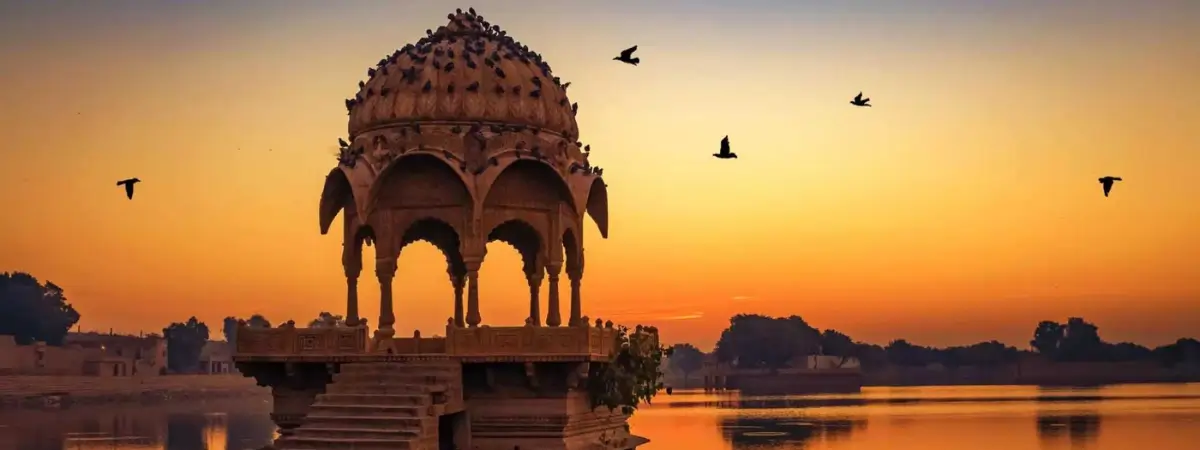
Gay, lesbian, bisexual, trans and queer travellers have been asking us the same honest question for years: will Rajasthan feel comfortable for us? Our LGBTQ Friendly Rajasthan Private Tour is our answer, built over thirteen days from Jaipur through Pushkar, Jodhpur and Jaisalmer to the lakes of Udaipur. Every hotel on this route has been personally checked by our Jaipur team for how it treats same-sex couples and gender-diverse guests, from a double bed confirmed in advance to front-desk staff who do not raise an eyebrow at two names on one booking. Since the Supreme Court of India struck down the colonial-era Section 377, attitudes in the cities have shifted noticeably, and the heritage hotels we work with are proud to host everyone. You travel with your own private car and driver, so the space around you stays yours from the first morning to the last.
Discretion is the quiet backbone of this trip. Public affection is uncommon in India for any couple, straight or otherwise, so we brief you gently on local customs and then let you relax completely inside the walls of welcoming boutique havelis and palace hotels. Your English-speaking chauffeur and the local guides in each city are people we have worked with for a long time and trust to be respectful, warm and unfussy. The pace is deliberately unhurried: a quiet sunrise walk on the Pushkar ghats, a rooftop sundowner facing Mehrangarh Fort, a night under dune skies outside Jaisalmer, and three full nights in Udaipur at the end. This Rajasthan private tour suits solo queer travellers, couples on honeymoon and groups of friends, and every day can be adjusted to your energy, your interests and your own sense of privacy.
Tour Highlights
 Package Includes:
 Package Excludes:
Reply within 24hrs
Whatever time your flight or train reaches Jaipur, a member of our team will be waiting with a name board that shows only what you have asked us to show, whether that is one name or both. Your chauffeur will load the bags into your air-conditioned car and drive you to a boutique haveli in the old city fringe that we have chosen because its owners have welcomed same-sex couples openly for years. Room types, bedding and any special requests, such as a single shared booking or adjoining rooms for friends, are confirmed before you land, so check-in is short and comfortable. There is no sightseeing pressure today, only a chance to stretch out, shower and recover from the flight.
In the late afternoon, your tour manager will sit down with you over masala chai in the courtyard to talk through the days ahead and answer any questions about local customs, dress, and how open you would like to be in different settings. This conversation is relaxed and honest; we simply share what we have learned from years of hosting queer travellers in Rajasthan. If you feel up to it, a short drive takes you to a rooftop restaurant facing the Nahargarh ridge, where the city lights come on slowly below the old walls. Dinner is at your own pace and choice, and your chauffeur waits nearby for the return.
Overnight stay in Jaipur.
An early start pays off at Amber Fort, where you arrive close to opening time and walk up through Suraj Pol before the heat and the tour buses build. Your local guide, someone we have worked with for many seasons and who is entirely at ease with LGBTQ guests, leads you through the Diwan-i-Aam, the painted Ganesh Pol and the mirrored ceilings of the Sheesh Mahal. Afterwards you stop at Panna Meena Ka Kund, the geometric stepwell nearby, for quiet photographs without the crowds that gather here later in the day. On the drive back toward the city, the car pauses at the Jal Mahal viewpoint for a view of the palace floating in Man Sagar Lake.
After lunch, the afternoon is given to the City Palace with its Peacock Gate in the Pritam Niwas Chowk, and the Jantar Mantar observatory next door, where the giant Samrat Yantra sundial still tells time within a couple of seconds. Hawa Mahal is best seen from the cafe terraces opposite, so your guide takes you up to one for a cold drink and a front-row view of its honeycomb facade. Evening is free, and many guests choose a hammam or Ayurvedic massage at the hotel spa. For dinner, we can reserve a table at a well-regarded Jaipur bistro with a mixed, relaxed clientele and a strong cocktail list.
Overnight stay in Jaipur.
Today trades monuments for makers. A short drive south takes you to Sanganer, where a block-printing family we have known for years welcomes you into their workshop to carve, ink and print your own cotton scarf or tablecloth. The family has hosted many of our queer couples and solo travellers, and the atmosphere is warm, chatty and unhurried. Nearby, you can watch handmade paper being pressed and dried in the sun. On the way back, there is an option to stop at the Anokhi Museum of Hand Printing in Amber, set in a restored haveli, which explains the history of the craft in clear, well-designed rooms.
The afternoon is yours. Some guests return to the old city to shop in Johari Bazaar for silver and gemstones, or Bapu Bazaar for juttis and textiles, with the chauffeur on standby to collect bags and drive you back. Others simply rest by the pool. In the evening, your tour manager can suggest a couple of venues where Jaipur's small but confident LGBTQ community meets socially, and arrange a safe ride there and back, though there is no pressure at all to go. A quieter alternative is dinner at Nahargarh Fort's terrace restaurant as the sun drops over the city.
Overnight stay in Jaipur.
After a leisurely breakfast, your chauffeur drives you west along a smooth highway toward Ajmer and then over the Nag Pahar hills into Pushkar, a small pilgrim town that wraps around a sacred lake. The drive takes about three hours, with a tea stop at a clean highway cafe. In Pushkar, you check into a peaceful garden resort on the edge of town that we selected for its relaxed, international feel and its genuinely welcoming staff. Pushkar is strictly vegetarian and alcohol is not served in the town, so we mention this in advance and suggest packing any personal preferences accordingly. Your chauffeur can also stop for snacks or supplies in Ajmer on the way.
In the late afternoon, a local guide walks you down to the ghats, explaining how to approach the lake respectfully: shoes off, cameras away near bathers, and a polite refusal ready for anyone offering an unsolicited puja. You visit the Brahma Temple, one of very few in India dedicated to the creator god, and then sit quietly on Gau Ghat as the evening aarti begins, bells and lamps reflecting across the water. Dinner can be at a rooftop cafe in the market, where falafel and wood-fired pizza share the menu with Rajasthani thalis. Try the malpua, a syrup-soaked sweet pancake fried fresh in the market.
Overnight stay in Pushkar.
Pushkar rewards slowness, so this day has very little fixed in it. Early risers can take the ropeway up to the Savitri Temple on Ratnagiri Hill for sunrise over the lake and the dunes beyond, a short and comfortable ride that replaces the steep climb. After breakfast, a stroll through Sadar Bazaar brings you past stalls of silver jewellery, hand-dyed fabrics, leather notebooks and rose products made from the fields that surround the town. Your guide can introduce you to a rose-water distiller on the outskirts, where petals are steamed in copper vessels exactly as they have been for generations. You leave with a small bottle of the morning's batch.
The afternoon is open for rest, reading or a massage at the resort. Pushkar has long drawn independent travellers from all over the world, and its cafes have an easy-going, accepting atmosphere where nobody pays much attention to who is holding whose hand. If you are visiting in October or November, your tour manager will let you know about the camel fair dates and suggest whether to visit the fairground. As the light softens, a short jeep ride into the surrounding dunes offers a quiet sunset with chai, away from the town. Your guide brings blankets for the cooler months.
Overnight stay in Pushkar.
The road from Pushkar to Jodhpur runs through mustard fields, small market towns and long open stretches of scrub where you may spot nilgai antelope near the roadside. The drive takes around four hours, and your chauffeur knows the clean rest stops along the way. On arrival, you check into a boutique heritage property close to the old city, chosen for its friendly owners, its rooftop with a direct view of Mehrangarh Fort, and its long record of hosting couples of every kind. This hotel has become a favourite with our LGBTQ guests because the staff are relaxed, professional and discreet. Rooms are confirmed with your chosen bed type well before arrival.
Late in the afternoon, your local guide leads a gentle walk through Navchokiya and the lanes below the fort, where many houses are still washed in the indigo blue that gives Jodhpur its nickname. You pass small temples, stepwells and doorways painted with wedding motifs, and the guide explains how the old city was laid out by caste and trade. The walk ends at Toorji Ka Jhalra, an eighteenth-century stepwell restored and now surrounded by cafes. Return to the hotel rooftop for a drink as the fort lights come on, followed by dinner. The kitchen serves excellent laal maas and a gentler vegetarian thali.
Overnight stay in Jodhpur.
Morning belongs to Mehrangarh Fort, rising sheer from a rocky ridge above the city. The audio guide here is excellent, but your personal guide adds the stories that matter, such as the handprints of royal widows at Loha Pol and the reasons behind the fort's seven gates. Inside, the Phool Mahal glitters with gold leaf and stained glass, the Moti Mahal is lit by coloured panes, and the Takhat Vilas is painted floor to ceiling. The museum's collection of howdahs, palanquins and miniature paintings is one of the finest in Rajasthan, so allow at least three hours here. The cafe near the exit makes a pleasant pause before lunch.
After lunch, you might rest or visit the Umaid Bhawan Palace museum, part of a grand Art Deco palace that is still partly home to the former royal family. Late afternoon is timed for Jaswant Thada, the white marble memorial below the fort, which glows warmly as the sun lowers and is usually calm at this hour. Your guide then leaves you to wander the Sardar Market and clock tower area if you wish, with the chauffeur nearby. Dinner can be arranged at a restaurant set inside a restored haveli, with a quiet corner table and the fort walls lit up overhead.
Overnight stay in Jodhpur.
Leaving Jodhpur after breakfast, your car heads west into the Thar Desert, the landscape flattening into sand, thorn trees and the occasional village of round mud houses. The drive takes about five hours, with a stop near Pokhran for tea and a stretch. Arrival in Jaisalmer brings the first sight of the golden sandstone fort rising from the desert floor, an image few guests forget. You check into a welcoming boutique hotel with a view of the ramparts, one we have used many times for same-sex couples, where the managers make a point of personal, low-key service. Take an hour to rest on the terrace while the heat fades over the town.
As the afternoon cools, take a gentle walk to Gadisar Lake on the edge of town, a former reservoir lined with small shrines, chhatris and an elegant carved gateway, Tilon Ki Pol. Local boats paddle across the water, and the lake attracts migratory birds in the winter months. Sunset is best seen from Vyas Chhatri, a cluster of sandstone cenotaphs on a low hill where the fort turns honey-gold against the evening sky. Dinner is at the hotel or at a rooftop restaurant facing the fort walls. Ask for the local ker sangri, a tangy dish of desert beans and berries that suits the setting.
Overnight stay in Jaisalmer.
Jaisalmer Fort is one of very few forts in the world where people still live, and your guide walks you through its narrow lanes past family homes, small shops, and the cluster of Jain temples carved in yellow stone. The Raj Mahal museum offers sweeping views over the city. Below the fort, Patwon Ki Haveli is a group of five merchant mansions covered in lace-like stone carving, and Nathmal Ki Haveli, built by two brothers who each carved one half without ever seeing the other's work, is a quieter alternative a short walk away. Your guide also points out the old merchant routes that made these families rich.
In the afternoon, your chauffeur drives you about 45 km to the dunes near Sam or Khuri. Rather than joining the crowded camp areas, we set up a private camel ride across a quieter stretch of sand, timed so you reach a dune crest for sunset with nobody else around. Afterwards, a private dinner is served under the stars with folk musicians from the Manganiyar tradition, and the evening is entirely on your terms. You return to Jaisalmer late, or, if you prefer, we can arrange a night in a luxury tented camp chosen for its welcoming management.
Overnight stay in Jaisalmer.
Today is the longest drive of the trip, and we make it as comfortable as possible with an early start after breakfast and regular breaks. The route runs southeast through Barmer district and the Luni river plains toward the green Aravalli hills, and your chauffeur will suggest a good lunch stop at a clean highway dhaba near Balotra or a heritage hotel restaurant along the way. The car is fully air-conditioned, water is always on board, and you can stop whenever you like for photographs of villagers in bright turbans, shepherds with flocks, or roadside temples. Music, quiet or conversation in the car is entirely your choice.
As the land rises into the Aravallis, the scenery turns greener and the air feels softer, a welcome change after the desert. You reach Udaipur in the early evening and check into a lakeside heritage hotel that we consider one of the most openly welcoming in Rajasthan, with staff who treat every couple with the same quiet courtesy. After the long day, dinner is served on the hotel terrace facing Lake Pichola, with the City Palace lit up across the water and nothing more demanding ahead than a good night's sleep. Breakfast tomorrow can be served late on request.
Overnight stay in Udaipur.
A morning visit to the Udaipur City Palace begins at the Badi Pol gate and leads through a maze of courtyards, balconies and mirror-inlaid rooms. Your guide points out the Mor Chowk with its peacock mosaics, the Manak Mahal's glass and porcelain, and the views from the upper terraces over the lake and the Aravalli hills. Afterwards, a short walk brings you to the Jagdish Temple, a seventeenth-century Vishnu temple with richly carved outer walls, and then down to Gangaur Ghat, where women gather to wash clothes and pigeons circle overhead. Your guide times the walk to avoid the midday heat, with a cold drink at a quiet lakeside cafe before you return to the hotel for a rest.
In the late afternoon, a private boat takes you out on Lake Pichola, circling Jag Mandir island and passing the white Lake Palace hotel as the sun drops behind the hills. With the boat reserved only for you, there is no need to share space or conversation with strangers. Back on shore, Bagore Ki Haveli hosts an evening Dharohar show of Rajasthani folk dance and puppetry, including the famous pot-balancing dance, which many guests find a joyful end to the day. Dinner is at a lakeside restaurant of your choice. Your chauffeur waits to drive you back afterwards, so there is no need to find a taxi late at night.
Overnight stay in Udaipur.
The final full day is left open on purpose, because by now most guests know exactly how they want to spend it. Popular choices include a private Rajasthani cooking class in a family home, where you learn dal, seasonal vegetables and fresh rotis, or a half-day drive into the hills to the Monsoon Palace at Sajjangarh for the widest view over the city. Shoppers enjoy the miniature painting studios near the City Palace, where artists paint with squirrel-hair brushes, and the silver shops along Hathi Pol. The hotel spa is also an excellent option for a long massage. Your chauffeur stays on call all day.
In the afternoon, a gentle walk through Saheliyon Ki Bari, the garden of the maids of honour, shows off fountains, lotus pools and marble elephants built for the royal ladies of Mewar. As the evening arrives, your tour manager joins you briefly to check departure details and to hear your thoughts on the trip, which genuinely helps us improve what we offer queer travellers. Your farewell dinner can be booked at a rooftop restaurant overlooking Lake Pichola, with a table placed slightly apart for privacy if you prefer. It is a gentle way to close the trip together.
Overnight stay in Udaipur.
After a relaxed breakfast, there is time for a last walk along the lake, a final coffee on the terrace, or some last-minute shopping, depending on your flight time. Your chauffeur collects you from the hotel at the agreed hour and drives you to Maharana Pratap Airport at Dabok, about 22 km and forty minutes from the city, for your onward flight to Delhi, Mumbai or your next destination. If you are continuing by train, the transfer can be to Udaipur City railway station instead. All luggage is handled for you, and the car remains with you until check-in. A packed breakfast can be arranged for early flights.
Over thirteen days, we hope this trip has shown that Rajasthan can be travelled comfortably and confidently as yourself, with people around you who are kind, respectful and quietly on your side. If you ever wish to return, extend into another part of India, or recommend us to friends in the LGBTQ community, our Jaipur team is always happy to hear from you. Many of our guests stay in touch for years, sending photographs and news, and we always enjoy seeing where their travels take them next. We wish you a smooth flight home and safe travels onward. Thank you for travelling with us.
Hear what our happy guests say about their India adventures! From private drivers to guided tours, we make every journey smooth, safe & unforgettable.
 rating score: 5.0 of 5, based on 448 reviews

Complete our inquiry form

Customize your itinerary

Confirm when you're satisfied
1-to-1 Service | Reply within 24hrs | Expert's Advice