Delhi - Agra - Jaipur - Jodhpur - Udaipur - Delhi
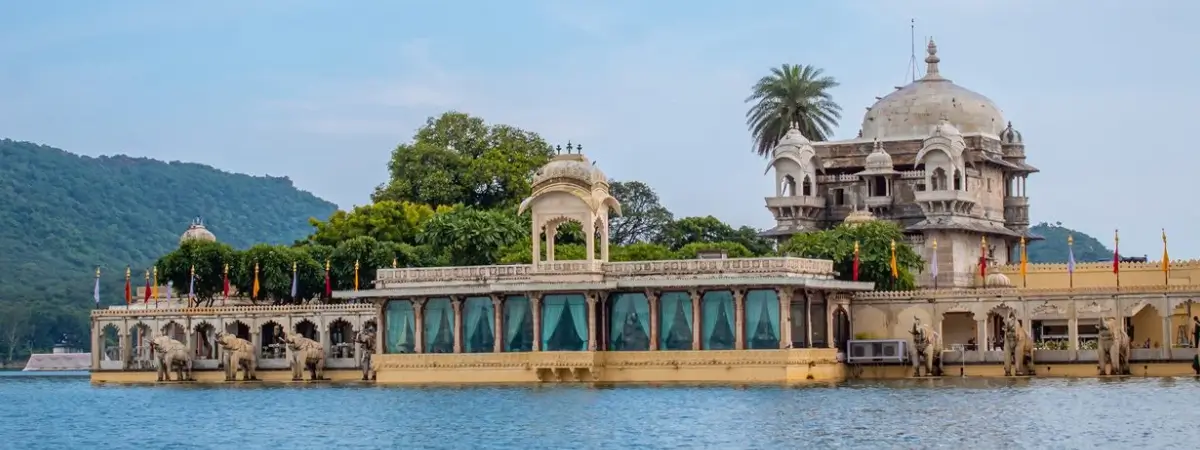
Sleeping where maharajas once held court is the heart of our Luxury India Tour with Taj Palace Hotels, a ten-day route that links Delhi and the Taj Mahal with three of the finest royal residences in Rajasthan. In Jaipur you stay at Rambagh Palace, the former home of Maharaja Man Singh II and his glamorous queen Gayatri Devi, where peacocks wander the lawns at breakfast. In Jodhpur the address is Umaid Bhawan Palace, a vast Art Deco palace of golden sandstone in which the present Maharaja still keeps a wing for his family. Udaipur ends the trip on the water at Taj Lake Palace, an eighteenth-century summer retreat that seems to rise straight out of Lake Pichola and can only be reached by boat.
All these rooms are booked through the Taj group, subject to availability, and we request palace-wing or lake-facing categories wherever possible. Overland legs are handled by private car and driver, one courteous English-speaking chauffeur staying with you right through to the shores of Lake Pichola, and a domestic flight carries you back to Delhi at the end, avoiding a twelve-hour drive. Local guides join you for the Taj Mahal tour, the Rajput forts of Jaipur and Jodhpur, and the lake city of Udaipur. Along the way we add quieter stops many visitors miss: the Chand Baori stepwell at Abhaneri, the holy lake of Pushkar and the marble Jain temple at Ranakpur. This trip suits couples, honeymooners and anyone marking a milestone in grand style.
Tour Highlights
 Package Includes:
 Package Excludes:
Reply within 24hrs
The tour opens at the international arrivals hall of Delhi airport, where our representative greets you with a garland of marigolds and a placard bearing your name. Your chauffeur, dressed in a crisp uniform, stows the luggage in a roomy SUV, and you head toward the Diplomatic Enclave. Our usual choice for the first two nights is the Taj Palace, New Delhi, subject to availability, set in six acres of gardens close to the embassies of Chanakyapuri. During the drive your representative goes over the whole route, explains how the palace hotel stays will work, and leaves you with a printed itinerary and our direct phone numbers.
After check-in the remainder of the day belongs to you. Many guests head straight to the pool and then to bed, which is the best cure for jet lag. If you fancy a short outing, the chauffeur will happily drive you to Gurudwara Bangla Sahib, the gold-domed Sikh temple near Connaught Place, whose community kitchen feeds lentils, rotis and kheer to anyone who sits down on the floor mats, free of charge. Heads stay covered and feet bare inside, and orange bandanas are handed out at the door. For dinner, the hotel's Orient Express restaurant, set in a replica railway carriage, gives the evening a sense of occasion. Overnight stay in Delhi.
Your guide picks you up after breakfast for a day split between the Mughal capital and the gardens of the south. The morning begins at the Red Fort, built of red sandstone in the 1640s, where you walk through the covered Chatta Chowk bazaar into the hall of public audience and on to the delicate marble pavilions near the river wall. Because the fort is closed on Mondays, Monday arrivals visit the Gandhi memorial at Raj Ghat and the National Gallery of Modern Art instead. A short walk away, the guide shows you the narrow lane of Dariba Kalan, famous for silver jewellery since Shah Jahan's day.
Lunch is at a smart contemporary Indian restaurant in Lutyens' Delhi, before a gentle afternoon at Sunder Nursery, a Mughal-era plant nursery and heritage park brought back to life with lotus pools, avenues of trees and a dozen small tombs. It lies next to Humayun's Tomb, and a gate connects the two, so you can walk from one into the other without returning to the car. Late in the day, stop at Agrasen ki Baoli, a stepwell of 108 stone steps hidden among the office towers near Connaught Place. Back at the Taj Palace, an early night sets you up for tomorrow's road south. Overnight stay in Delhi.
After breakfast the car joins the Yamuna Expressway; four hours later the dome-shaped skyline of Agra appears and a late lunch is waiting. For this city our usual pick is the Taj Hotel and Convention Centre, subject to availability, whose rooftop and upper rooms look straight across to the white dome less than two kilometres away. Rest while the sun is fiercest, then meet your guide at about three o'clock for a visit to Itmad-ud-Daulah, the riverside tomb that locals call the Baby Taj. Commissioned by Empress Nur Jahan in memory of her father, Mirza Ghiyas Beg, it pioneered the marble inlay work later perfected next door, and its walls look almost embroidered.
From there you cross back over the Yamuna and enter the Taj Mahal through the West Gate as the afternoon light turns warm and golden. Because the monument shuts its gates every Friday for prayers, we fix your Agra day to avoid it. Beyond the romance of an emperor grieving his queen, your guide shares the engineering facts: twenty thousand craftsmen, a thousand elephants hauling marble from Makrana, and twenty-two years of work. Linger on the riverside terrace until the closing bell, then return to the hotel for a drink on the terrace facing the floodlit dome. Overnight stay in Agra.
Breakfast done, the car heads west over the state line into Rajasthan, where the countryside turns drier and the women's saris brighter. Rather than the usual stop at Fatehpur Sikri, we turn off the highway at Abhaneri, a farming village with a remarkable ninth-century well. Chand Baori sinks some thirty metres below the fields in a funnel of zigzag staircases, so precise that photographers struggle to frame it in one shot. Across the lane, the broken shrine of Harshat Mata keeps sculpted panels of lovers and drummers. Lunch is a simple meal at a clean wayside cafe our chauffeur trusts.
Around five you sweep up the drive of Rambagh Palace, our preferred Jaipur address where rooms allow. It started in 1835 as a modest pavilion given to a royal wet nurse, then became a royal hunting lodge and then the main residence of the Jaipur royal family until 1957. Its corridors are lined with polo trophies and old photographs, and in the evening a bagpiper in Rajput dress plays on the lawn as the lights come on. Take a cocktail at the Polo Bar before dinner at Suvarna Mahal, where gilded mirrors and a frescoed ceiling recall the banquets of the Jaipur court. Overnight stay in Jaipur.
Your guide arrives at eight for the drive to Amber Fort, which crowns a hillside above Maota Lake. Enter the fort through the main courtyard and climb to the Diwan-i-Aam, a hall of double columns where the Raja met his subjects, then to the Sukh Niwas, a pleasure hall cooled by an early form of air conditioning, with breezes drawn across water. From Amber a steep road leads higher still to Jaigarh Fort, the military stronghold that guarded the palace below. Here stands the Jaivana, a monster cannon mounted on giant iron wheels, a fifty-tonne gun cast on site in 1720, which according to local lore was fired just once and never needed again.
The afternoon is free to enjoy Rambagh's forty-seven acres of gardens, its indoor pool or the Jiva spa. At around four thirty the car climbs out past the eastern walls to Galta Ji, a set of pink sandstone shrines and spring-fed tanks squeezed between two cliffs. Troops of monkeys own the place, and pilgrims bathe in the green pools fed by a natural spring. Walk up to the small Sun Temple on the ridge for a view of the whole city turning gold at sunset. Back at the palace, a private dinner can be laid out on the lawn. Overnight stay in Jaipur.
Covering the most kilometres of the trip, today begins at eight with breakfast boxes on board if you prefer to eat on the way. After about three hours you reach Pushkar, a desert pilgrimage town whose white houses ring a holy lake. A local guide walks with you to the Brahma temple, with a tall red shikhara and a silver tortoise set into the marble floor, and a rare shrine to Hinduism's creator god, and down to the ghats, where priests may offer a small blessing ceremony by the water. If you would rather skip the ritual, simply say so; it is never an obligation. Lunch is fresh falafel or a thali at a rooftop cafe by the water.
The road then runs west through mustard fields and scrub toward Jodhpur, reaching the city in the late afternoon. Crowning Chittar Hill stands Umaid Bhawan Palace, booked for you where rooms allow; Maharaja Umaid Singh commissioned it in 1929 to employ thousands of villagers through years of drought. It has 347 rooms, a great central dome and an underground pool decorated with zodiac mosaics. Part of the building is still the private home of the royal family of Marwar, and another part is a museum. Enjoy a quiet evening with a drink on the terrace overlooking the palace gardens. Overnight stay in Jodhpur.
Mehrangarh Fort, perched on a sheer cliff over Brahmpuri's indigo-washed homes, is the highlight of the Jodhpur city tour. Your guide leads you up through seven gates, one still marked by cannonball scars and another, Loha Pol, by a cluster of small carved handprints left by queens who died on their husbands' funeral pyres. Inside, the palace rooms hold one of the best museums in Rajasthan: elephant howdahs, royal cradles, miniature paintings and the extraordinary Phool Mahal, a hall of gold leaf and stained glass. Below the fort lies Jaswant Thada, a cenotaph of translucent Makrana marble raised in 1899 in memory of the ruler Jaswant Singh II; here musicians often play the ravanhatta, a simple bowed instrument.
After lunch, the chauffeur drops you near the Clock Tower in the heart of the old city. Sardar Market fans out from its gates in rows of traders offering saffron, lac bangles, bandhani scarves and the local sweet called mawa kachori, which is best eaten warm. Your guide helps you find a reliable spice shop and a good place for a cup of masala chai. Return to Umaid Bhawan by late afternoon for a short private visit to the palace museum, showing off the family's collection of clocks, crystal and vintage photographs. Dinner tonight is at the hotel's Risala restaurant. Overnight stay in Jodhpur.
The drive south to Udaipur follows small roads through the Aravalli hills, where camel carts and goat herds are more common than other cars. About three hours from Jodhpur you reach Ranakpur, a forested valley holding a Jain temple to Adinath raised by the merchant Dharna Shah around 1439. Leave shoes and any leather items with the attendant, and note that tourists are admitted only after twelve noon, once morning worship has finished. Inside, the ceiling domes are carved with layered lace-like circles, and the 1,444 pillars are all carved differently. Lunch is at a quiet garden restaurant near the temple.
In the late afternoon you reach the lakeshore in Udaipur, where a hotel boat waits at the jetty. Our usual choice for the last two nights is Taj Lake Palace, subject to availability, built in 1746 as the summer palace of Maharana Jagat Singh II on the small island of Jag Niwas. Staff greet you with rose petals dropped from above as you step ashore. The rooms are decorated with old miniature paintings and coloured glass, and many look directly onto the water toward the City Palace. Take dinner on the floating pontoon of the hotel, or simply watch the lights from your window. Overnight stay in Udaipur.
Breakfast is served by the lily pond, and then the hotel launch drops you at the Bansi Ghat landing of the City Palace. Your guide leads you through courtyards decorated with peacock mosaics, the Mor Chowk, and rooms lined with mirrors and Chinese tiles, and tells the story of the Mewar rulers who refused to marry their daughters to the Mughals. Just up the slope, Jagdish Temple was raised by Maharana Jagat Singh I in 1651, and its plinth is carved with elephants, dancers and musicians. The morning ends at Saheliyon ki Bari, a small garden of fountains and lotus pools built for the queen's companions.
The afternoon is free for the hotel spa, which is set on a traditional boat called Jiva, or for a nap before the evening. Late in the day you board a private motor launch for a sunset circuit of Lake Pichola, gliding past Gangaur Ghat and Lal Ghat before landing at Jag Mandir, the island pavilion of grey stone elephants that sheltered a rebel Mughal prince. An hour later, seats are reserved for Dharohar, the evening folk programme staged at Bagore ki Haveli, a lively hour of puppets and dancers balancing pots on their heads. Your farewell dinner can be served by candlelight at Bhairo, the rooftop restaurant. Overnight stay in Udaipur.
Eat breakfast slowly on the last morning, because few hotel windows frame a view like this one, with washerwomen on the ghats and the palace walls turning honey-coloured in the early sun. The launch ferries you ashore, and the chauffeur drives the twenty-two kilometres to Udaipur's Dabok airport. Here the person who has guided your car across Rajasthan for over a week says farewell, his allowances long since paid by us. The hop to Delhi lasts around eighty minutes, and on landing a member of our Delhi team is in the arrivals area to help with your bags and either a connection or a hotel transfer.
Should your flight home depart around midnight, a day room close to Terminal 3 can be booked, or an extra short tour of Delhi, for example a visit to the Lodhi Art District to see the colourful murals painted on residential buildings. Our representative then takes you to the international departure terminal in good time. Our Jaipur office will call you once more before you fly, to check that everything went smoothly, settle any small queries and hear your comments about each palace hotel, room by room. Many of our travellers return to see the southern states, the Himalayan foothills or the tigers of Ranthambore.
Hear what our happy guests say about their India adventures! From private drivers to guided tours, we make every journey smooth, safe & unforgettable.
 rating score: 5.0 of 5, based on 448 reviews
Complete our inquiry form

Customize your itinerary

Confirm when you're satisfied
1-to-1 Service | Reply within 24hrs | Expert's Advice