Delhi - Agra - Gwalior - Orchha - Khajuraho - Jaipur
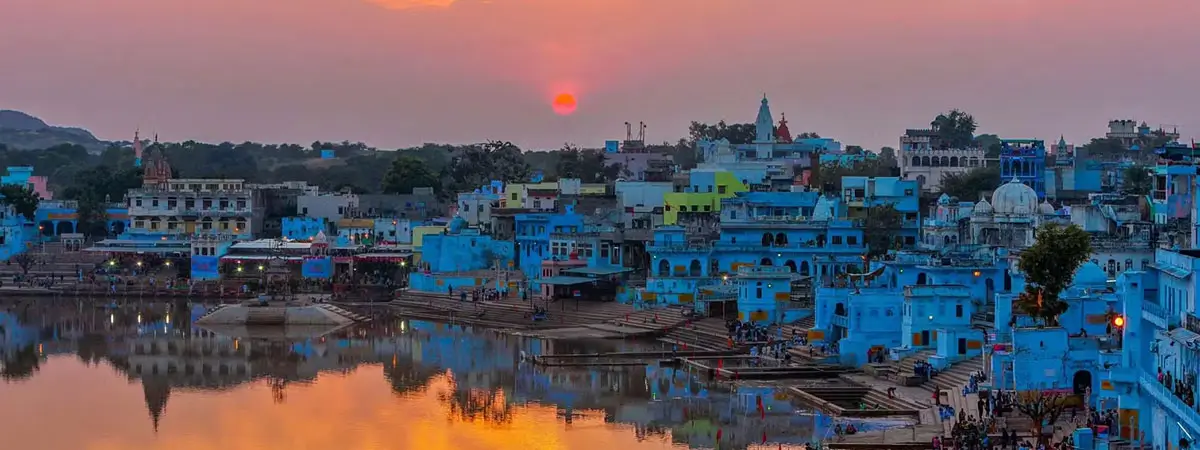
Stone carving is the thread that ties together our Golden Triangle Tour with Orchha and Khajuraho, a 10-day private route designed for travellers who love architecture, sculpture and quieter corners of India. After the Mughal monuments of Delhi and Agra, a fast morning train carries you south into Bundelkhand, a region of rocky plains and slow rivers that most visitors never see. Orchha, once the capital of the Bundela kings, is a small town of palaces and temples on the Betwa River, with royal cenotaphs lining the banks. A few hours further on, Khajuraho holds the finest group of medieval Hindu and Jain temples in India, built by the Chandela dynasty about a thousand years ago and covered in sculptures of gods, dancers, musicians and everyday life.
From Khajuraho you fly back towards Rajasthan to finish in Jaipur, the Pink City, so the route forms a loop without tiring backtracking. Road journeys are made in a private car and driver, with an English-speaking chauffeur in the north and a second car waiting in Madhya Pradesh. In each city a local guide brings the stones to life, explaining the stories behind the panels at Khajuraho or the Mughal-Rajput fusion in Orchha's Jahangir Mahal. The pace leaves room for sunsets and slow walks. This Khajuraho and Orchha tour is a good choice for repeat visitors to India, photographers, art lovers and anyone who has already seen the classic triangle and wants to add something less familiar, with comfortable heritage hotels throughout.
Tour Highlights
 Package Includes:
 Package Excludes:
Reply within 24hrs
When you step out of Indira Gandhi International Airport, a representative from Heritage India Private Tours will be waiting with your name on a sign, ready to help with luggage and currency exchange if needed. Your chauffeur for the Delhi and Agra part of the tour introduces himself and drives you to your hotel, which usually takes 45 minutes to an hour depending on the traffic. On the way, you receive a welcome folder with printed train tickets, flight details, hotel confirmations and emergency phone numbers. It is a good moment to mention any dietary needs or walking limits, so we can adjust the days ahead.
The rest of the day is yours to settle in and recover from the journey. If you arrive early and would like a gentle introduction to the city, your driver can take you to the Lodhi Garden, a large park dotted with fifteenth-century tombs of the Sayyid and Lodi dynasties, where local families stroll in the evening. The Bara Gumbad and the Shish Gumbad, with traces of blue glazed tiles, give a first look at the stonework that will become a theme of this tour. Dinner can be at your hotel or at one of the restaurants in Khan Market nearby.
Overnight stay in Delhi.
Your guide meets you after breakfast for a full Delhi city tour that traces how building styles changed over eight centuries. You begin in the south at the Qutub Minar, where the carved bands of the tower and the Alai Darwaza gateway show early Indo-Islamic craftsmanship, then move on to Humayun's Tomb, the garden tomb whose proportions later guided the builders of the Taj Mahal. Before lunch, walk into the lanes of Nizamuddin Basti to visit the dargah of the Sufi saint Hazrat Nizamuddin Auliya, and the small marble tomb of the poet Amir Khusrau beside it, still visited by devotees who leave rose petals.
In the afternoon the tour heads to Old Delhi. The Red Fort is closed on Mondays, but on other days you can walk through the Lahori Gate and the covered Chhatta Chowk bazaar to the Diwan-i-Am and the white marble Rang Mahal. Afterwards visit Jama Masjid, with its tall minarets and red sandstone courtyard, and then take a cycle-rickshaw through Chandni Chowk, where shops sell silver, spices, wedding fabrics and sweets. Stop at a famous old shop for a plate of chole bhature or a glass of chilled badam milk. End the day with a drive past India Gate as the lights come on.
Overnight stay in Delhi.
After breakfast your chauffeur drives you to Agra along the Yamuna Expressway, a smooth, wide road through the farmland of western Uttar Pradesh. The journey takes around four hours with a short stop for tea, and you reach Agra in time for lunch. After checking into your hotel and resting for a while, your guide takes you to Agra Fort, where Akbar's red sandstone walls enclose the Jahangiri Mahal and the white marble palaces added later by Shah Jahan. Pay attention to the carved brackets and stone screens here, as you will see similar details again in Orchha, built by an ally of the Mughals.
In the late afternoon cross the Yamuna to Mehtab Bagh, a riverside garden directly opposite the Taj Mahal. From this quiet spot you can watch the sun set behind the white dome, with the river in the foreground and few other visitors around. It is the best place in Agra for a wide view of the monument without crowds. For dinner, try a Mughlai meal of mutton korma, dal and fresh roti, followed by the local petha sweet. Remember that the Taj Mahal is closed every Friday, and we will arrange your sunrise visit tomorrow to fall on an open day.
Overnight stay in Agra.
Rise early for a sunrise visit to the Taj Mahal, when the light is soft and the gardens are still quiet. Your guide explains the symmetry of the complex, the pietra dura inlay of carnelian, jade and lapis, and the calligraphy around the main arch, which seems uniform from the ground because the letters grow larger towards the top. After about two hours you return to the hotel for breakfast and check out. Your chauffeur then drives you to Agra Cantt station for the Gatimaan Express or Shatabdi Express to Jhansi, one of the fastest trains in India, passing Gwalior on the way.
The train journey takes about two and a half hours in comfortable air-conditioned chair-car seats, with tea and snacks served on board. At Jhansi station, a new chauffeur and car meet you for the short 18 km drive to Orchha, a small and peaceful town on the banks of the Betwa River. After checking into your heritage hotel, take a gentle evening walk to the river, where the tall stone chhatris of the Bundela kings stand in a row along the bank. At sunset vultures often circle above the domes, and the light turns the stone a warm gold. A quiet dinner follows at your hotel.
Overnight stay in Orchha.
Spend the whole day in Orchha with a local guide, beginning at the fort complex on an island in the Betwa River. The Raja Mahal has beautiful wall paintings showing scenes from the Ramayana and the life of Krishna, while the Jahangir Mahal, built by Raja Bir Singh Deo to welcome the Mughal emperor Jahangir, has domed pavilions, carved elephant brackets and fine stone screens. From its upper terraces you can see the whole town, with temple spires and cenotaphs scattered across the countryside. Nearby is the Rai Praveen Mahal, built for a poet and dancer of the court, set in a small garden of fountains.
After lunch visit the Chaturbhuj Temple, with its tall spire and vast interior, and the Ram Raja Temple next door, the only temple in India where Lord Rama is worshipped as a king, with an armed police guard of honour at every aarti, just as for a ruling monarch. The evening aarti at Ram Raja Temple is lively, and your guide will explain the rituals. Later walk through the small market for brass items and local snacks such as fresh samosas and jalebi. For those interested, a short walk along the nature trail by the river reveals birdlife, old ruins and the quiet Phool Bagh garden.
Overnight stay in Orchha.
After a relaxed breakfast, check out and drive south-east towards Khajuraho through the rural landscape of Bundelkhand. The road passes small villages, granite outcrops, and fields of wheat and mustard, with buffalo carts and women carrying water pots along the way. Your driver can stop at a small town such as Chhatarpur for tea, a stretch and perhaps a plate of hot poha. The journey takes about four hours, and the change of pace from big cities is noticeable. Khajuraho is a small and calm town, with the temples set in green parks and very little traffic, which makes it pleasant to walk in the evenings.
In the afternoon, after checking into your hotel, visit the Eastern Group of temples, which includes several Jain temples still in active use. The Parsvanath Temple is the largest and has some of the finest sculpture in Khajuraho, including the famous figure of a woman applying kohl to her eyes. The Adinath and Shantinath temples are close by. In the evening, you can attend the sound and light show at the Western Group, narrated in English, which tells the history of the Chandela kings and their temples. Dinner is at your hotel or at a rooftop restaurant near the temples, where the spires are softly lit after dark.
Overnight stay in Khajuraho.
Today's Khajuraho temples tour focuses on the Western Group, a UNESCO World Heritage Site and the largest cluster of temples in the town. Visit in the early morning when the light is softest on the sandstone. The Kandariya Mahadeva Temple, dedicated to Shiva, is the largest and most richly decorated, with more than 800 sculptures of gods, celestial dancers, warriors, musicians and lovers. Your guide explains the meaning of the famous erotic panels, which form only a small part of the carving, and how they fit into the wider symbolism of the temples. Bring a hat and water, as there is little shade.
Continue to the Lakshmana Temple, with its friezes of hunting scenes, battles and processions around the base, and the Chitragupta and Devi Jagadambi temples, both dedicated to different forms of the divine, and the open Varaha shrine with its giant boar carved from a single block. In the afternoon, you can visit the small Archaeological Museum, closed on Fridays, which holds sculptures recovered from ruined temples. An optional drive to Raneh Falls, about 20 km away, shows a deep canyon of red, pink and grey granite with crocodiles in the river below. Alternatively, spend a quiet hour sketching or photographing the temples in the late afternoon, when long shadows bring out the depth of each carved figure.
Overnight stay in Khajuraho.
After breakfast, your chauffeur takes you to Khajuraho Airport, just a few kilometres from town, for your domestic flight towards Jaipur. Since Khajuraho has limited flights, the journey usually connects through Delhi, and our team chooses the best timings so that you reach Jaipur by afternoon. If flight schedules do not suit your dates, an alternative is the overnight train from Khajuraho or a drive back to Jhansi for a train north. On arrival at Jaipur International Airport, your new chauffeur meets you with the car that will serve you for the rest of the tour, and loads your luggage for the short drive into the city.
After checking into your hotel, spend a relaxed evening in the Pink City. Your driver can take you to the Birla Mandir, a white marble temple dedicated to Lakshmi and Narayan, which looks especially beautiful when lit in the evening. Then head to Chokhi Dhani, a village-style complex on the edge of the city where you can enjoy Rajasthani folk dances, puppet shows and a traditional dinner served on leaf plates, including dal baati churma, gatte ki sabzi and bajra roti. This is a fun way to get to know local culture after a long travel day, and children especially enjoy it.
Overnight stay in Jaipur.
Your Jaipur city tour starts in the morning at Amber Fort, set high on a ridge above Maota Lake. Ride up in a jeep to the main gate and walk through the courtyards to the Diwan-i-Am, the Sukh Niwas and the Sheesh Mahal, decorated with thousands of small mirrors. Your guide will point out how the Rajput rulers adopted Mughal designs, which links nicely with what you saw in Orchha a few days earlier. On the way down stop at the Panna Meena ka Kund stepwell, and pause for a photograph at Jal Mahal, the water palace in the middle of Man Sagar Lake.
In the afternoon visit the City Palace, where the Mubarak Mahal displays royal costumes and the courtyard of Pritam Niwas Chowk has four doorways painted with peacocks, lotus flowers and other seasonal motifs. Next door, Jantar Mantar is a UNESCO-listed observatory with stone instruments built in the eighteenth century to measure time and track stars. End with Hawa Mahal, the Palace of Winds, and some time in the bazaars of the old city. Johari Bazaar sells jewellery and gemstones, while Tripolia Bazaar is good for lac bangles and brassware. Your guide can recommend fair-priced shops and help you bargain politely.
Overnight stay in Jaipur.
After breakfast, check out and drive back to Delhi on the national highway, a journey of about five hours with a stop for lunch at a highway restaurant near Neemrana or Behror. If time allows, your driver can take a short detour to the Neemrana Fort Palace, a fifteenth-century hill fort now used as a heritage hotel, where you can have lunch on a terrace overlooking the Aravalli hills. Our team will have checked your international flight timing and will adjust the departure from Jaipur so that you reach Delhi with plenty of time to spare, allowing for the heavy traffic around Gurgaon.
On arrival in Delhi, your chauffeur drops you at the international airport for your flight home, or at a hotel near the airport if your flight leaves late at night. Before saying goodbye, take a moment to share your feedback with us, as a small Jaipur-based company founded by Magan Singh, every comment helps us improve. We hope your Golden Triangle Tour with Orchha and Khajuraho has given you a richer picture of India's art and architecture, from the white marble of the Taj Mahal to the sandstone carvings of the Chandela temples. We look forward to welcoming you back.
Hear what our happy guests say about their India adventures! From private drivers to guided tours, we make every journey smooth, safe & unforgettable.
 rating score: 5.0 of 5, based on 448 reviews
Complete our inquiry form

Customize your itinerary

Confirm when you're satisfied
1-to-1 Service | Reply within 24hrs | Expert's Advice